Short note: This website is in Beta - we are currently building everything up but you can already find the apps to download and participate! Thank you and stay safe!

 Questions, help or just curious?
Information

Le corps des fourmis se divise en trois parties (tête, thorax et abdomen). Par ailleurs, elles possèdent trois paires de pattes et certaines d’entre elles, deux paires d’ailes. Il en existe un peu plus de 13000 espèces. Les fourmis vivent en société, et sont divisées au minimum en trois castes, les femelles reproductrices (reines, absentes chez certaines espèces), les mâles reproducteurs et les ouvrières.
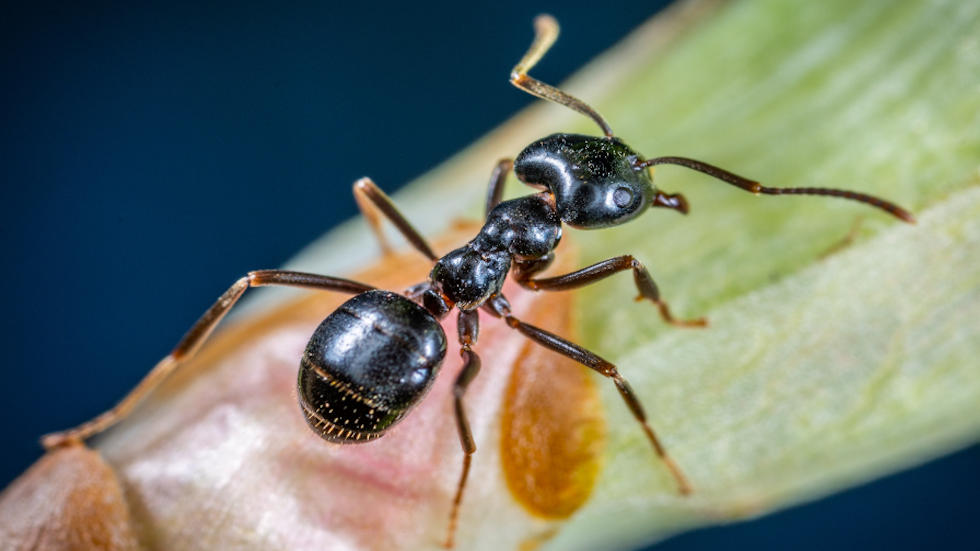
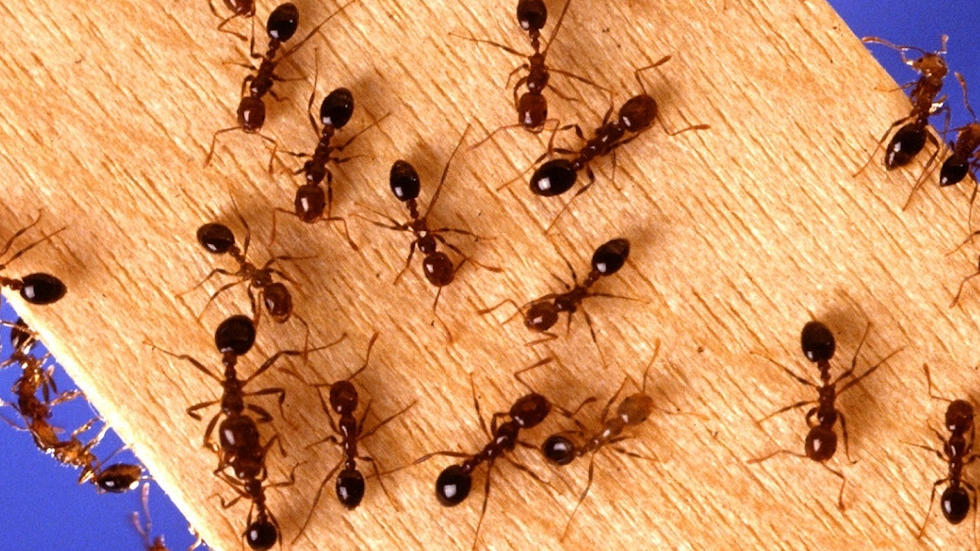
The body of ants is divided into three parts (head, chest and abdomen). In addition, they have three pairs of legs and some of them have two pairs of wings. There are more than 13,000 known species. Ants live in so-called insect states, which are always divided into at least three castes, fertile females (queens), fertile males and workers.
Sipelgate keha jaguneb kolmeks osaks (pea, rind ja kõht). Lisaks on neil kolm paari jalgu ja mõnel kaks paari tiibu. Tuntud on üle 13 000 liigi. Sipelgad on ühiselulised ja nad jagunevad alati vähemalt kolmeks kastiks, viljakad emased (kuningannad), viljakad isased ja töölised.
El cuerpo de las hormigas se divide en tres partes (cabeza, pecho y abdomen). Además, tienen tres pares de patas y algunos de ellos tienen dos pares de alas. Hay más de 13.000 especies conocidas. Las hormigas viven en los llamados estados de insectos, que siempre se dividen en al menos tres castas, hembras fértiles (reinas), machos fértiles y obreras.
Het lichaam van mieren is verdeeld in drie delen (kop, borst en achterlijf). Daarnaast hebben ze zes poten en sommige hebben twee paar vleugels. Er zijn meer dan 13.000 soorten bekend. Mieren leven in zogenaamde insecten kolonies, die altijd verdeeld zijn in ten minste drie kasten, vruchtbare vrouwtjes (koninginnen), vruchtbare mannetjes en werksters.
Il corpo delle formiche è diviso in tre parti (testa, torace e addome). Inoltre, hanno tre paia di zampe e alcune di loro hanno due paia di ali. Ci sono più di 13.000 specie note. Le formiche vivono in cosiddetti stati di insetti, che sono sempre divisi in almeno tre caste, femmine fertili (regine), maschi fertili e operaie.
Το σώμα των μυρμηγκιών διαιρείται σε τρία τμήματα (κεφάλι, θώρακας και κοιλιά). Επίσης, έχουν τρία ζεύγη ποδιών και κάποια από αυτά έχουν δύο ζεύγη φτερών. Υπάρχουν πάνω από 13,000 γνωστά είδη. Τα μυρμήγκια ζουν σε αποικίες, που χωρίζονται σε τρεις τάξεις, τα γόνιμα θηλυκά (βασίλισσες), τα γόνιμα αρσενικά και τους εργάτες.
Telo mravelj je razdeljeno na tri dele (glava, prsni koš in trebuh). Poleg tega imajo tri pare nog, nekatere med njimi pa tudi dva para kril. Poznamo več kot 13.000 vrst. Mravlje živijo v tako imenovanih žuželčjih združbah, ki se vedno delijo na vsaj tri kaste, plodne samice (kraljice), plodne samce in delavce.
Τα ισόποδα ανήκουν στις ανώτερες τάξεις των καρκινοειδών. Μπορούν να φτάσουν από 0.3 mm έως σχεδόν 50 cm. Είναι επίπεδα από την πλάτη ως την κοιλιά. Έχουν επτά ζεύγη ποδιών. Τα βράγχια εντοπίζονται στα πίσω πόδια. Διαφορετικά είδη, ωστόσο, εμφανίζουν διαφορετικά επίπεδα προσαρμογής στη ζωή στην ξηρά. Για το λόγο αυτό, υπάρχουν επίσης είδη με άλλα αναπνευστικά όργανα, όπως τραχείες ή πνεύμονες, πέρα από αυτά που αναπνεύουν μέσω βραγχίων.
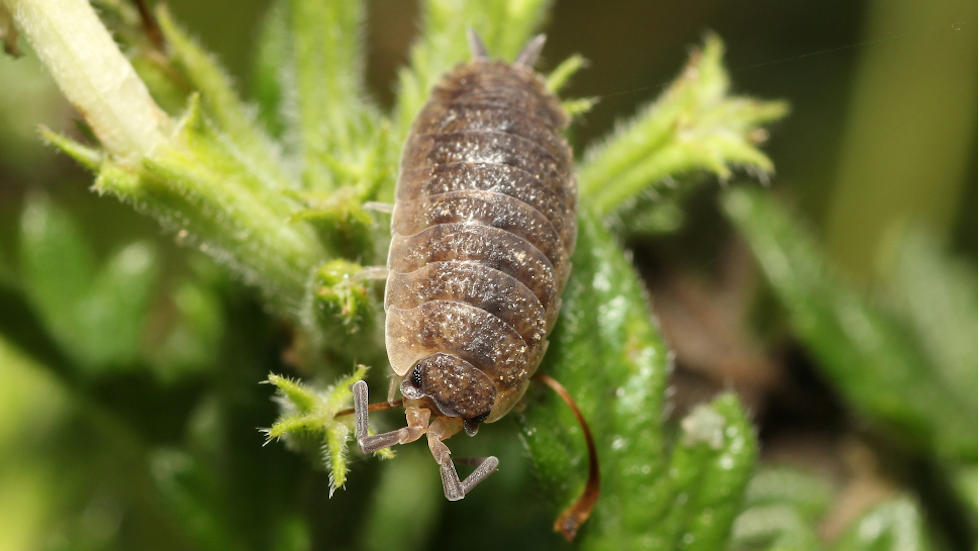
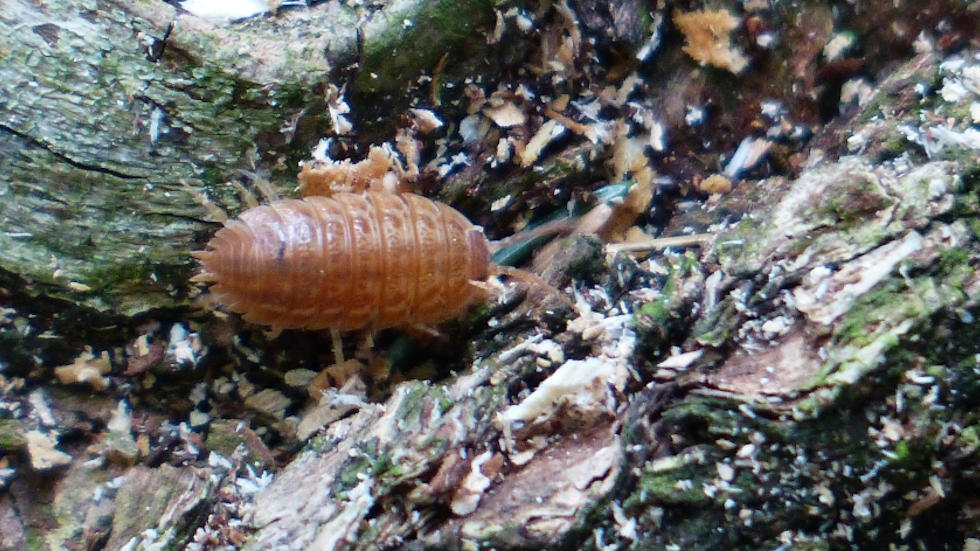
Pissenbedden (Isopoda) behoren tot de klasse van de kreeftachtigen. Ze kunnen 0,3 mm tot bijna 50 cm groot worden. Ze zijn afgeplat van de rug tot de buik. Ze hebben zeven paar poten. De kieuwen zitten aan de achterpoten. Verschillende soorten hebben zich echter in verschillende mate aangepast aan het leven op het land. Daarom zijn er ook soorten met andere ademhalingsorganen zoals luchtpijpen of longen naast de kieuwademhaling
Los isópodos pertenecen a la clase de crustáceos superiores. Pueden crecer desde 0,3 mm hasta casi 50 cm de tamaño. Son aplanados desde la espalda hasta el vientre. Tienen siete pares de patas. Las branquias se sientan en las patas traseras. Sin embargo, diferentes especies tienen diferentes niveles de adaptación a la vida en la tierra. Por lo tanto, también existen especies con otros órganos respiratorios como tráqueas o pulmones además de la respiración branquial.
Kakandid kuuluvad kõrgemate vähilaadsete klassi. Nad võivad kasvada 0,3 mm kuni peaaegu 50 cm suuruseks. Nad on lamedad seljast kõhuni. Neil on seitse paari jalgu. Lõpused istuvad tagajalgadel. Erinevatel liikidel on aga eluga maismaal erinev kohanemisaste. Seetõttu leidub peale lõpushingamise ka liike, millel on ka teisi hingamiselundeid, nagu hingetoru või kopsud.
Isopods belong to the class of higher crustaceans. They can grow from 0.3 mm to almost 50 cm in size. They are flattened from the back to the belly. They have seven pairs of legs. The gills sit at the rear legs. However, different species have different levels of adaptation to life on land. Therefore, there are also species with other respiratory organs such as tracheas or lungs besides gill breathing.
Les cloportes font partie de l’ordre des isopodes, lui-même relié au sous-embranchement des crustacés (embr. Arthropodes). Ils peuvent mesurer de 0,3 mm à presque 50 cm. Ce sont des animaux plats à sept paires de pattes, dont les postérieures comportent des branchies. Toutefois, les différentes espèces ont des niveaux d’adaptation très différents à la vie terrestre ; ainsi, certaines d’entre elles possèdent des organes respiratoires comme une trachée ou des poumons en plus des branchies.
Isopodi che appartengono alla classe dei crostacei superiori. Possono crescere da 0.3 mm fino a quasi 50 cm in grandezza. Sono schiacciati dalla schiena all’addome. Hanno sette paia di zampe. Le branchie si trovano nelle zampe posteriori. Tuttavia, diverse specie hanno diversi livelli di adattamento alla vita sulla terra. Di conseguenza, vi sono anche specie con altri organi respiratori come trachee e polmoni oltre che branchie.
Enakonožci spadajo v razred višjih rakov. Zrastejo lahko od 0,3 mm do skoraj 50 cm. Od hrbta do trebuha so sploščeni. Imajo sedem parov nog. Na zadnjih nogah imajo škrge. Različne vrste so različno prilagojene življenju na kopnem. Obstajajo tudi vrste, ki imajo poleg dihanja s škrgami še druge dihalne organe, kot so sapniki ali pljuča.
Strige so podvrsta členonožcev. Vključujejo izključno na kopnem živeče vrste z dvo- ali trimestnim številom nog. Tisočinožci imajo telo razdeljeno na dva dela. Imajo glavno , sestavljeno iz več segmentov, in deljeno telo z vsaj štirimi opornimi členi za noge.
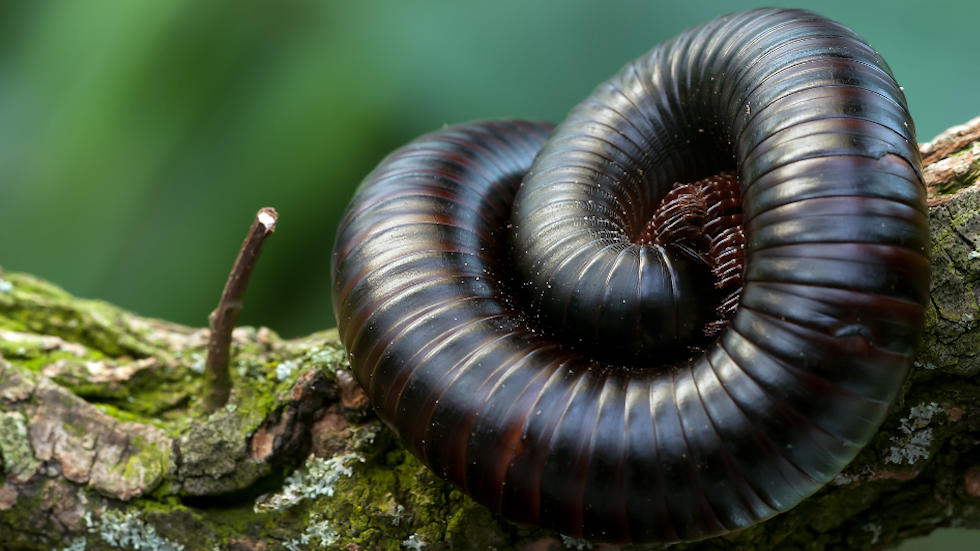
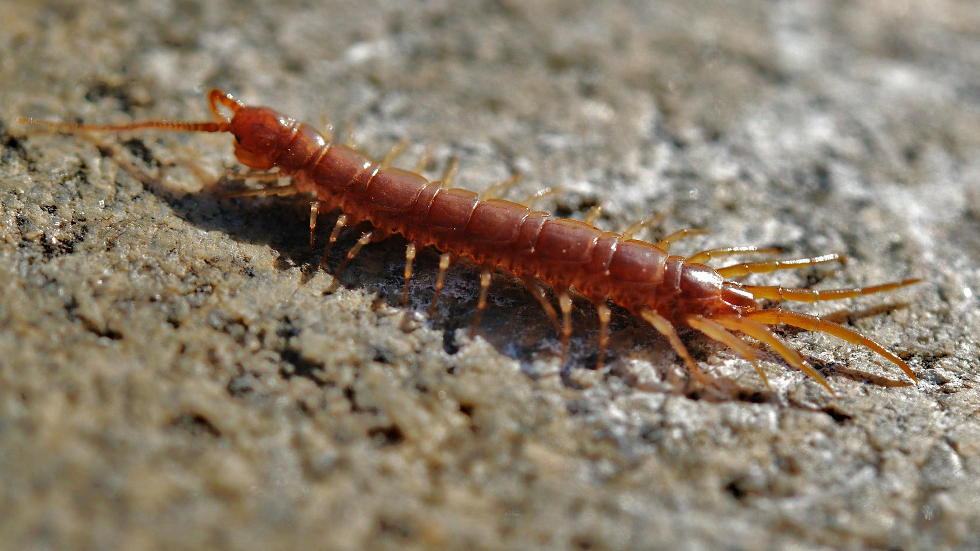
Los milpiés son una sublínea de los artrópodos. Comprenden exclusivamente especies terrestres con un número de pies de dos o tres dígitos. Los milpiés tienen un cuerpo dividido en dos partes. Tienen una cápsula de la cabeza que consta de varios segmentos y un tronco dividido con al menos cuatro segmentos de apoyo para los pies.
Thatjalgsed on lülijalgsete alamliin. Need hõlmavad eranditult maismaal elavaid liike, millel on kahe- või kolmekohaline jalgade arv. Tuhatjalgsel on keha, mis on jagatud kaheks osaks. Neil on peakapsel, mis koosneb mitmest segmendist ja jagatud ruumist, millel on vähemalt neli jalga toetavat segmenti.
The Thousand leggers are a subline of the arthropods. They comprise exclusively land living species with a two- or three-digit number of legs. Thousand leggers have a body divided into two parts. They have a head capsule consisting of several segments and a divided trunk with at least four leg supporting segments.
Les mille-pattes font partie des arthropodes. Exclusivement terrestres, ils possèdent une tête (portant une paire d’antennes, quatre paires de mandibules et deux paires de mâchoires) suivie d’un corps composé d’anneaux, chacun d’entre eux supportant une ou deux paires de pattes.
De duizendpoten zijn een subgroep van de geleedpotigen. Zij omvatten uitsluitend op het land levende soorten met een twee- of driecijferig aantal poten. Duizendpoten hebben een lichaam dat in twee delen is verdeeld. Zij hebben een kopkapsel dat uit verscheidene segmenten bestaat en een gedeelde romp met ten minste vier pootdragende segmenten.
I millepiedi sono un gruppo di artropodi. Comprendono esclusivamente specie che vivono sulla terra con un numero di paia di zampe nell’ordine di due o tre cifre. I millepiedi hanno il corpo diviso in due parti. Hanno una capsula apicale formata da diversi segmenti e un tronco settato con almeno quattro zampe che sostengono i segmenti.
Τα χιλιόποδα είναι μια υποκατηγορία των αρθρόποδων. Αποτελούνται αποκλειστικά από χερσαία είδη με διψήφιο ή τριψήφιο αριθμό ποδιών. Το σώμα των χιλιόποδων διαιρείται σε δύο μέρη. Έχουν μια κεφαλή που αποτελείται από διάφορα τμήματα και διαχωρισμένο κορμό με τουλάχιστον τέσσερα μέρη στήριξης ποδιών.
Τα σαλιγκάρια ανήκουν στα μαλακόστρακα. Το μέγεθος τους κυμαίνεται ανάμεσα στα κάτω από 0.5 mm έως πάνω από 90 cm. Το σώμα ενός σαλιγκαριού αποτελείται από το κεφάλι και τον πόδα, καθώς και τον οπίσθιο σπλαχνικό σάκο, που προστατεύεται από ένα στρώμα ιστού του καλύμματος. Κύτταρα εντός του καλύμματος σχηματίζουν ένα σκληρό κέλυφος που προσομοιάζει στη βασική του δομή τα κελύφη των άλλων μαλακόστρακων και είναι συνήθως ασύμμετρα στραμμένο προς τη μία πλευρά του σώματος.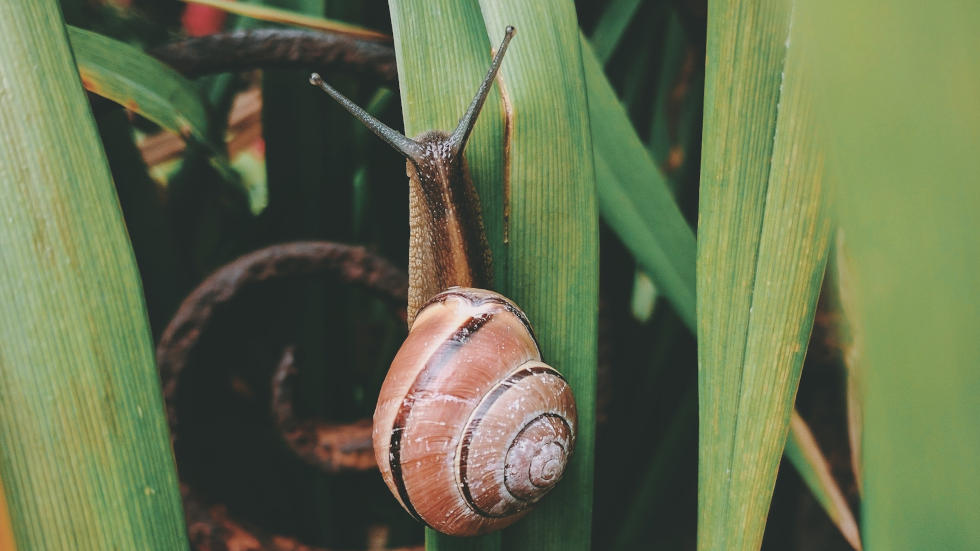
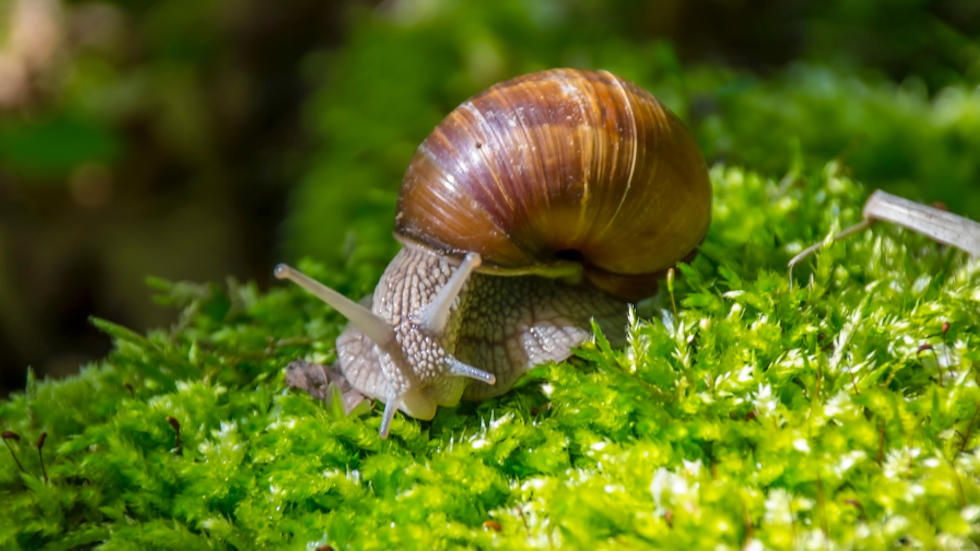
Le lumache appartengono alla tribù dei molluschi. La dimensione del corpo delle lumache varia da meno di 0.5 mm a più di 90 cm. Il corpo di una lumaca è formato dalla testa e dal piede, oltre che dalla sacca viscerale sulla parte posteriore, che è protetta dallo strato di tessuto della copertura. Le cellule nella copertura formano una conchiglia dura, che ricorda altre conchiglie di molluschi nella sua forma di base, e generalmente risulta girata asimmetricamente verso uno dei lati del corpo.
Slakken behoren tot de stam van de weekdieren. De lichaamsgrootte van slakken varieert van minder dan 0,5 mm tot meer dan 90 cm. Het lichaam van een slak bestaat uit kop en voet, alsmede de achterliggende ingewandenzak, die beschermd wordt door de weefsellaag van de mantel. De cellen in de mantel vormen een harde schelp, die qua basisstructuur lijkt op andere schelpen van weekdieren, die gewoonlijk asymmetrisch naar één kant van het lichaam is gedraaid.
Les escargots sont des mollusques. Leur taille peut aller de moins de 0,5 mm jusqu’à plus de 90 cm, et ils sont pourvus d’une tête avec des yeux au bout de tentacules (ou cornes), d’un corps (ou pied) tandis que la partie viscérale est protégée d’une coquille plus ou moins dure, souvent spiralée.
Teod kuuluvad molluskite hõimu. Tigude keha suurus varieerub alla 0,5 mm kuni üle 90 cm. Teo keha koosneb peast ja jalalabast ning seljal asetsevast vistseraalsest kotist, mida kaitseb karvkatte koekiht. Karvkatte rakud moodustavad kõva kesta, mis põhistruktuurilt meenutab teisi molluskikarpe, mis on tavaliselt asümmeetriliselt ühele kehapoolele keerdunud.
Snails belong to the mollusc tribe. The body size of the snails varies from less than 0.5 mm to over 90 cm. The body of a snail consists of head and foot as well as the back lying visceral sac, which is protected by the tissue layer of the coat. Cells in the coat form a hard shell, which resembles other mollusc shells in the basic structure, which is usually asymmetrically twisted to one side of the body.
Los caracoles pertenecen a la tribu de los moluscos. El tamaño del cuerpo de los caracoles varía desde menos de 0,5 mm hasta más de 90 cm. El cuerpo de un caracol consiste en la cabeza y el pie, así como el saco visceral que se encuentra en la parte posterior, que está protegido por la capa de tejido del pelaje. Las células del pelaje forman un caparazón duro, que se asemeja a otros caparazones de moluscos en la estructura básica, que generalmente está torcida asimétricamente hacia un lado del cuerpo.
Polži spadajo v mehkužce. Telesna velikost polžev je od manj kot 0,5 mm do več kot 90 cm. Polževo telo sestavljajo glava in noga ter zadaj ležeča visceralna vreča, ki jo ščiti plast tkiva plašča. Celice v plašču tvorijo trdo lupino, ki po osnovni zgradbi spominja na lupine drugih mehkužcev in je običajno asimetrično zasukana na eno stran telesa.o
Take a photo of the observation site. Make sure that other citizen scientists can easily recognize the site by including some reference objects in the picture.
You can also choose a suitable photo from your album. In this case, please adjust date and time of your observation before saving the spot.
Please estimate how much burnable vegetation you see five meters around you on the ground. This includes grass, moss, leaves, needles, and small shrubs that can easily ignite.
The image content. Adapted from "Assessing the quality of forest fuel loading data collected using public participation methods and smartphones" by Colin J. Ferster and Nicholas C. Coops, 2014, International Journal of Wildland Fire.

Please estimate how much large woody debris you see on the ground five meters around you. This includes branches and trunks from about five centimeters in diameter.
The image content. Adapted from "Assessing the quality of forest fuel loading data collected using public participation methods and smartphones" by Colin J. Ferster and Nicholas C. Coops, 2014, International Journal of Wildland Fire.

Vui lòng ước lượng phần trăm mặt đất được bao phủ bởi cành gãy, củi khô trong bán kính 5 mét. Các cành gãy và thân cây khô nhỏ có đường kính khoảng 5 xăng-ti-mét.
Hình ảnh được chuyển thể từ kết quả nghiên cứu: "Assessing the quality of forest fuel loading data collected using public participation methods and smartphones", Colin J. Ferster và Nicholas C. Coops, 2014, International Journal of Wildland Fire.
Bitte schätze ab, wie viel Totholz du fünf Meter um dich herum auf dem Boden siehst. Dazu gehören Äste und Stämme ab etwa fünf Zentimeter Durchmesser.
Bildquelle: Adaptiert aus "Assessing the quality of forest fuel loading data collected using public participation methods and smartphones" von Colin J. Ferster und Nicholas C. Coops, 2014, International Journal of Wildland Fire.
Bitte schätze ab, wie viel brennbare Vegetation du fünf Meter um dich herum auf dem Boden siehst. Dazu gehören Gras, Moos, Blätter, Nadeln und kleine Sträucher, die sich leicht entzünden können.
Bildquelle: Adaptiert aus "Assessing the quality of forest fuel loading data collected using public participation methods and smartphones" von Colin J. Ferster und Nicholas C. Coops, 2014, International Journal of Wildland Fire.
Vui lòng ước lượng phần trăm mặt đất được bao phủ bởi thực vật dễ cháy trong bán kính 5 mét. Nó bao gồm cỏ, rêu, lá và cây bụi nhỏ có thể dễ dàng bắt lửa.
Hình ảnh được chuyển thể từ kết quả nghiên cứu: "Assessing the quality of forest fuel loading data collected using public participation methods and smartphones", Colin J. Ferster và Nicholas C. Coops, 2014, International Journal of Wildland Fire.
Mache ein Foto vom Beobachtungsort. Stelle sicher, dass andere Citizen Scientists den Standort leicht erkennen können, indem Du einige Referenzobjekte in das Bild einfügst.
Du kannst auch ein passendes Foto aus deinem Album auswählen. Bitte adaptiere in diesem Fall das Datum und die Uhrzeit deiner Beobachtung, bevor du den Spot speicherst.
Chụp các bức ảnh tại địa điểm quan sát. Đảm bảo rằng các nhà khoa học cộng đồng khác có thể dễ dàng nhận ra địa điểm bằng cách đưa một số đối tượng tham chiếu vào hình ảnh.
Bạn cũng có thể chọn những bức ảnh phù hợp từ Bộ sưu tập ảnh trong điện thoại của mình. Trong trường hợp này, vui lòng điều chỉnh ngày giờ quan sát cho phù hợp trước khi lưu thông tin.
Grass
Herbaceous ground cover in woodland or open land, including shrubs, ferns or herbs. Does not include woody parts.
Shrubs/Understory
Shrubs, hedges and young trees (< 2m high), including dwarf shrubs such as blueberries. Usually leafy during the growing season, can be very dense.
Slash-Blowdown
Lying or standing dead tree parts or branches. Formed by natural processes, forest use or disturbances (e.g. storms, snowfall, pests).
Timber-litter
Fallen and dead needles, leaves, cones and small branches. Can form a centimetre-high layer on the forest floor.
Moss
Green, densely growing land plant without supporting tissue. Can absorb a lot of water, but can also dry out completely during droughts.
Gras
Krautiger Bodenbewuchs im Wald oder Offenland, auch Stauden, Farne oder Kräuter. Beinhaltet keine verholzten Teile.
Sträucher/Unterholz
Sträucher, Hecken und Jungbäume (< 2m Höhe), auch Zwergsträucher wie die Heidelbeere. In der Vegetationszeit meist belaubt, können sehr dicht sein..
Größeres Totholz
Liegende oder stehende abgestorbene Baumteile oder Äste. Entstehen durch natürliche Prozesse, die Waldnutzung oder durch Störungen (z. B. Sturm, Schneebruch, Schädlinge).
Nadel-/Laubstreu
Herabgefallene und abgestorbene Nadeln, Blätter, Zapfen und kleine Äste. Können eine zentimeterhohe Schicht am Waldboden bilden.
Moss
Grüne, dicht wachsende Landpflanze ohne Stützgewebe. Kann viel Wasser aufnehmen, aber während Dürren auch komplett austrocknen.
Cỏ
Cỏ là loại cây thân thảo mọc ở trong rừng hoặc các vùng đất trống. Cỏ bao gồm cả dương xỉ hoặc các loại thực vật thân thảo có hoa. Cỏ không bao gồm các loại cây có thân gỗ.
Cây bụi / Tầng dưới tán
Cây bụi/ Tầng dưới tán là lớp thực vật bên dưới tán trong một khu rừng hoặc khu vực nhiều cây cối, đặc biệt là những cây bụi, cây non (chiều cao dưới 2m). Thường ra lá trong mùa sinh trưởng và nhìn rất rậm rạp.
Cành gãy - Củi khô
Là những phần của thân cây hoặc cành cây gãy, rơi, rụng xuống. Chúng xuất hiện do tác động của các quá trình xảy ra ngoài tự nhiên, việc khai thác và xáo trộn trong rừng (ví dụ: Bão, sâu bệnh, tuyết rơi)
Thảm mục
Thảm mục là sự tích tụ của lá cây, cành cây nhỏ rụng và chết trên nền rừng. Nó có thể tạo thành một lớp thảm mục cao vài cen-ti-mét trên nền rừng. Nó là một thành phần quan trọng của hệ sinh thái rừng vì nó cung cấp chất dinh dưỡng cho đất và là môi trường sống cho các loài động vật nhỏ.
Rêu
Rêu là một loại thực vật màu xanh, thường mọc dày đặt trên mặt đất nhưng không có các mô nâng đỡ. Nó có thể hấp thụ nhiều nước, nhưng khô hoàn toàn trong thời gian hạn hán.
Smouldering fire
A smouldering fire burns slowly and without flames mainly in the humus layer posing a significant danger as it can spread unnoticed for a longer time period.
Surface fires
Surface fires burn surface litter, other loose debris of the forest floor, and small vegetation. A surface fire may burn with flames only several centimeters high, flames a few meters high or may intensify and turn into a crown fire. Depending on the wind, the spread of the fire front can reach marching speed.
Crown fires
Crown fires burn the canopy of the forest and can spread from treetop to treetop. They are the most intense type of forest fires and are often accompanied by intense surface fires. In extreme cases, the flames can be several dozen meters high and spread at running speed.
Schwelbrände
Ein Schwelbrand brennt meist sehr langsam und ohne sichtbare Flammen. In erster Linie ist dabei die (Roh-)Humusdecke betroffen. Durch die geringe Rauchentwicklung kann ein Schwelbrand über einen längeren Zeitraum unentdeckt bleiben.
Boden-/Lauffeuer
Ein Bodenfeuer verbrennt die Streuschicht (Laub, Nadeln), Gras, Moos und die niedere Vegetation (bspw. Sträucher und Jungbäume). Die Flammenhöhe beträgt wenige Zentimeter bis mehrere Meter, die Ausbreitung der Feuerfront kann je nach Wind Marschgeschwindigkeit erreichen. Intensive Bodenfeuer können sich zu Kronenfeuern entwickeln.
Kronenfeuer
Ein Kronenfeuer erfasst die Kronen (Wipfel) der Bäume und stellt den intensivsten Feuertyp dar. Häufig geht ein Kronenfeuer mit einem intensiven Bodenfeuer einher. Im Extremfall können die Flammen mehrere Dutzend Meter hoch sein und sich in Laufgeschwindigkeit ausbreiten.
Cháy ngầm (Cháy âm ỉ)
Ngọn lửa âm ỉ cháy chậm và không có ngọn lửa, nó có thể gây rất nguy hiểm vì dễ lan rộng mà không được chú ý và thậm chí cháy dưới lòng đất trong thời gian dài.
Cháy dưới tán (Cháy ngầm)
Ngọn lửa lan tràn trên mặt đất làm đốt cháy một phần hoặc toàn bộ thảm mục, cành khô, lá rụng, cỏ khô, thảm tươi, cây bụi, cây tái sinh, gốc cây, rễ cây nổi lên trên mặt đất và ở sát mặt đất. Cháy dưới tán có thể có thể bùng lên dữ dội và biến thành cháy tán rừng.
Cháy tán rừng
Cháy tán rừng sẽ đốt cháy và lan truyền ngọn lửa trên tầng tán của rừng, từ ngọn cây này sang ngọn cây khác - còn được gọi là cháy trên ngọn. Không giống như đám cháy bề mặt lan chậm hơn, đám cháy tán rừng lan nhanh với tốc độ nhanh.
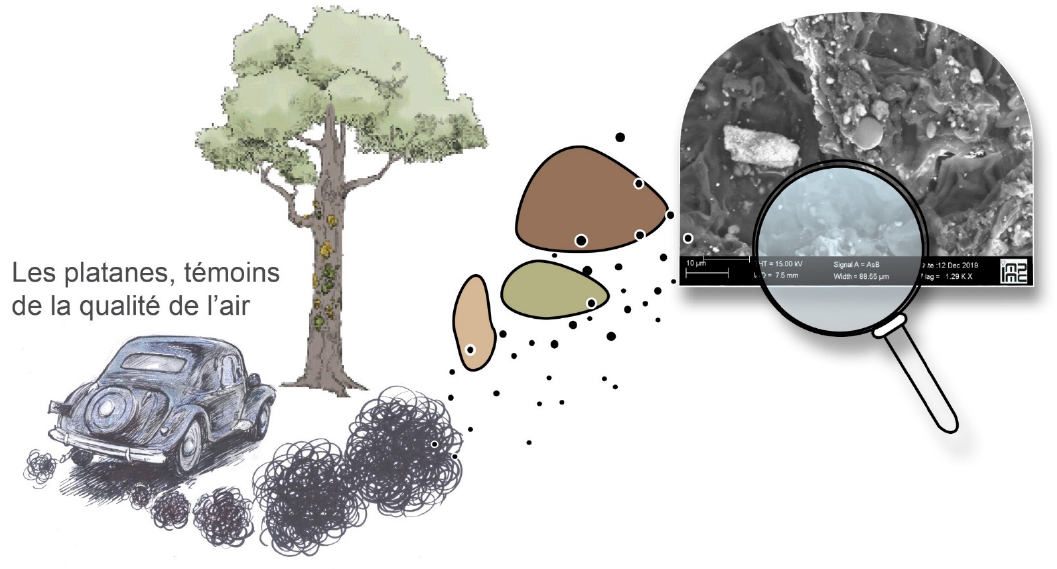
Pourquoi les platanes ?
Ces arbres sont omniprésents le long des rues et axes urbains, souvent en alignement, ce qui permet une très bonne résolution de la mesure de la pollution atmosphérique. Ils permettent un échantillonnage à hauteur de la respiration humaine. Ce sont des capteurs passifs bien plus économiques que les filtres.
Les écorces des platanes se renouvelle tous les ans, la collecte d’écorce permet alors d’avoir une valeur moyennée sur une année. Ce renouvellement annuel permet également une collecte facile sans préjudices pour les arbres et facilite l'échantillonnage. Il débute fin février - début mars.
Pour en apprendre plus sur le projet, nous vous proposons un livret de présentation.
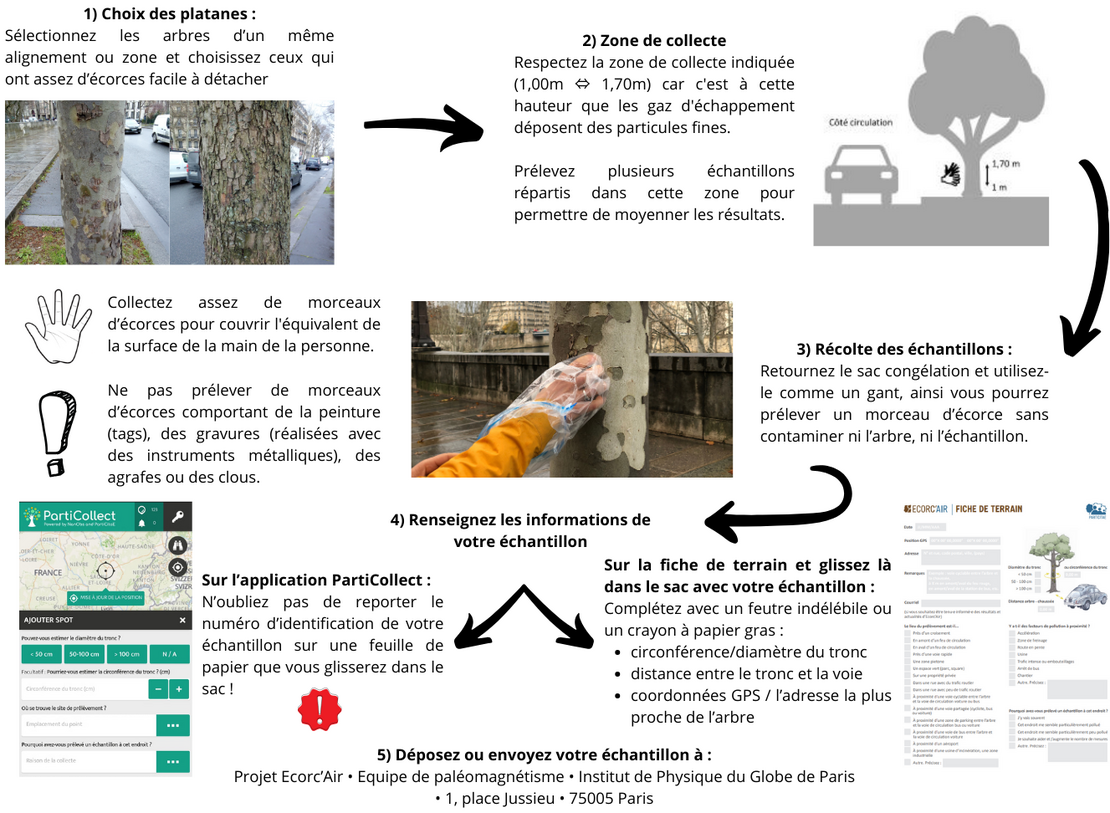
Protocole d'échantillonnage
Exploring your world with Spotteron Apps in these current times is something, you can do safely. Not only is going out into the fresh air beneficial for your health, but it is also a chance to escape the current everyday routine of staying at home most of the time.
While spotting, you can easily keep your distance to others, and you can go out into the wild without being surrounded by other people on a close quarter. But you won't be alone! In the apps, you will find a community of people like you, with an adventurous spirit, who are interested in similar topics as you.
Please stay safe - always watch your steps and take care of others. Keep the physical distance and do not put yourself at risk. But also enjoy walking out into nature and discover new things with your SPOTTERON apps.
With your contributions to the apps, you not only help important projects by making observations, but you also share what you find out there with other like-minded people. Let's explore and discover your world together!

If you want to share your experiences with the current Covid-19 crisis, please check out his app:
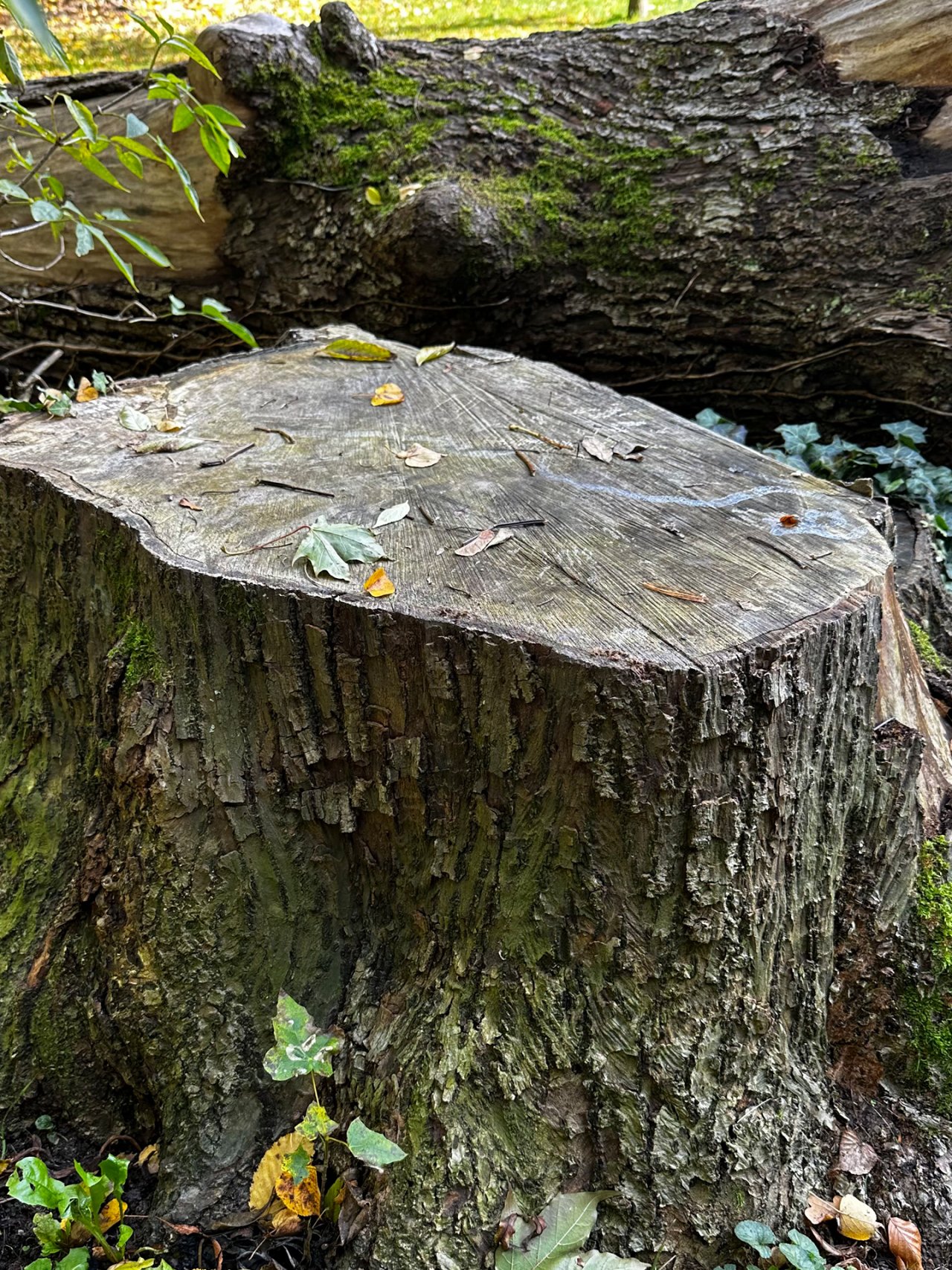
Dead tree due to disease or injury
e.g. infestation with harmful bugs, fungi or bacteria
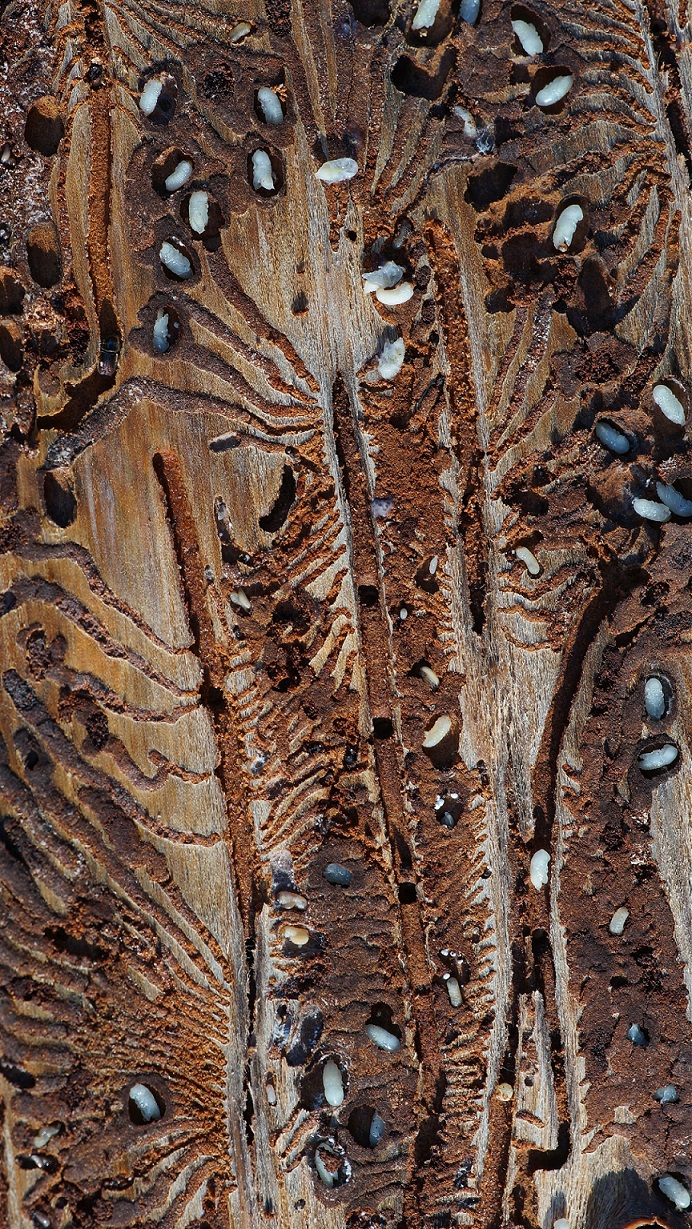
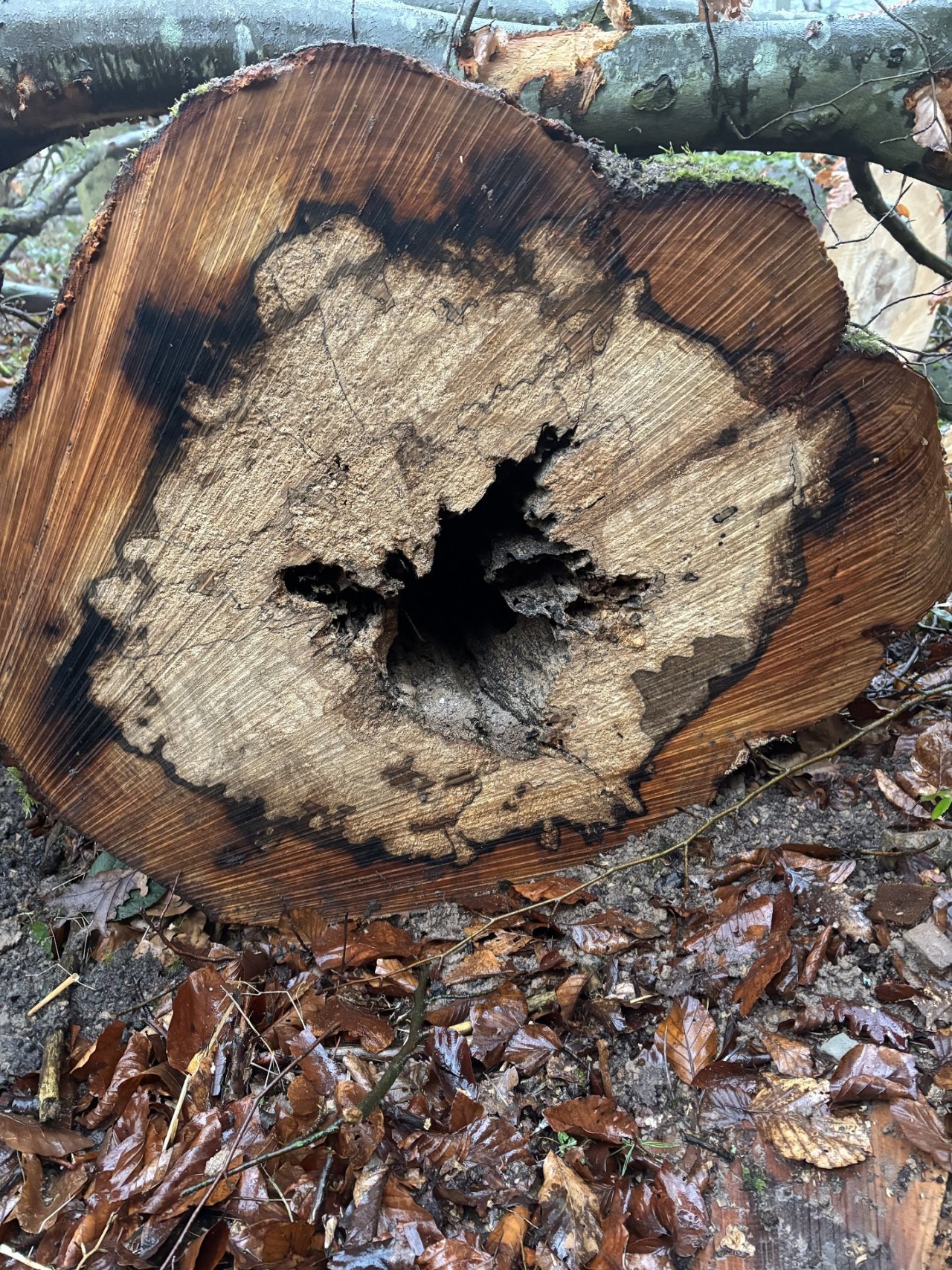
Photos: Wolfgang Schödel (1), Janina Deutschmann (2)
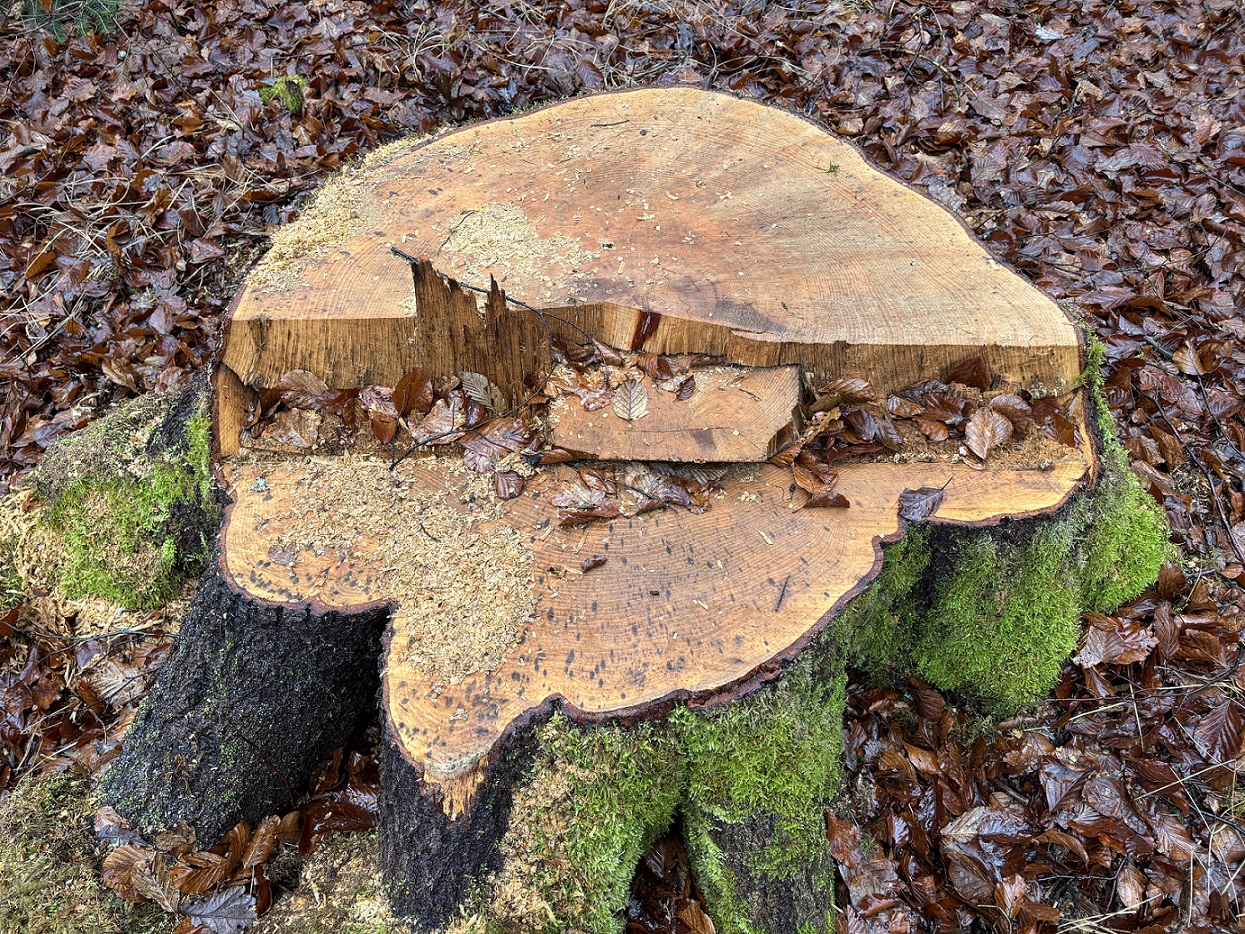
Tree killed by storm and severe weather
e.g. uprooting, toppling, splitting, lightning strike
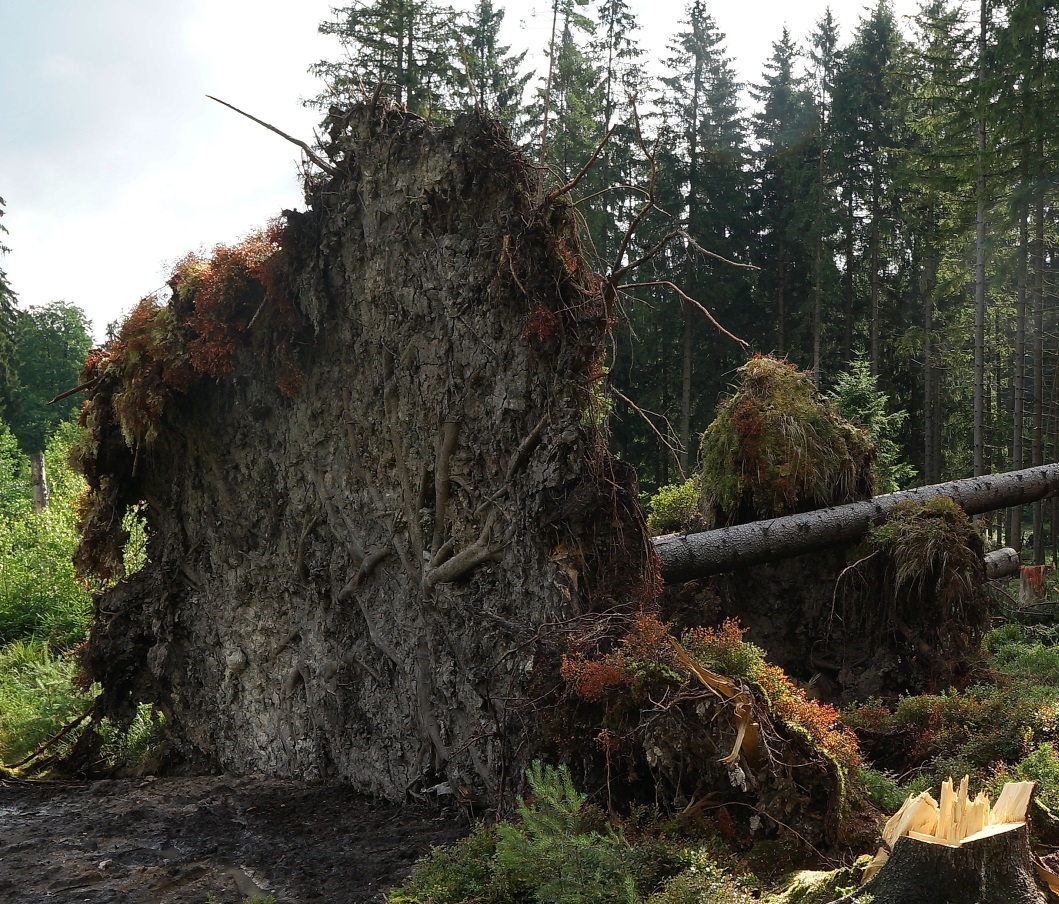
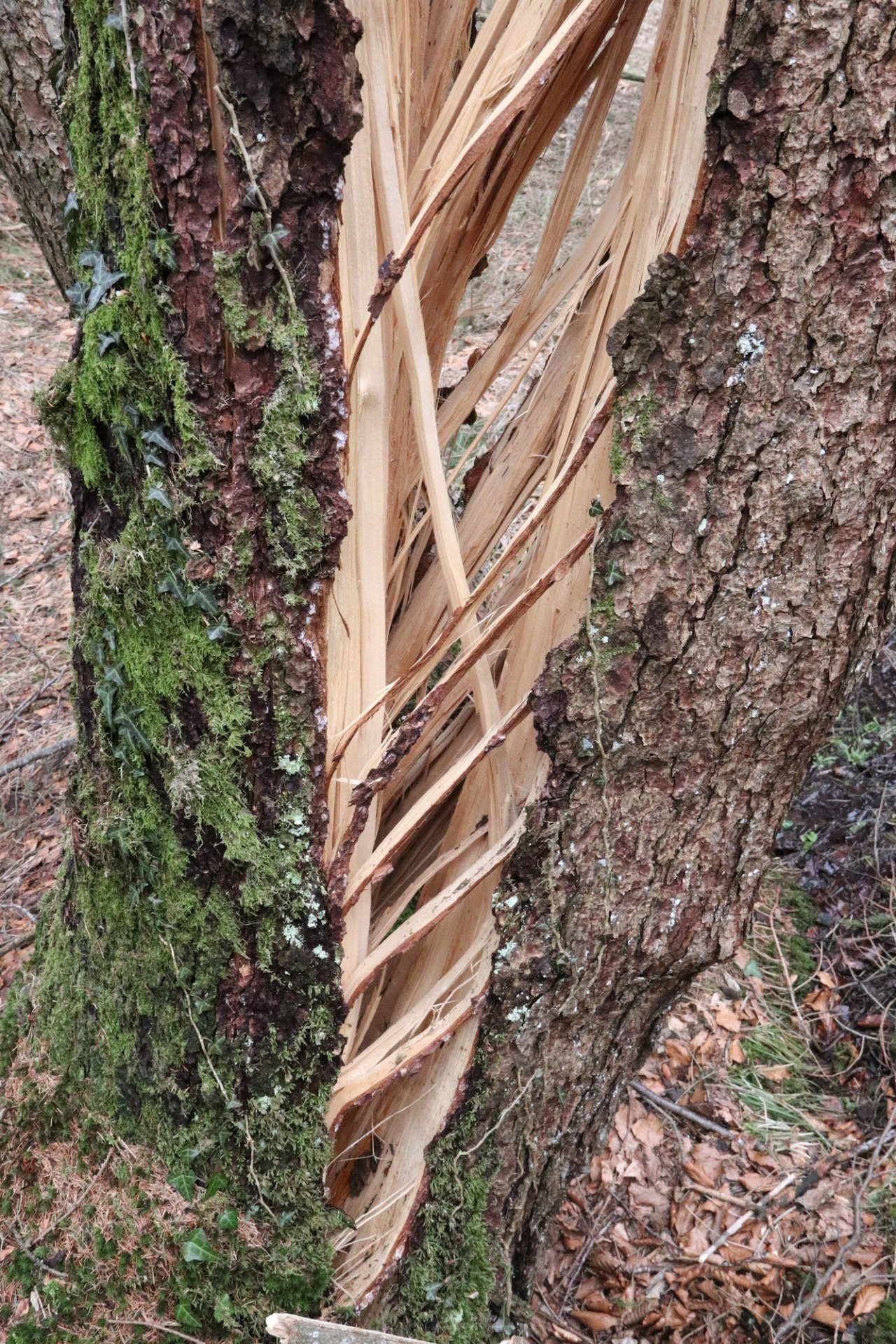
Fotos: Wolfgang Schödel (1), Sonja Kreil (2)
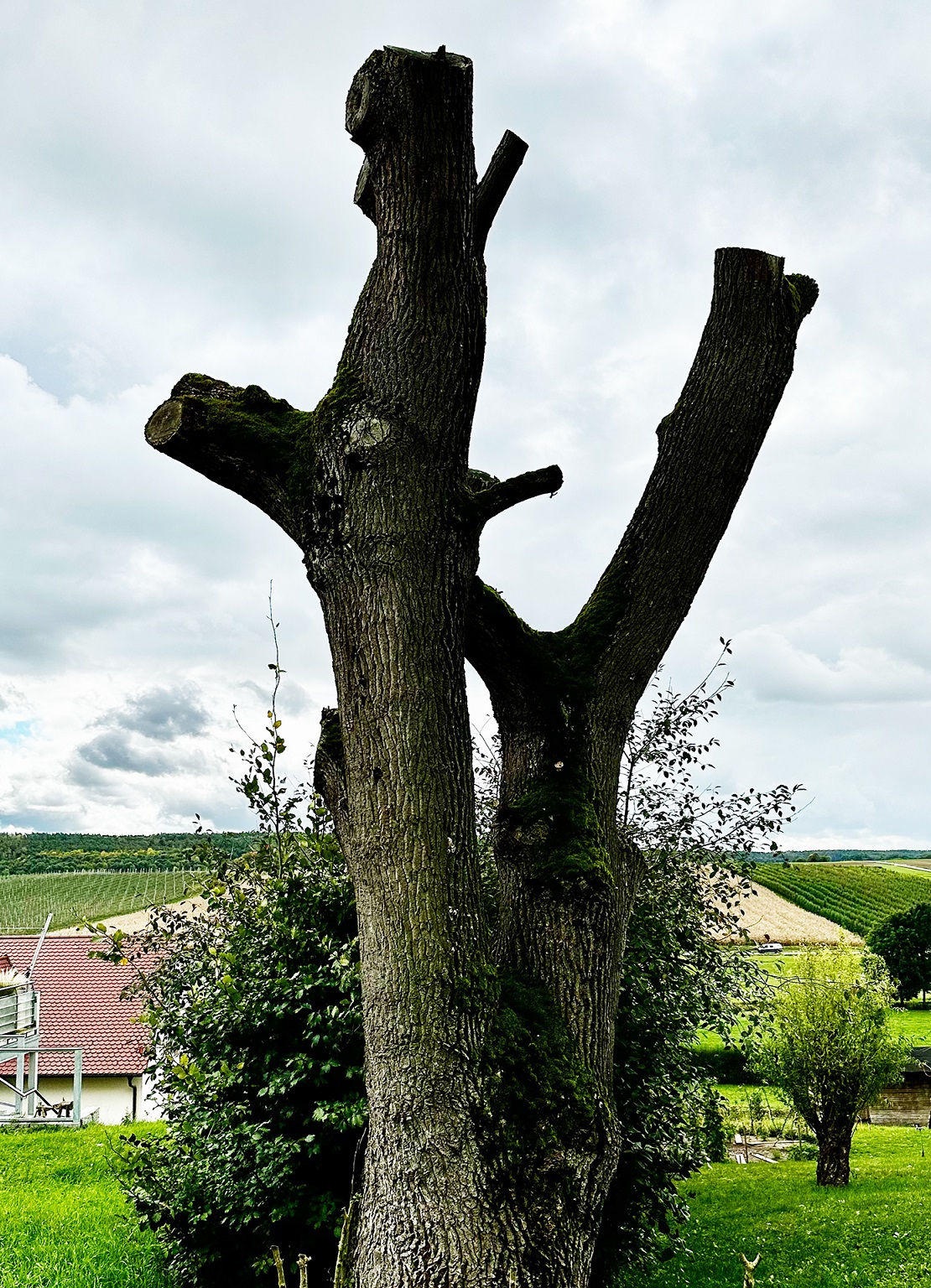
Lack of tree planting
e.g. empty tree discs, entire streets, squares without trees
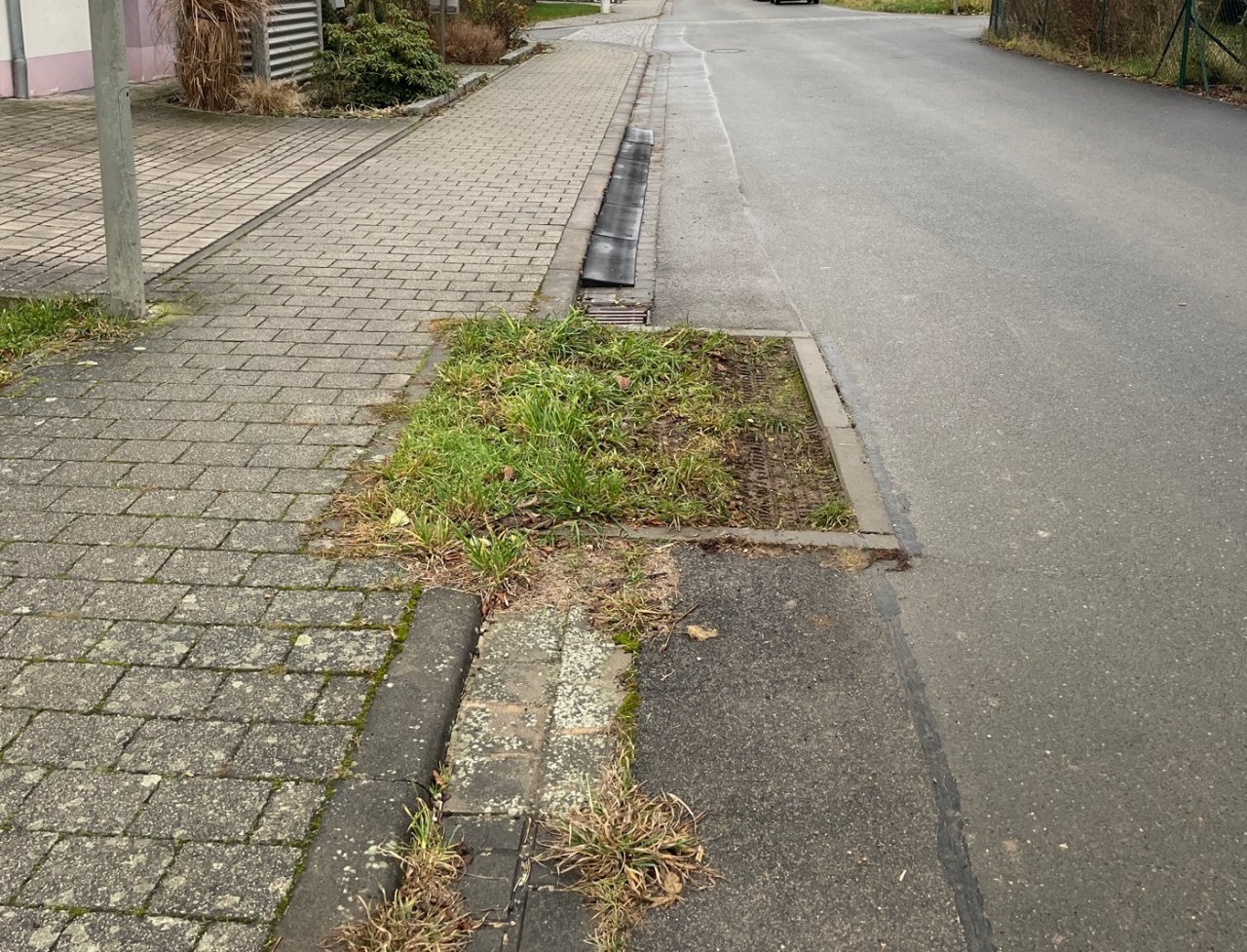
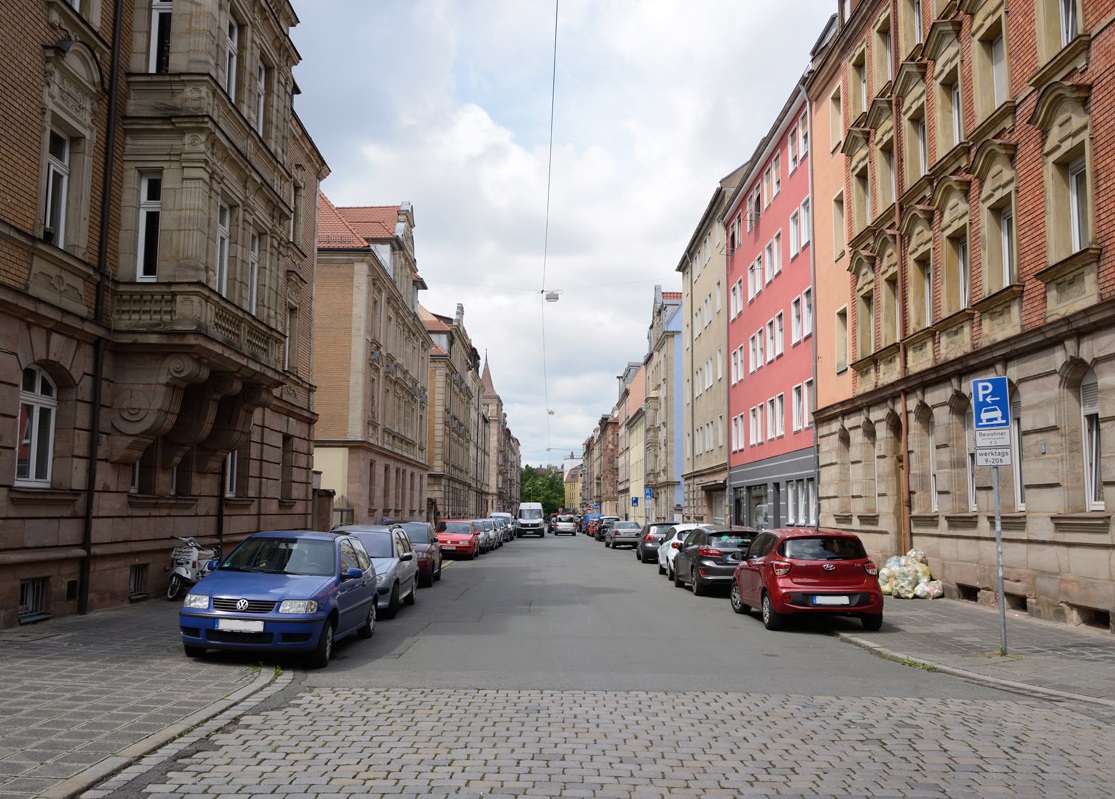
Photos: Christopher Busch (1), Thomas Stephan (2)
Dead tree due to construction sites
e.g. due to construction work in the root area, damage to the tree due to lack of root protection, soil compaction
Impact of the injury or impairment is usually delayed
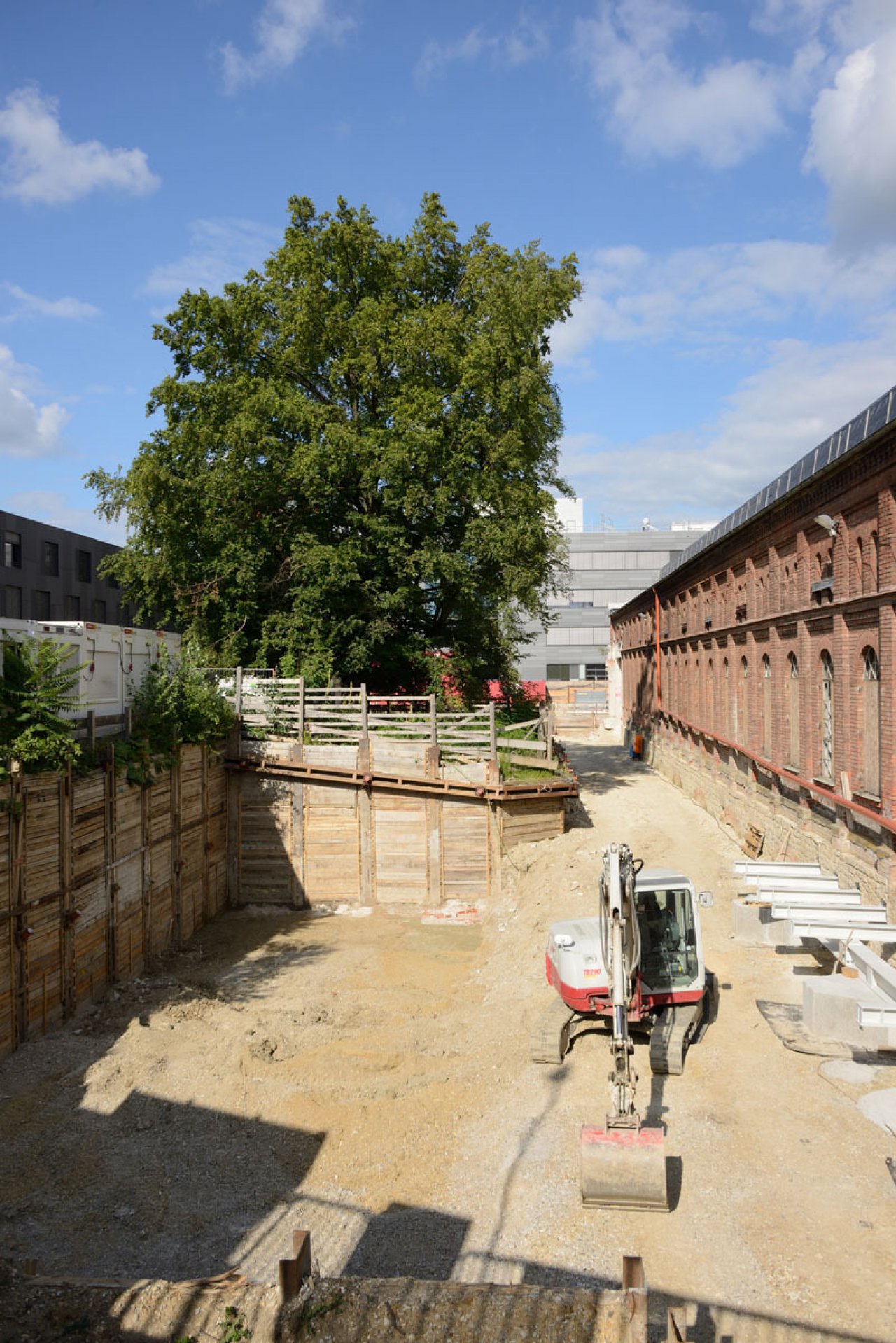
Photo: Thomas Stephan
Tilia spp.
- Height: up to 30 m
- Trunk: gray to black-brown bark, longitudinally fissured
- Leaves: heart-shaped, 3-15 cm long, angled, serrated edges (small spikes)
- Flowers: in June/July, strongly scented, insect-friendly
- Fruits/seeds: small, spherical nut fruits (approx. 5 mm) with 1 wing, stemmed
- Other: common urban tree
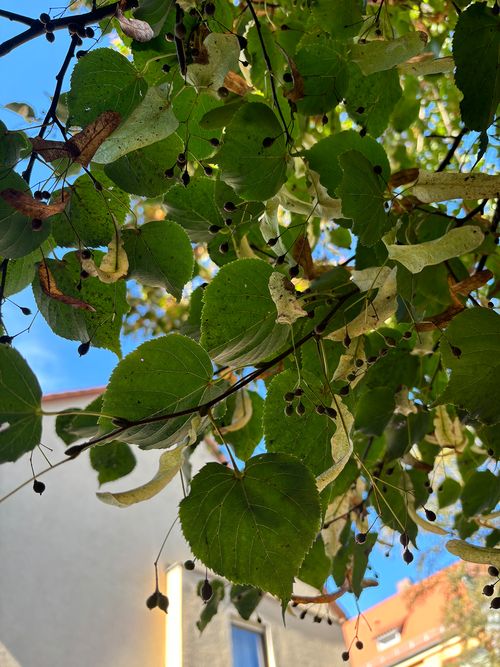
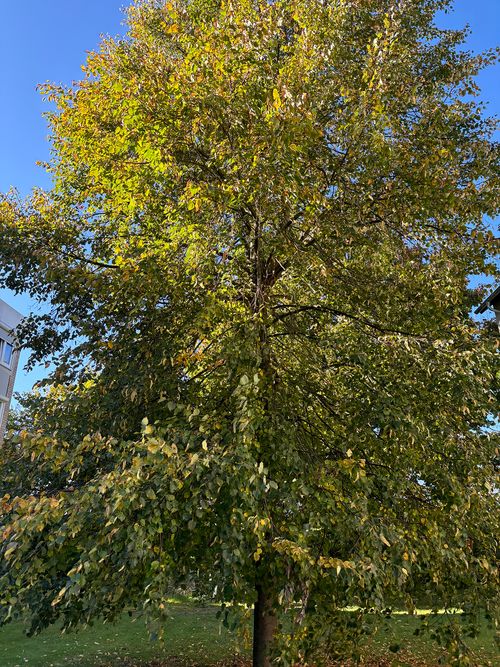
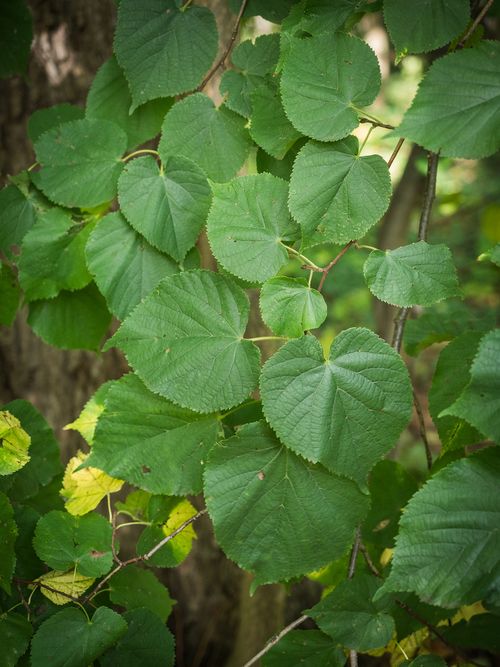
Photos: Janina Deutschmann (1,2), Kerstin Ellersdorfer (3)
Tilia cordata
- Height: up to 30 m
- Trunk: gray-brown, longitudinally cracked bark with age
- Crown: broadly spread and round, very dense and variegated with age
- Leaves: heart-shaped, 3-10 cm long, angled, finely toothed with dark green upper side, lighter underside with small tufts of dark hair in leaf vein axils
- Flowers: yellowish-white, in drooping, corymbose inflorescences, strongly scented in June/July, insect-friendly
- Fruits/seeds: small, spherical nut fruits (approx. 5 mm) with 1 wing, stemmed
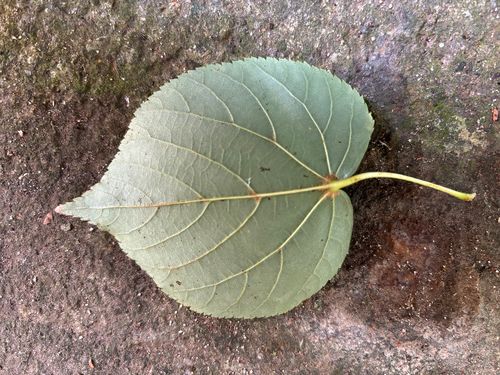
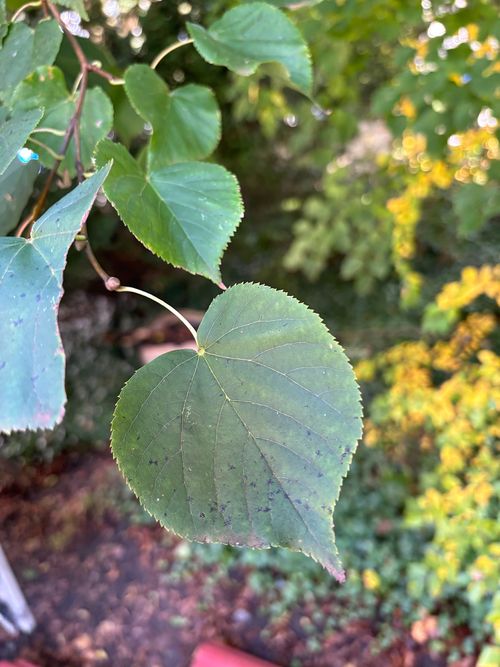
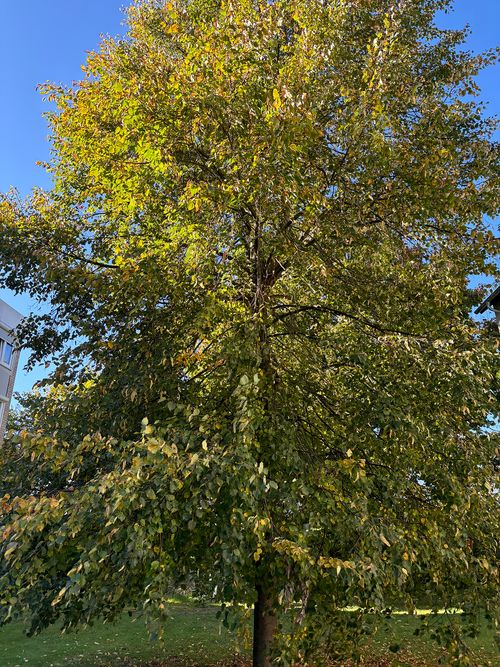
Photos: Janina Deutschmann (1,2,3)
Tilia platyphyllos
- Height: up to 30 m
- Trunk: gray to black-brown bark, longitudinally fissured
- Leaves: heart-shaped, 7-15 cm long, angled, serrated edges, upper side loosely hairy, with small tufts of white hair in leaf vein axils
- Buds: ovoid
- Flower: in June/July, strongly scented, insect-friendly
- Fruits/seeds: small, spherical nut fruits (approx. 5 mm) with 1 wing, stemmed
- Other: common urban tree
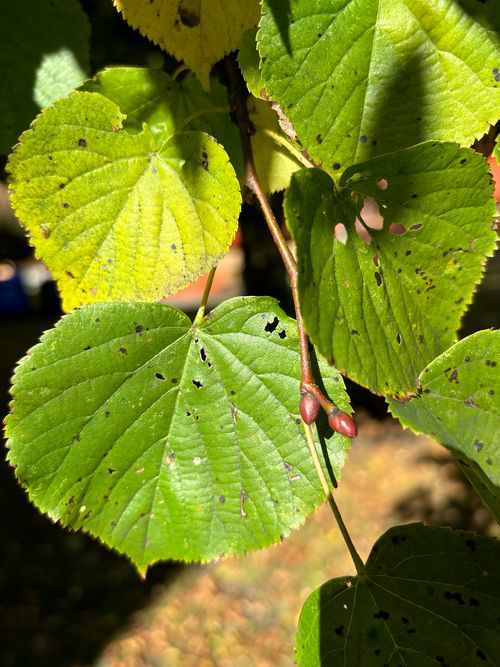
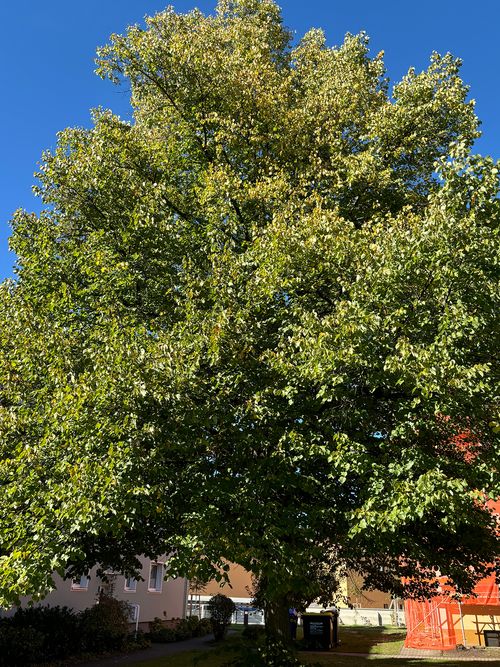
Photos: Janina Deutschmann (1,2)
Aesculus hippocastanum
- Height: up to 25 m
- Trunk: gray-brown to red-brown bark, flat, striped
- Leaves: palmate, consisting of 5-7 individual leaves, up to 25 cm long
- Buds: fawn-brown, up to 3 cm long, very sticky
- Flowers: conspicuous, large, upright flowers in May/June
- Fruits/seeds: green, spherical fruits with spines, shiny chestnut seed
- Other: common urban tree
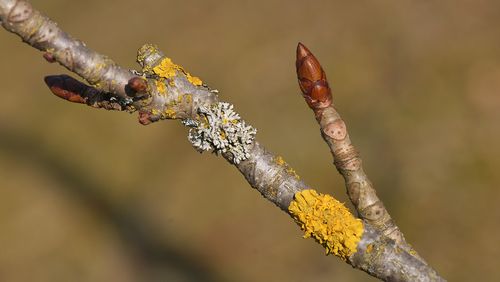
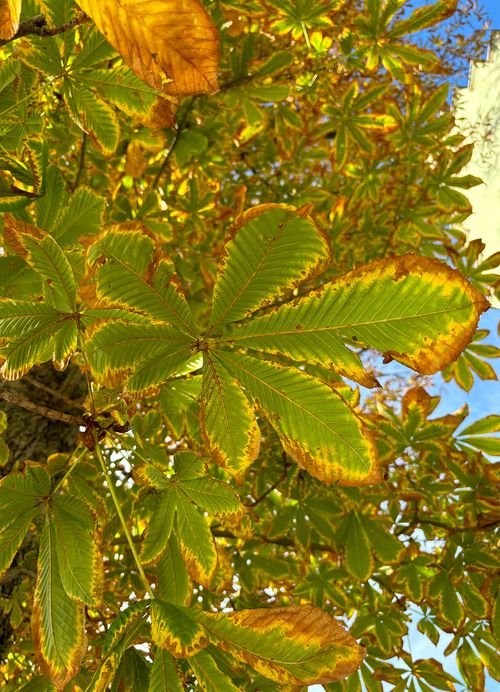
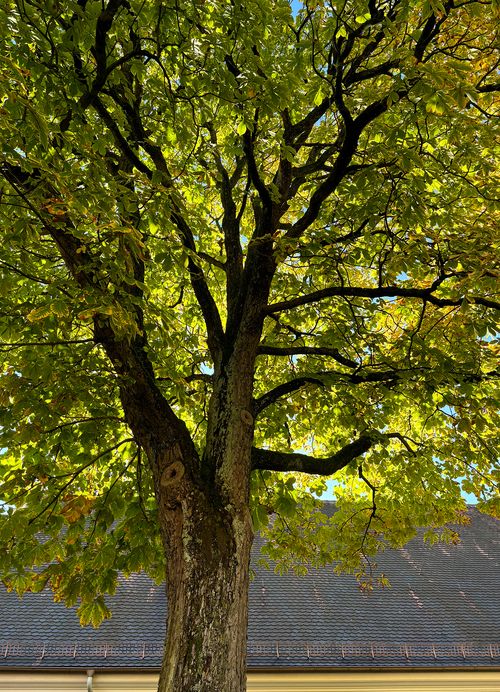
Photos: Wolfgang Schödel (1), Janina Deutschmann (2,3)
Quercus spp.
- Height: up to 30 m
- Trunk: gray-brown bark, longitudinally fissured, ribbed
- Leaves: clearly lobed, 6-17 cm long
- Buds: Light brown buds clustered at the end of the branch
- Fruit/seed: ovoid with a fruit cup
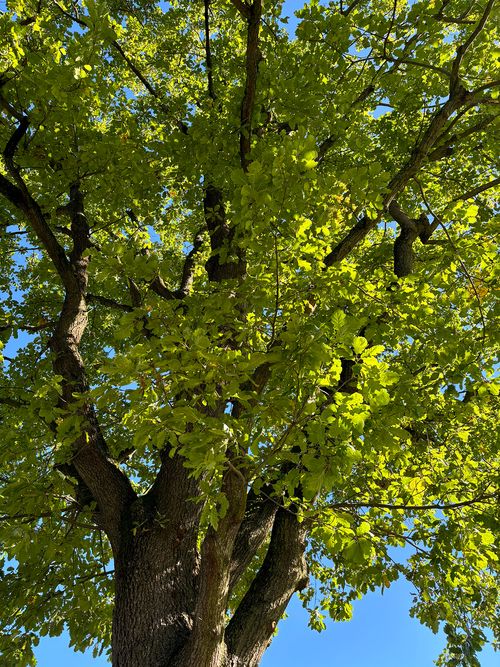
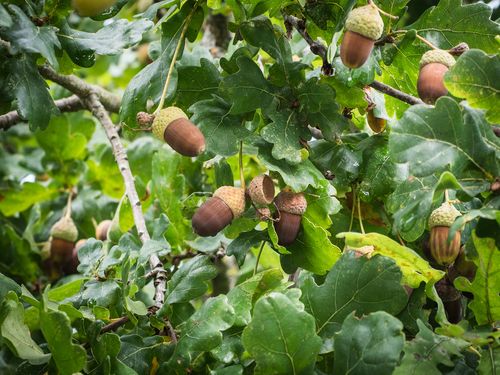
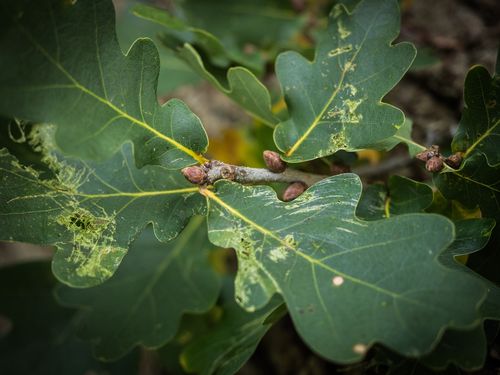
Photos: Janina Deutschmann (1), Kerstin Ellersdorfer (2,3)
Quercus robur
- Height: up to 30 m
- Trunk: already branched at the base, grey-brown bark, longitudinally fissured, deeply furrowed
- Leaves: clearly lobed, 5-15 cm long, deep green glossy upper side, with short petioles (4-8 mm)
- Buds: light brown, clustered at the end of the branch
- Fruits/seeds: ovoid fruits with small fruit cups on long stalks, arranged in clusters
- Other: very gnarled appearance with age
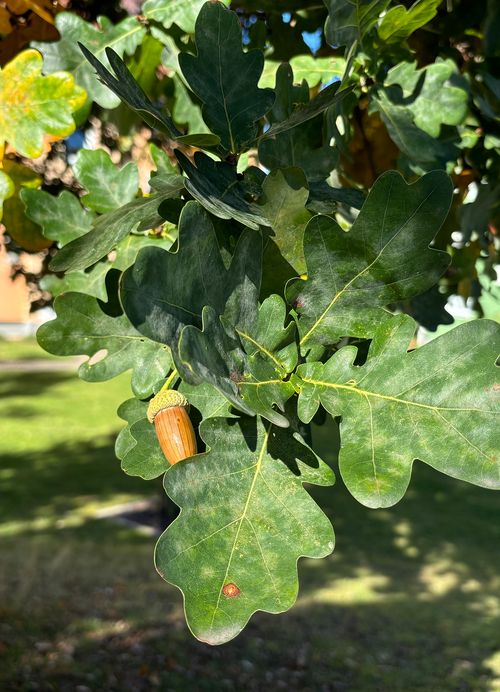
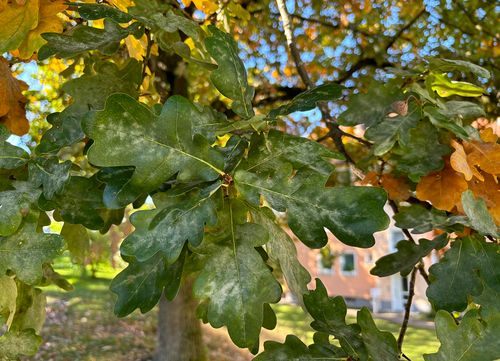
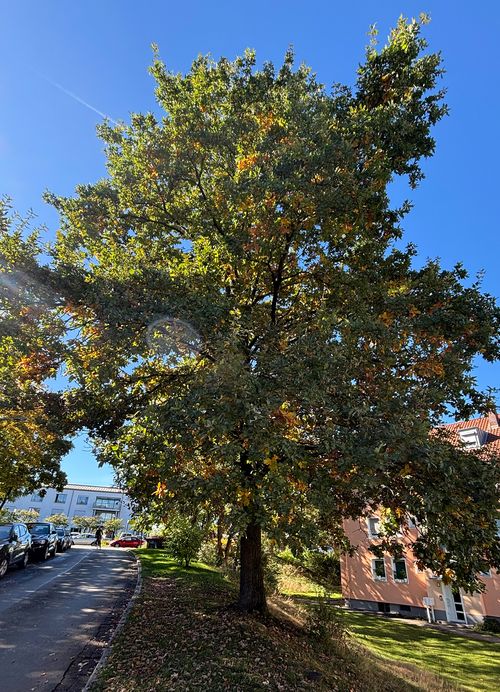
Photos: Janina Deutschmann (1,2,3)
Quercus petraea
- Height: up to 30 m
- Trunk: only branched at the top, grey-brown bark, longitudinally fissured, deeply furrowed
- Leaves: clearly lobed, 6-17 cm long, with tufts of hair on the underside, with long petioles (2-5 cm), small ears at the base of the leaves
- Buds: light brown, clustered at the end of the branch
- Fruits/seeds: ovoid fruits with small fruit cups on short stalks, clustered in groups
- Other: very gnarled appearance with age
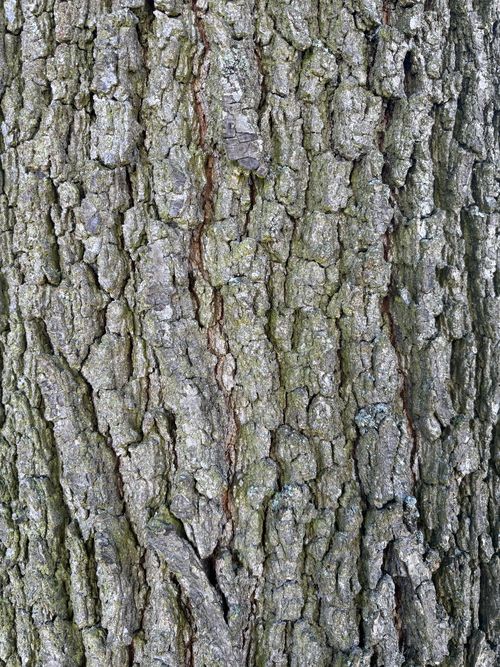
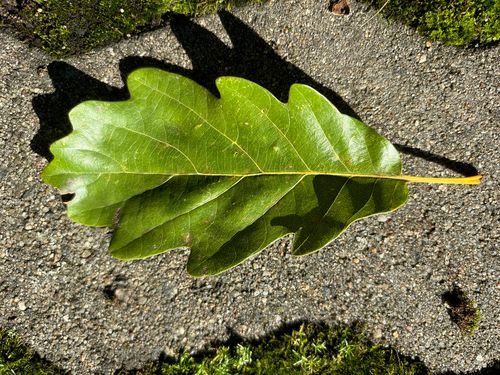
Photos: Janina Deutschmann (1,2)
Quercus rubra
- Height: up to 25 m
- Stem: grey-brown bark, smooth, only furrowed with age
- Leaves: clearly and pointedly lobed, 10-22 cm long, reddish-brown tufts of hair on the underside, with long petioles (2-5 cm)
- Buds: light brown, clustered at the end of the branch
- Fruits/seeds: spherical, compact fruits with small fruit cups on short stalks, clustered in groups
- Other: striking red autumn colouring
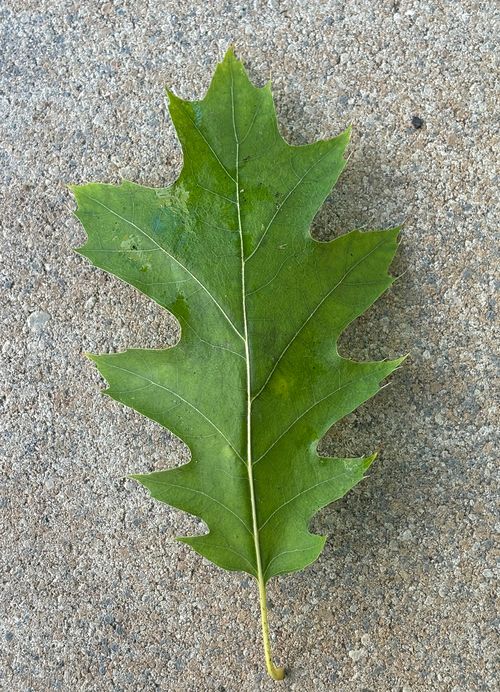
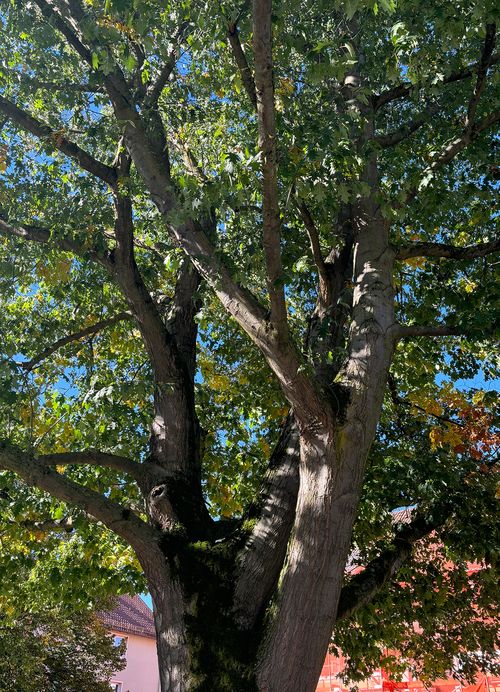
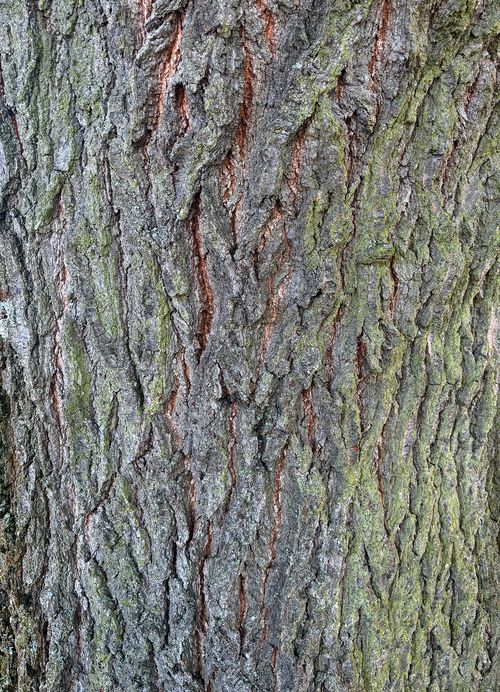
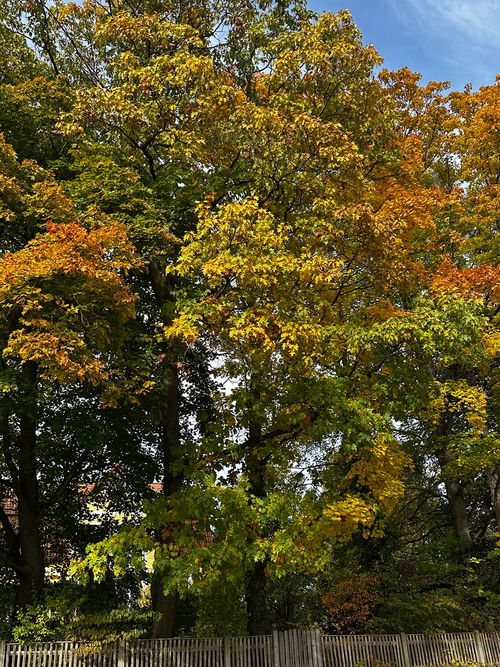
Photos: Janina Deutschmann (1,2,3), Martina Gehret (4)
Quercus cerris
- Height: up to 30 m
- Trunk: dark grey, longitudinally fissured bark
- Leaves: elongated elliptical, deeply lobed in variegated shapes, shiny dark green
- Buds: surrounded by thread-like stipules (approx. 2 cm long)
- Flowers: yellow catkins in April, bee-friendly
- Fruits/seeds: ovoid fruits with spiky fruit cups, clustered in groups
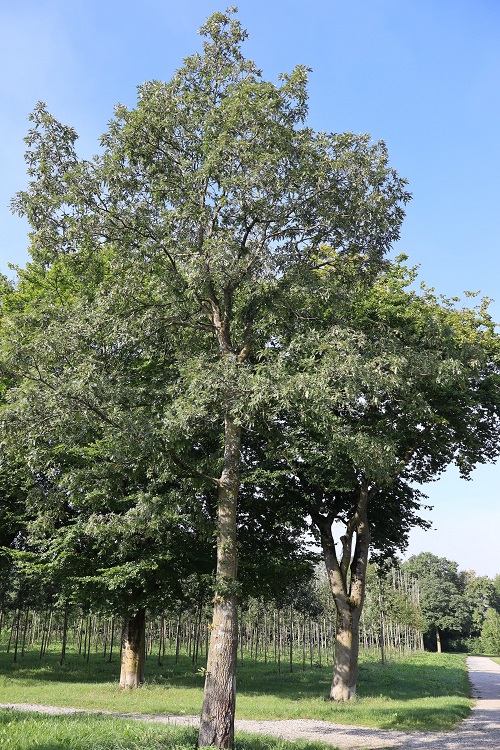
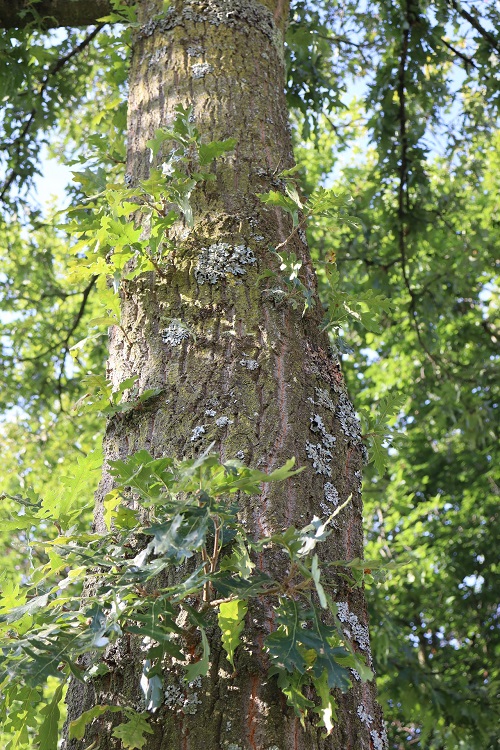
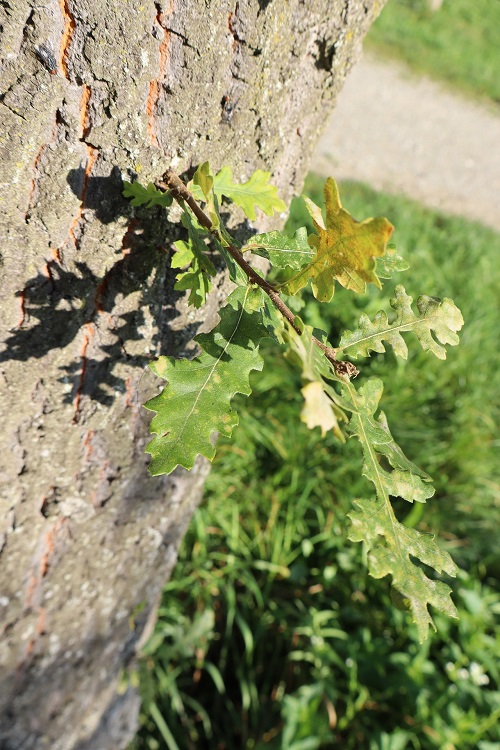
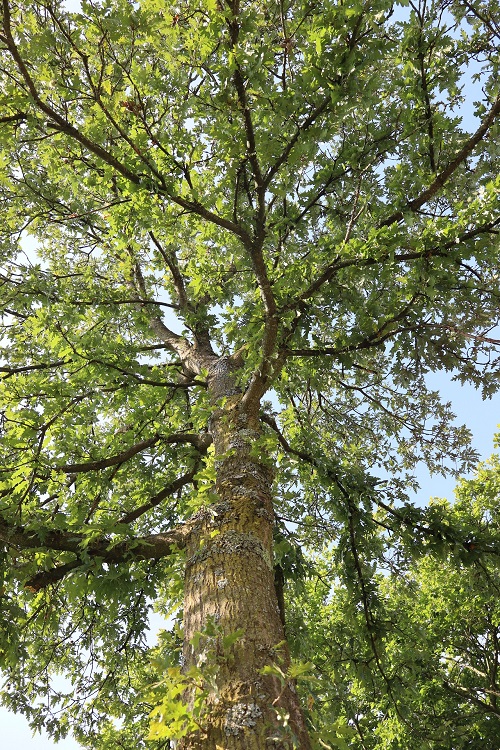
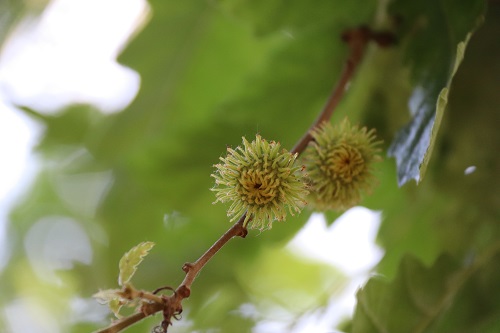
Photos: Dorit Zimmermann (1,2,3,4,5)
Platanus x hispanica
- Height: up to 30 m
- Trunk: conspicuously flat, smooth, peeling bark with clearly lighter-coloured bark underneath, ‘camouflage pattern’
- Leaves: 12-25 cm wide, 3 to 5-lobed, with a 3-10 cm long stem
- Fruits/seeds: spherical, hanging on long stems
- Other: cross between American and Oriental plane tree
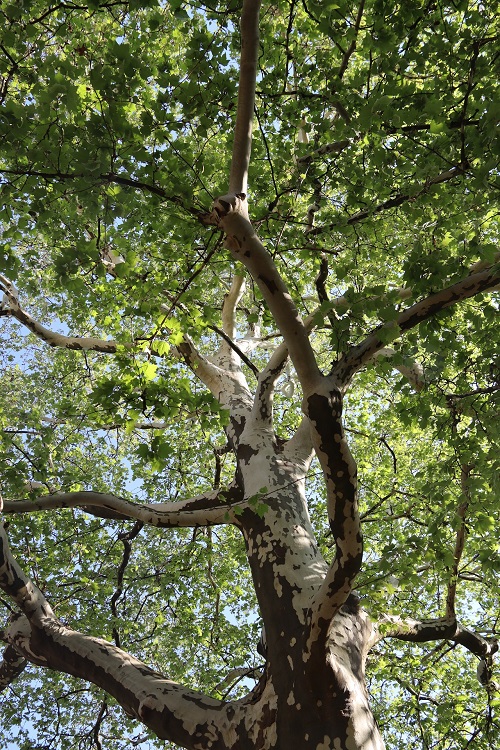
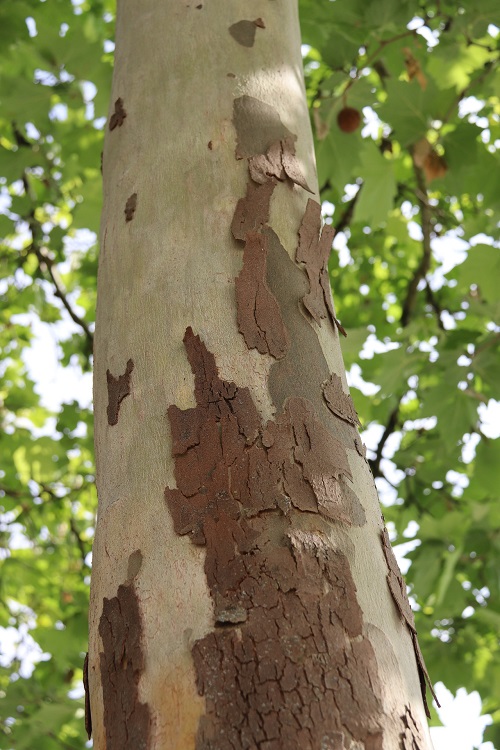
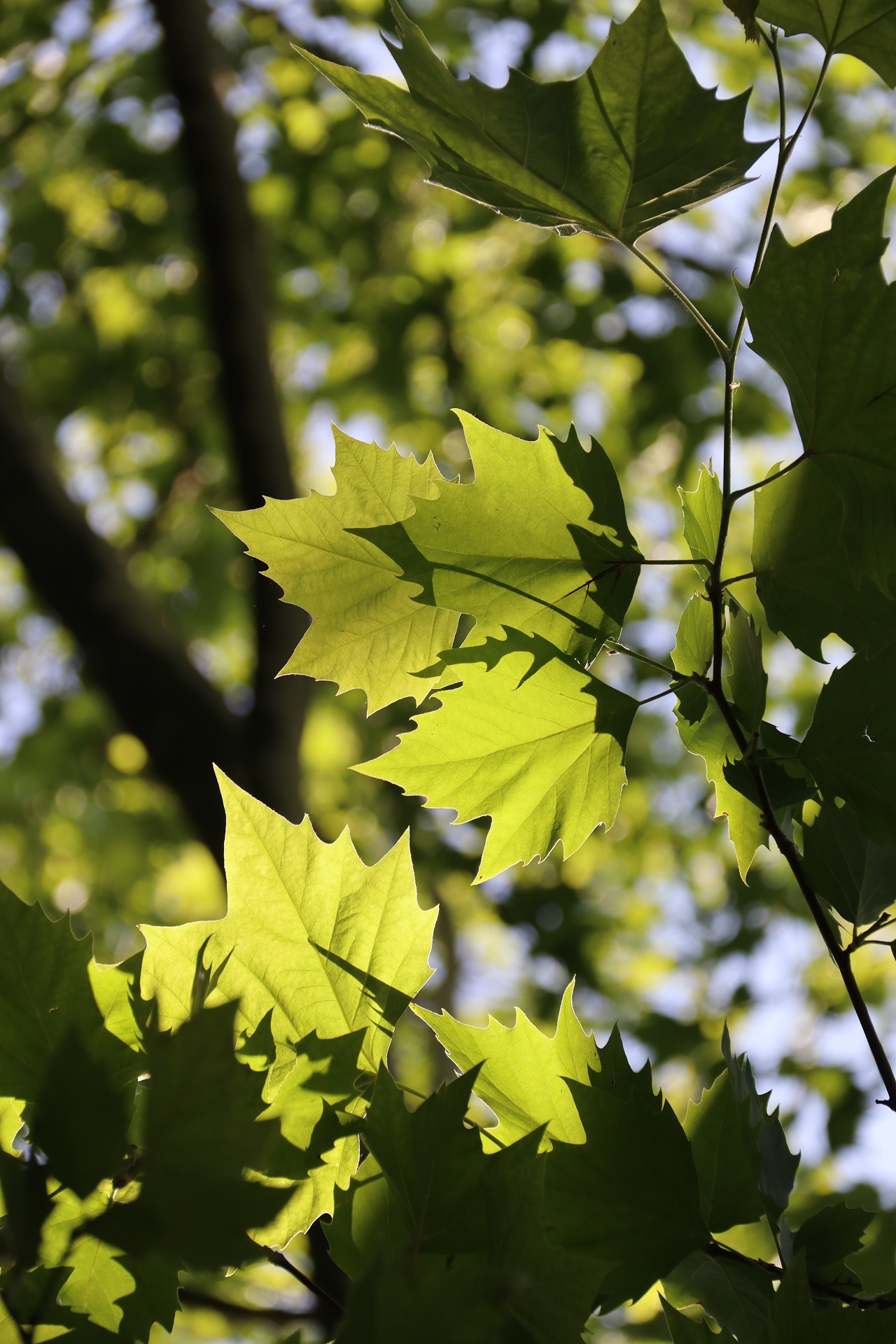
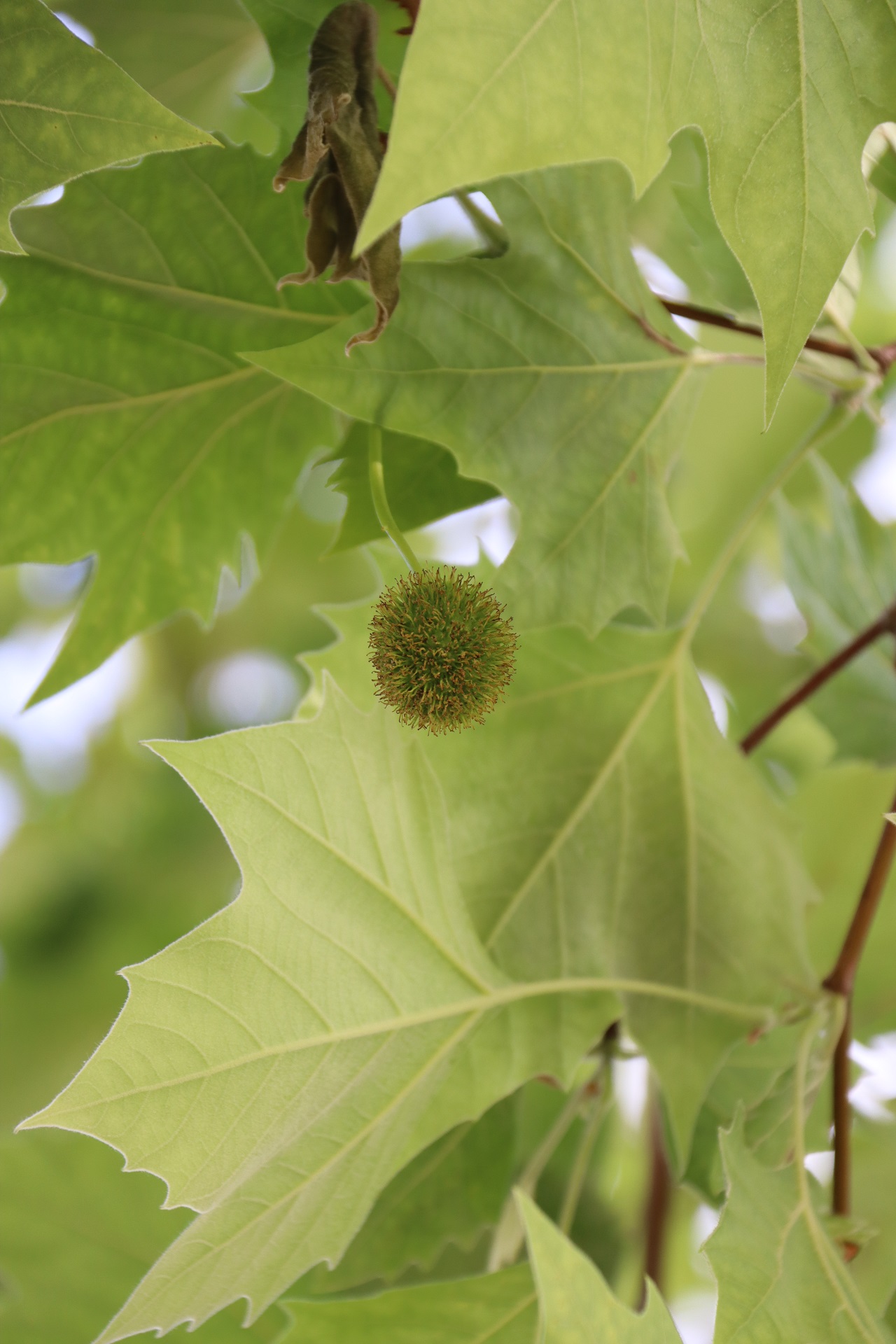
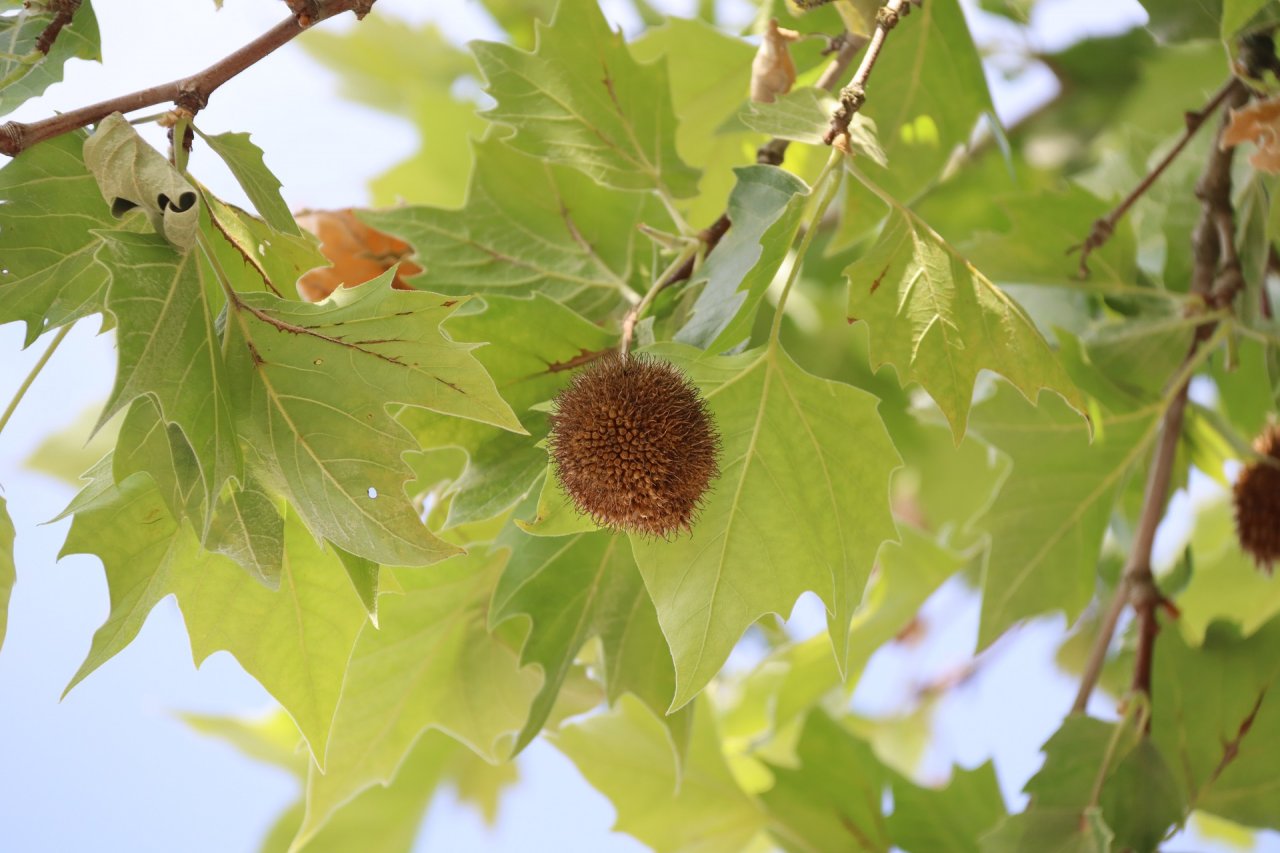
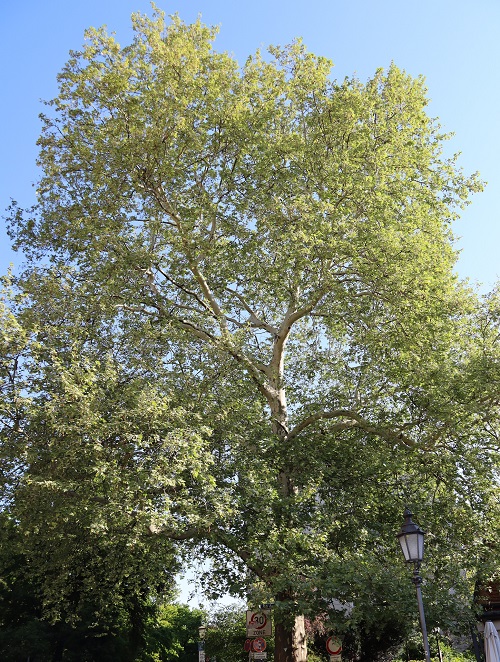
Photos: Dorit Zimmermann (1,2,3,4,5,6)
Robinia pseudoacacia
- Height: up to 25 m
- Trunk: deeply longitudinally fissured, gray to dark brown bark
- Leaves: pinnate, alternate leaves with smooth edges, 20-30 cm long, with stipules
- Flowers: striking white butterfly flowers hanging down in clusters, strongly scented, insect-friendly
- Fruits/seeds: 5-10 cm long pods, remain on tree for a long time
- Other: common urban tree, nitrogen-enriching
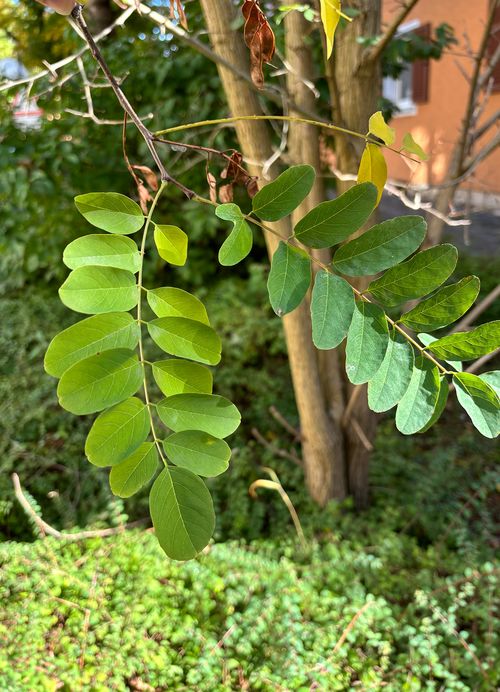
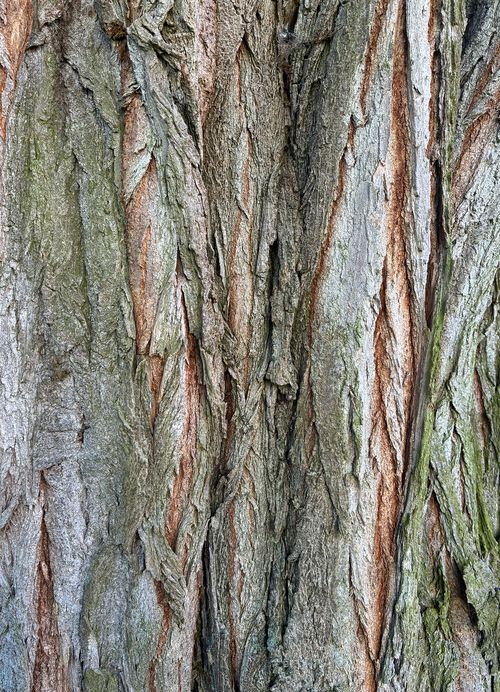
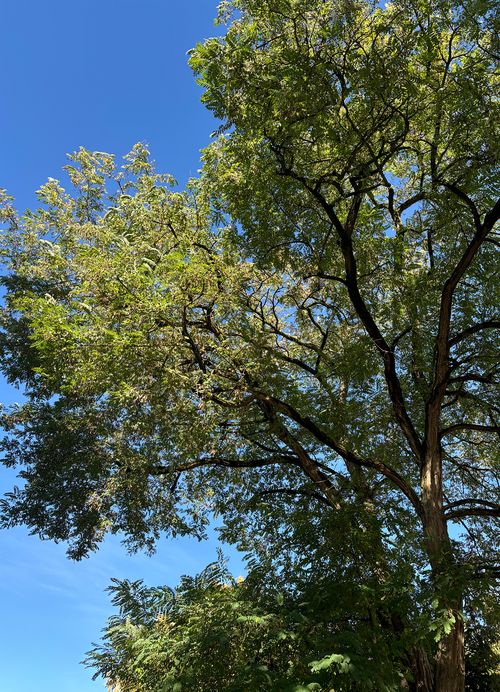
Photos: Janina Deutschmann (1,2,3)
Betula spp.
- Height: up to 20 m
- Crown: usually narrow
- Trunk: strikingly white (betulin), smooth bark, cracks and darkens with age
- Leaves: diamond-shaped to triangular, ovate, 4-7 cm long
- Fruits/seeds: elongated catkins
- Other: very thin, fine twigs, often drooping
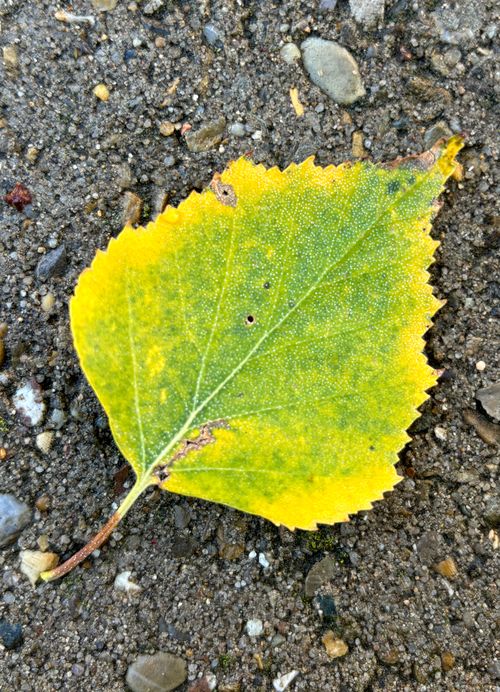
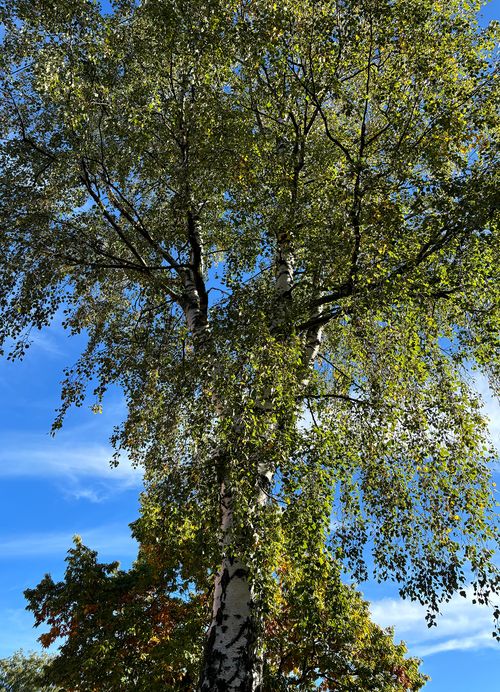
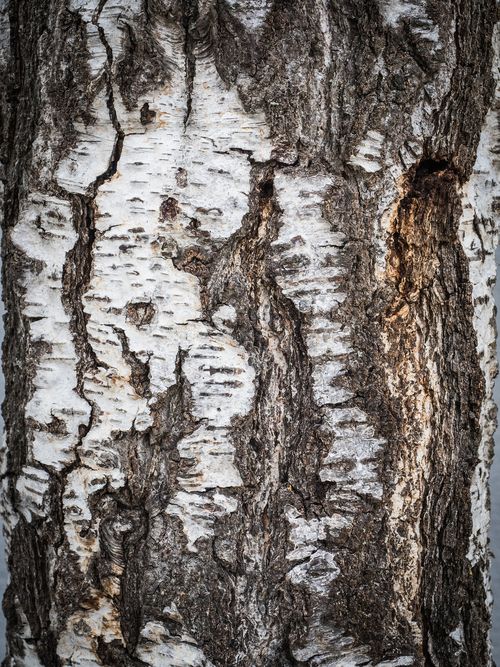
Photos: Janina Deutschmann (1,2), Kerstin Ellersdorfer (3)
Betula pendula
- Height: up to 20 m
- Trunk: strikingly white (betulin), smooth bark, cracking and darkening with age
- Leaves: diamond-shaped to triangular, 4-7 cm long, hairless
- Fruits/seeds: 2-3 cm long catkins
- Other: overhanging branches, covered with small cork warts
Photos: Janina Deutschmann (1,2), Kerstin Ellersdorfer (3)
Betula pubescens
- Height: up to 20 m
- Trunk: strikingly white (betulin), smooth bark, cracking and darkening with age, reddish in colour
- Leaves: broadly ovate, 4-6 cm long, hairy on top and underneath
- Fruits/seeds: 2-3 cm long catkins
- Other: overhanging densely hairy branches
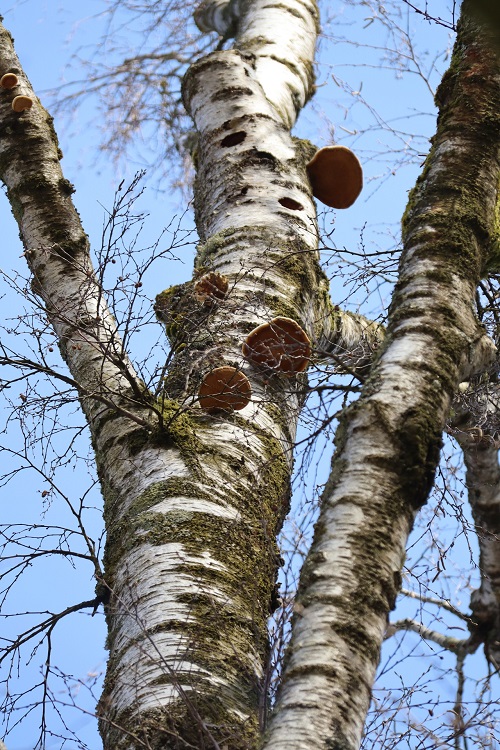
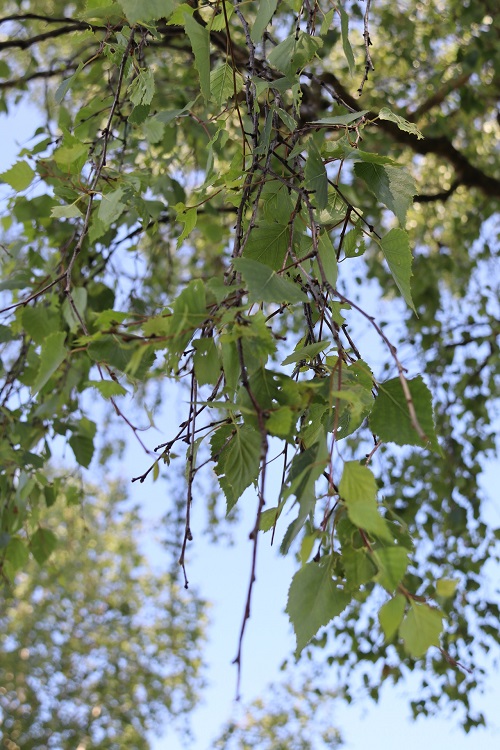
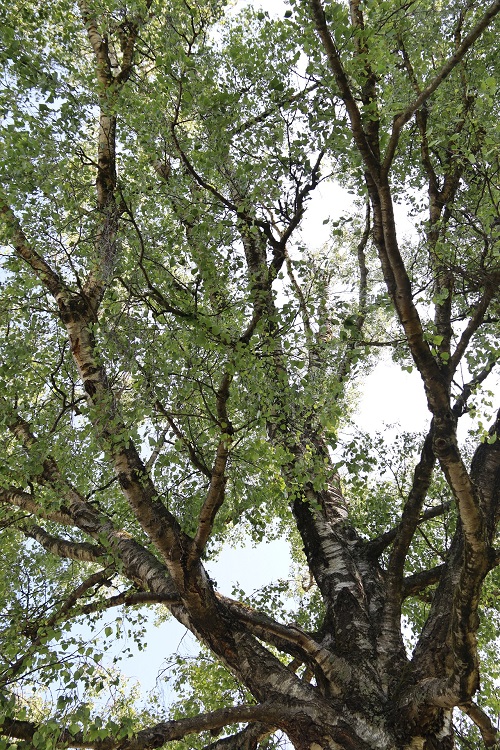
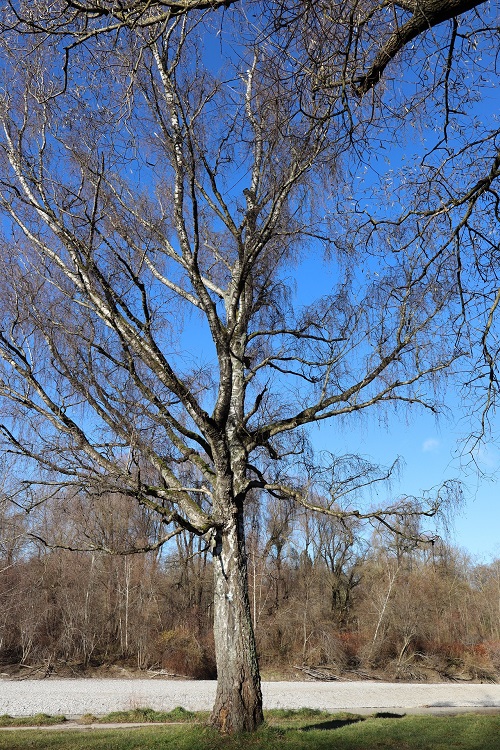
Photos: Dorit Zimmermann (1,2,3,4)
Carpinus betulus
- Height: up to 20 m
- Trunk: smooth bark, often deeply furrowed with age, twisted growth
- Leaves: ribbed surface, double serrated at the leaf edge (large and small serrations)
- Buds: fawn-brown with light-coloured edges on the individual bud sheds
- Fruits/seeds: conspicuous seed clusters
- Other: very tolerant to pruning, therefore also found as a hedge or topiary
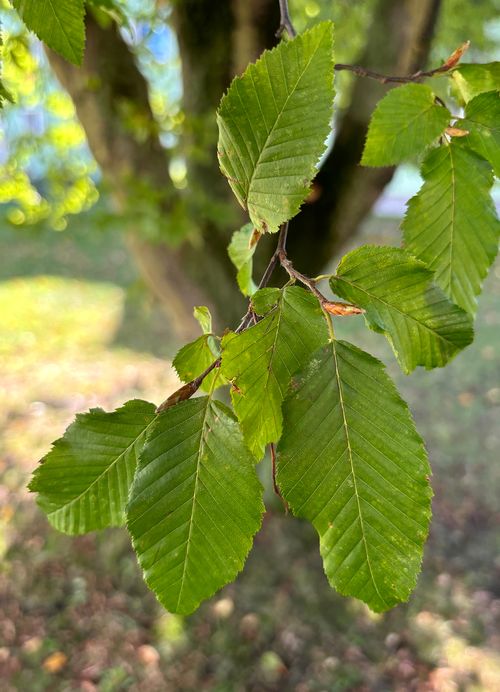
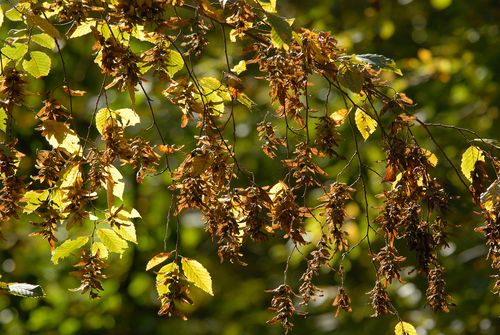
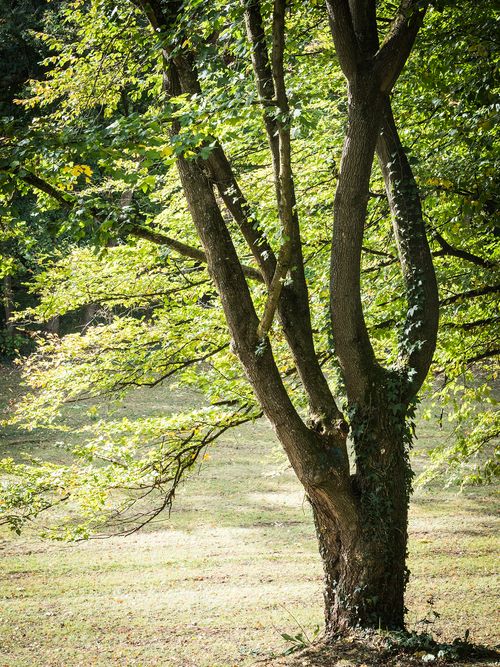
Photos: Janina Deutschmann (1), Thomas Stephan (2), Kerstin Ellersdorfer (3)
Fraxinus excelsior
- Height: up to 30 m, exceptions up to 40 m
- Trunk: grey to olive green bark when young, finely furrowed with age
- Leaves: opposite, odd-pinnate leaves, 20-40 cm long, consisting of individual leaflets (7-13)
- Buds: large buds, with black felt-like hairs
- Fruits/seeds: winged fruits in clusters
- Other: common disease ash dieback, recognisable by dying branches, starting in the crown
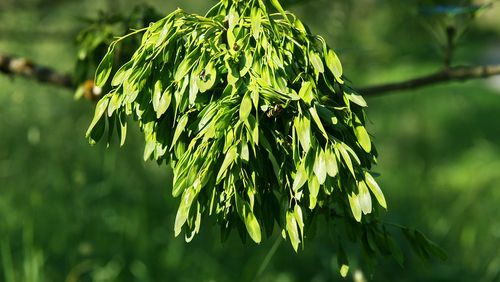
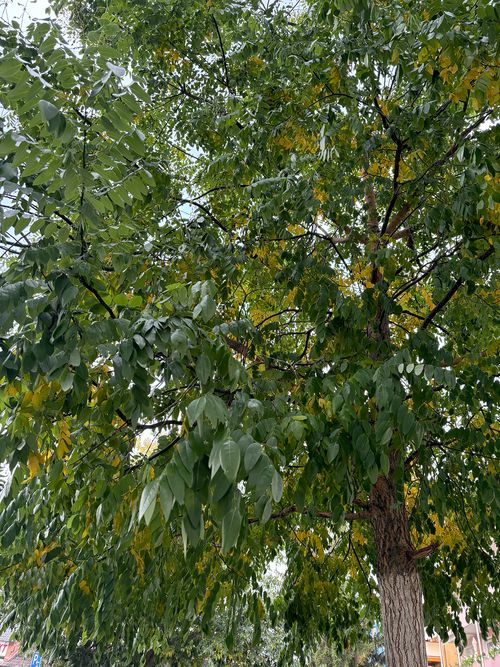
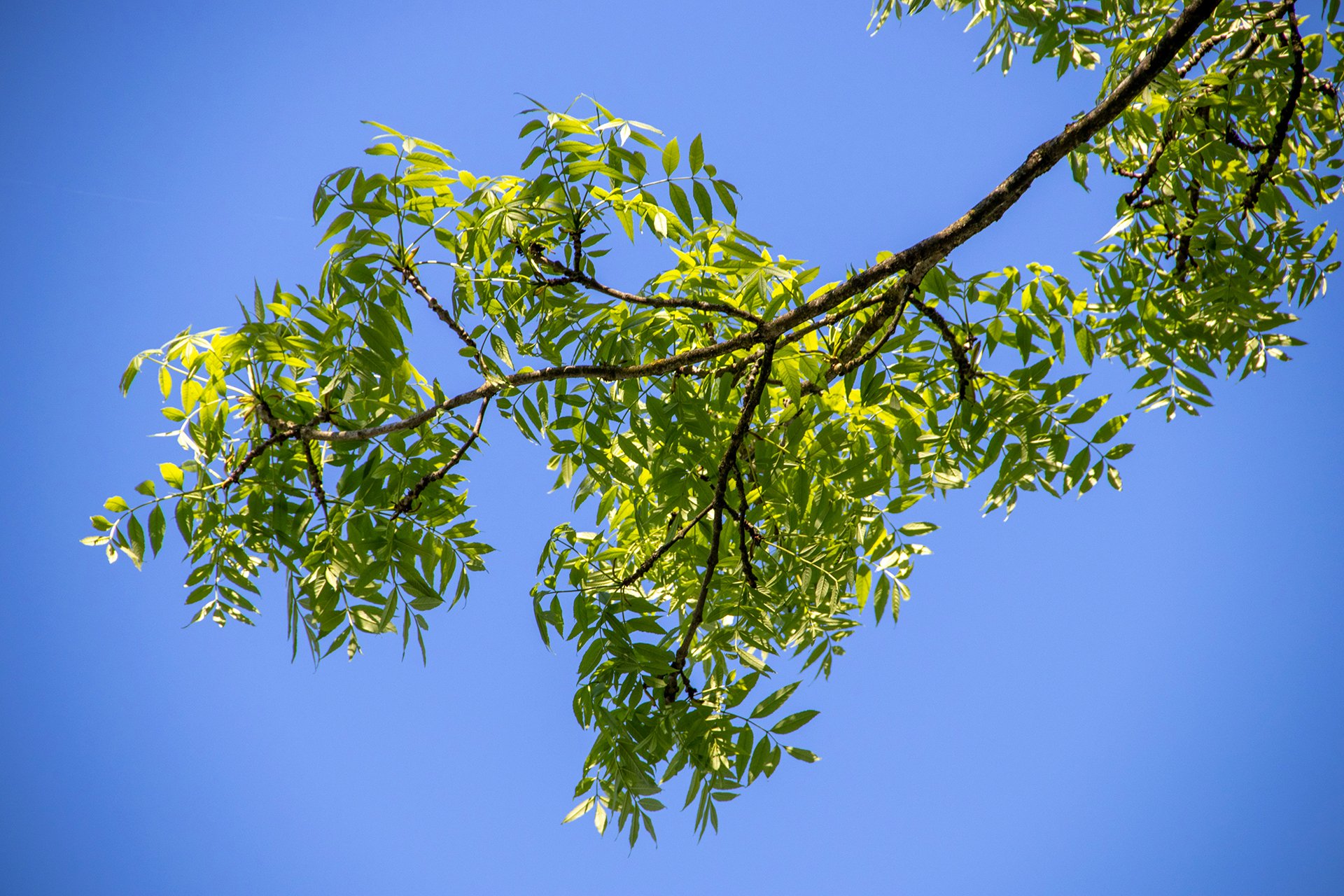
Photos: Wolfgang Schödel (1), Janina Deutschmann (2), Sonja Kreil (3)
Populus spp.
- Height: up to 30 m
- Stem: grey, dark bark
- Leaves: mostly heart-shaped or triangular with long petioles
- Flowers: drooping catkins
- Fruits/seeds: Capsules containing many small, hairy seeds (wind dispersal)
- Other: fast-growing deciduous tree that belongs to the willow family
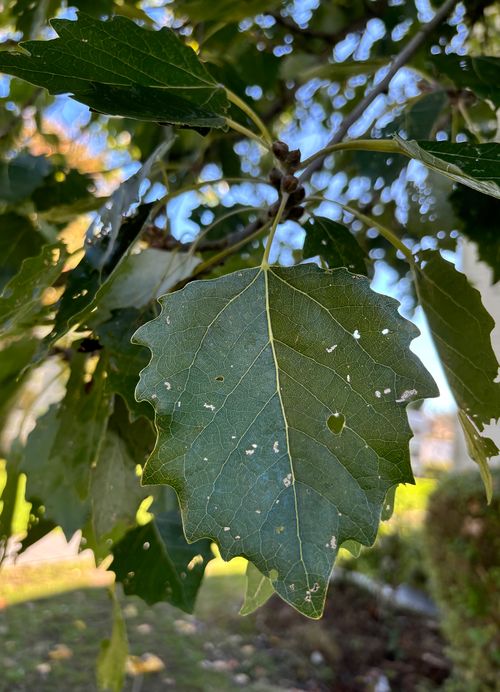
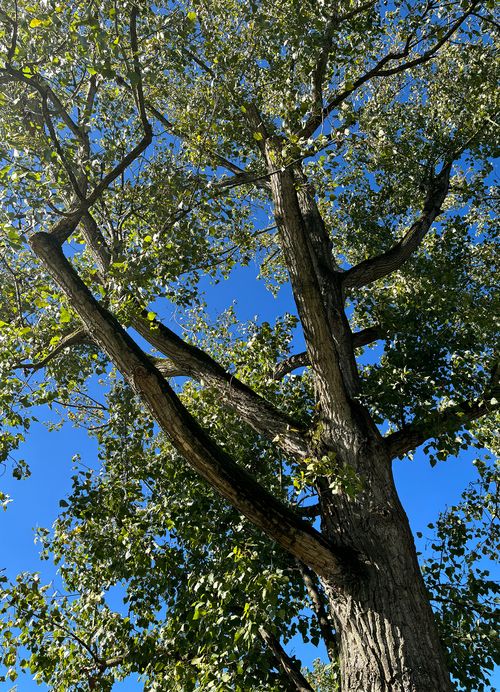
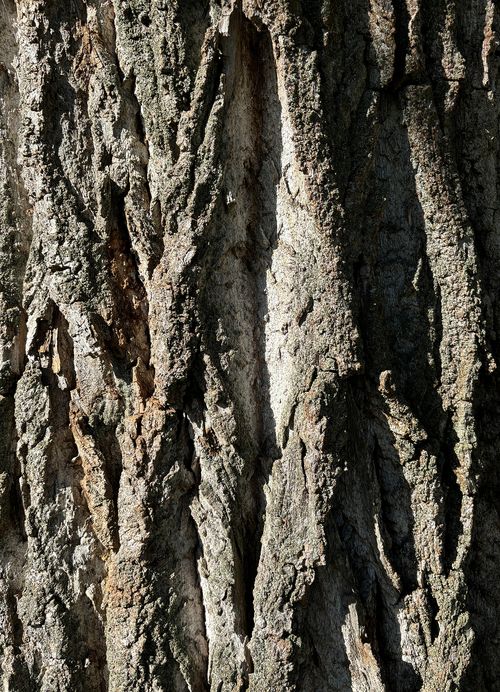
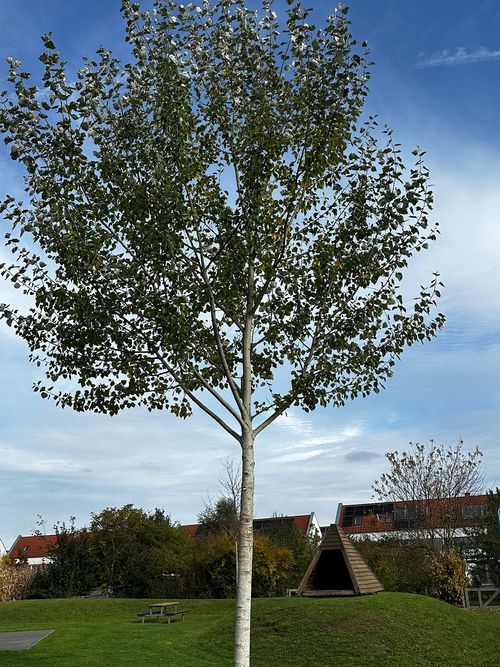
Photos: Janina Deutschmann (1,2,3), Martina Gehret (4)
Populus nigra ‘Italica‘
- Height: up to 25 m
- Trunk: grey bark, deeply longitudinally fissured
- Crown: narrow, columnar
- Leaves: triangular to diamond-shaped, with fine serrated edges, 5-12 cm long, on flattened stem
- Flowers: drooping, red catkins in March/April before leaves emerge
- Other: frequent urban tree, cultivated from native black poplar
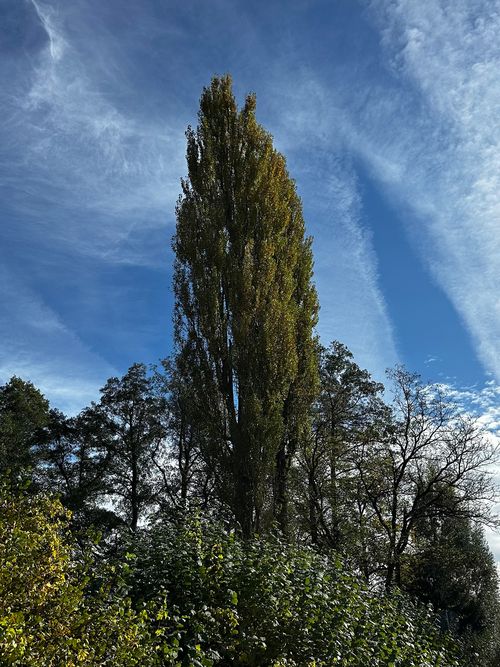
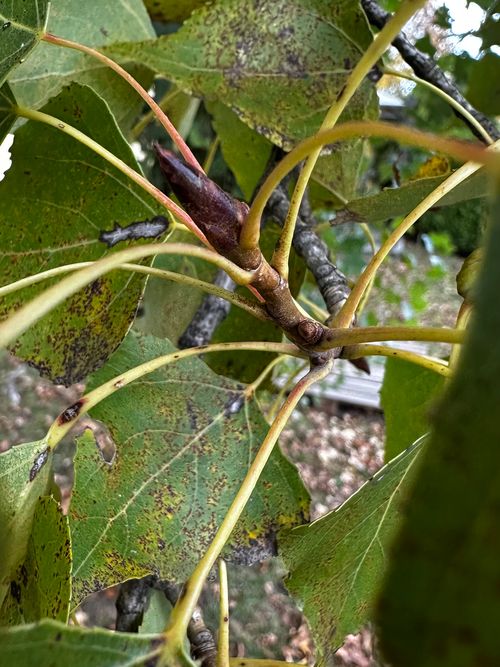
Photos: Martina Gehret (1,2)
Populus x canadensis
- Height: up to 30 m, fast-growing
- Trunk: grey bark
- Crown: forms widely spreading crowns
- Leaves: triangular to rhombic, 7-10 cm long, serrated margins, flattened, reddish petiole
- Flowers: long catkins in March/April before leaves emerge
- Other: hybrid of Populus nigra and Populus deltoides
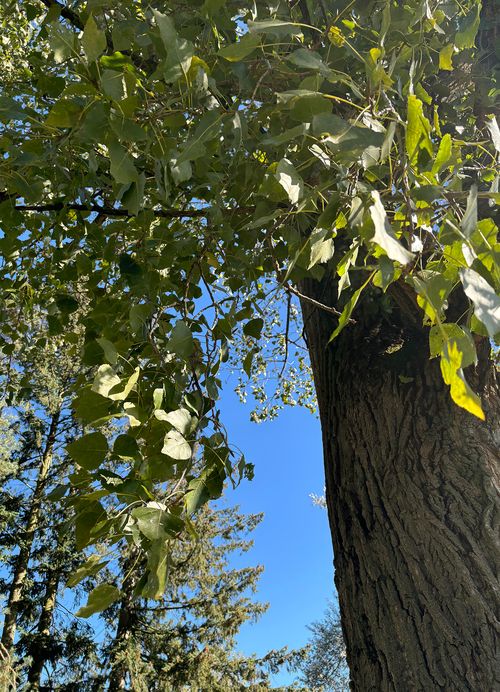
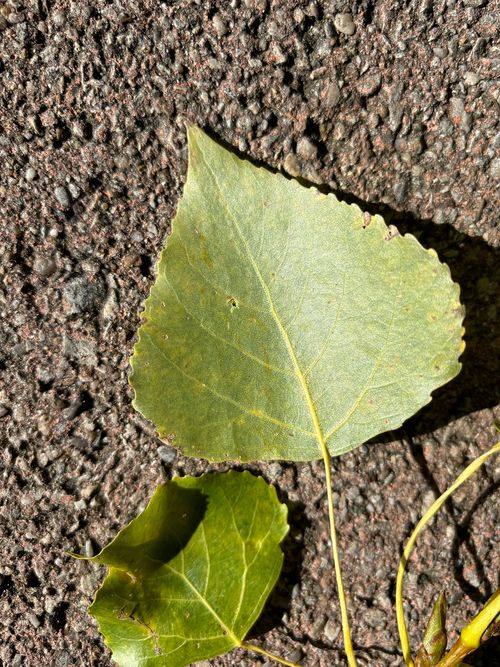
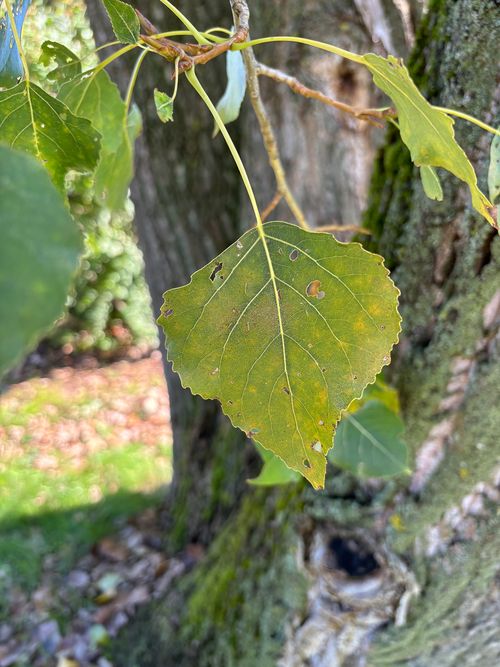
Photos: Janina Deutschmann (1,2,3)
Populus x canescens
- Height: up to 30 m
- Trunk: initially smooth, light-coloured, dark, deeply furrowed bark with age
- Leaves: roundish to triangular (approx. 7 cm), long, flattened, hairy leaf stalk, dark, shiny grey-green upper side, densely silver-haired underside
- Flowers: grey to reddish (male) or greenish (female) catkins in April before leaves emerge
- Other: hybrid of Populus alba and Populus tremula
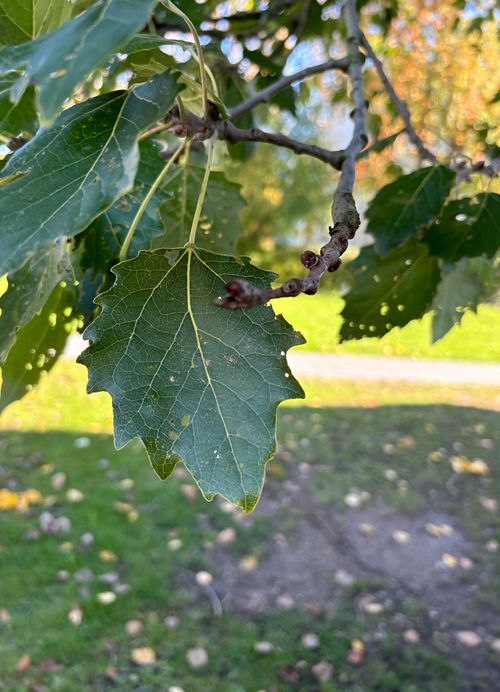
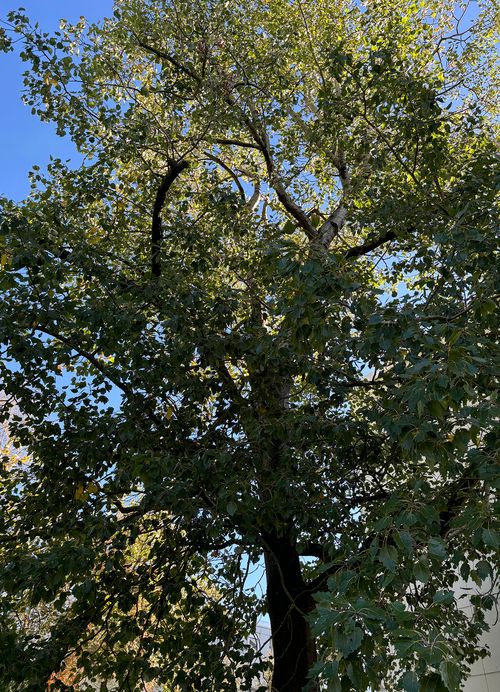
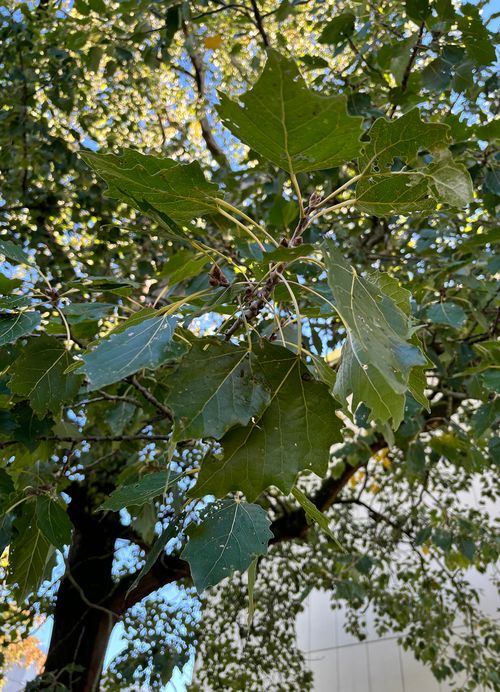
Photos: Janina Deutschmann (1,2,3)
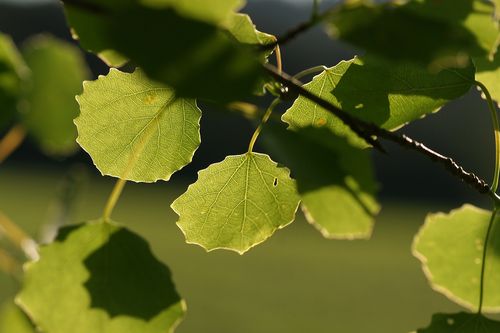
Populus tremula
- Height: up to 20 m, exceptions up to 30 m
- Trunk: narrow, often slightly twisted, grey bark with horizontal stripes
- Crown: Loose, roundish, broadly spreading
- Leaves: round to heart-shaped, toothed edges, long laterally flattened petioles that cause the characteristic ‘trembling’ of the leaves in a light wind
- Flowers: reddish (male) or greenish (female) catkins in March/April before the leaves emerge
- Fruits/seeds: capsules containing many small, hairy seeds (wind dispersal)
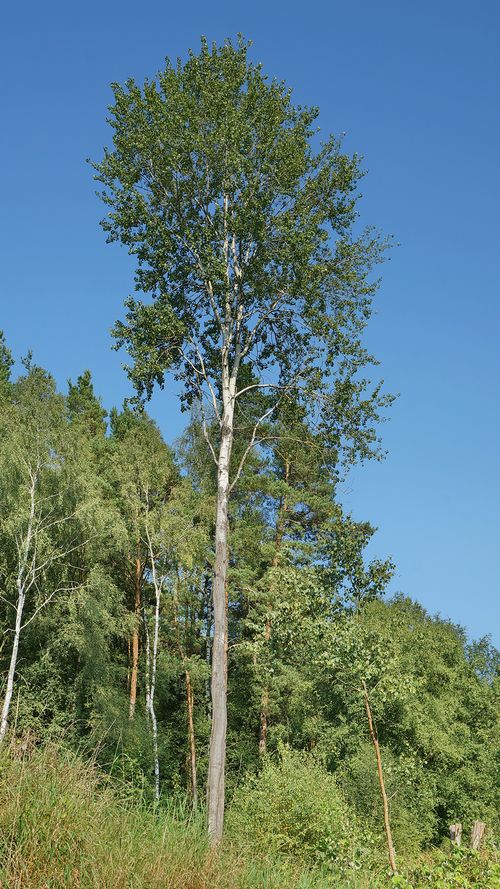
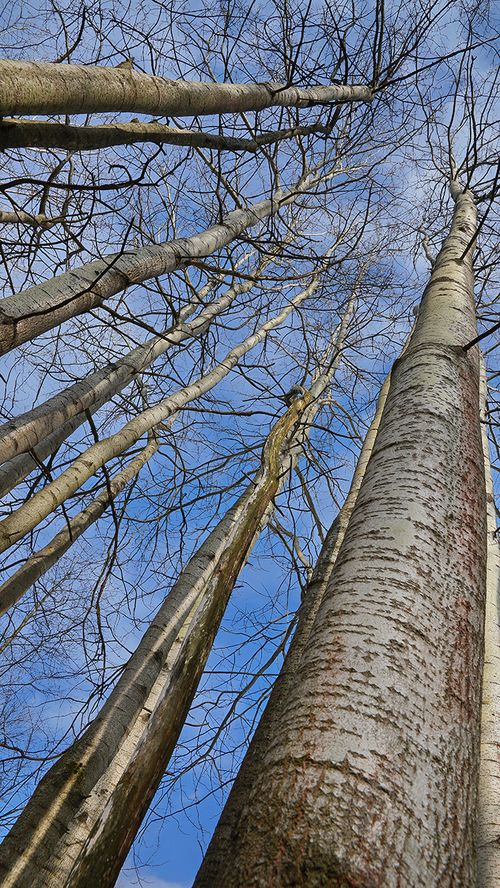
Photos: Wolfgang Schödel (1,2,3)
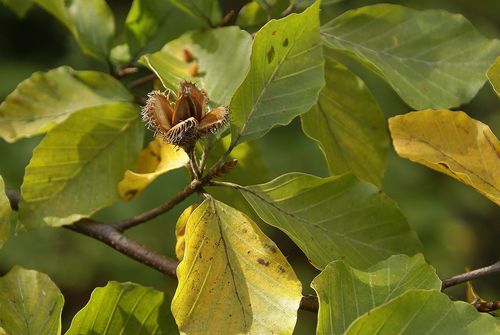
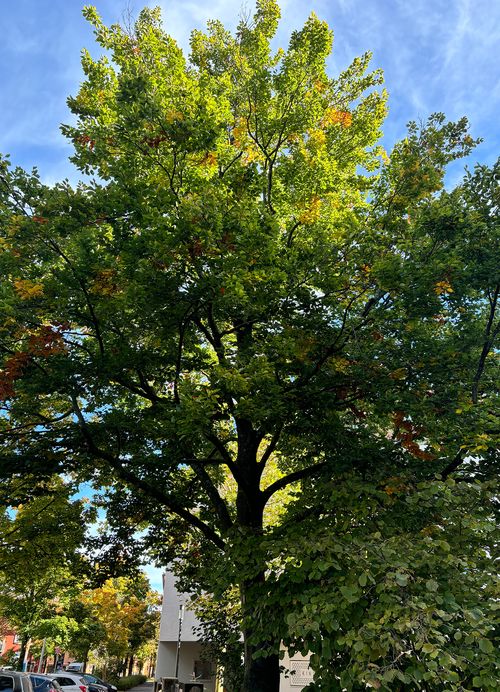
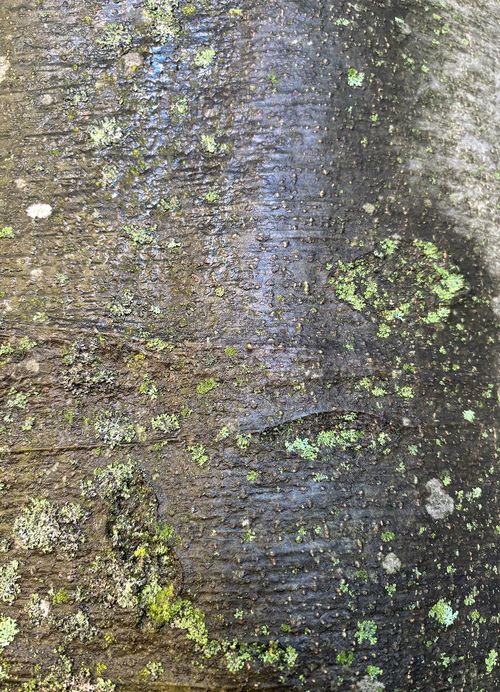
Fagus sylvatica
- Height: up to 30 m
- Trunk: smooth, grey-brown bark
- Leaves: ovate to elliptical, 5-10 cm long, wavy to slightly toothed edges, initially hairy
- Fruits/seeds: triangular, edible nuts in spiky fruit cups
- Other: Shade tree species, special form of copper beech with red leaves
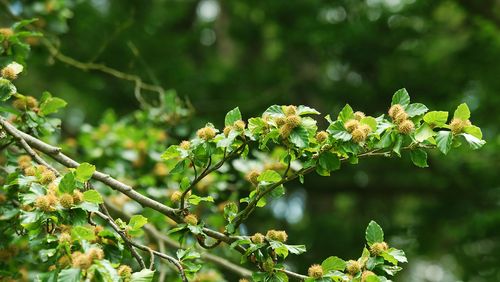
Photos: Wolfgang Schödel (1,4), Janina Deutschmann (2,3)
Ulmus spp.
- Height: up to 30 m
- Trunk: deeply furrowed bark
- Leaves: obovate to elliptical, with clear asymmetrical leaf base on stem, more or less hairy, serrated leaf margin, rustling
- Fruits/seeds: round to ovoid, resembling wafer-thin leaflets with a seed in the centre, in clusters
- Other: rare tree species, 3 species in Germany that are difficult to distinguish
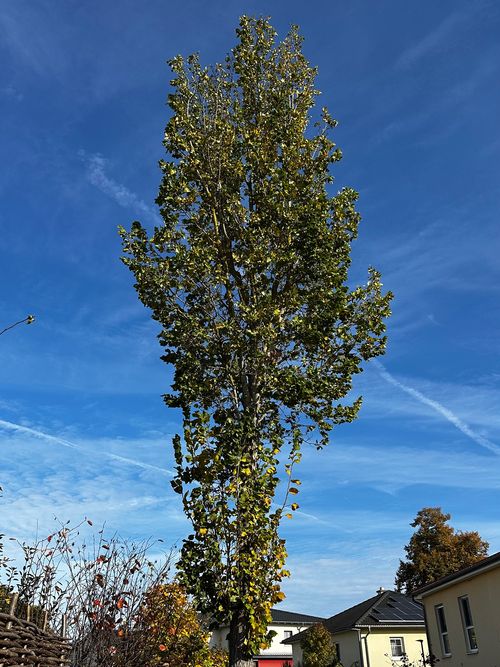
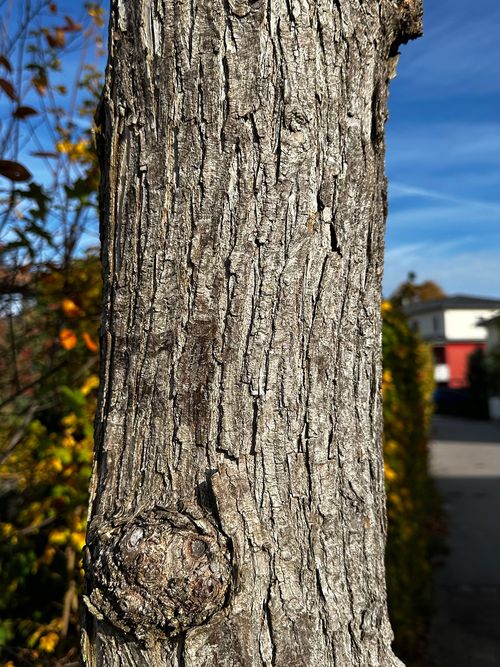
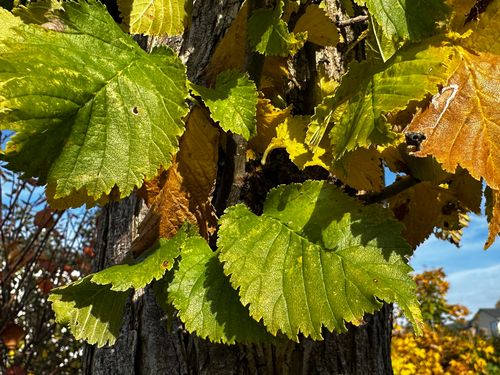
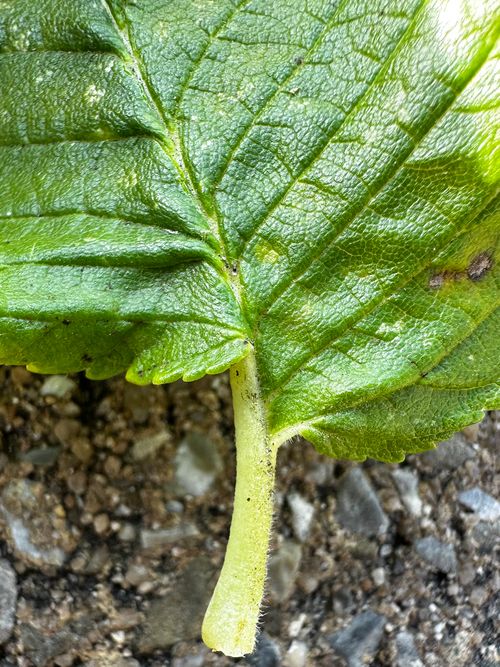
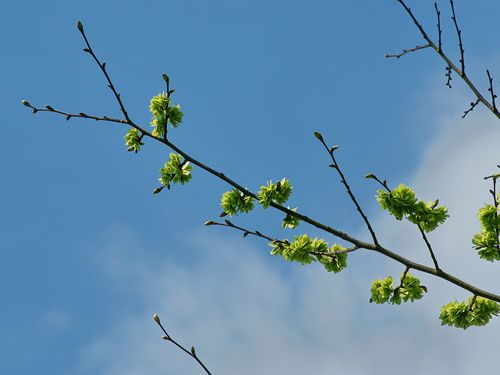
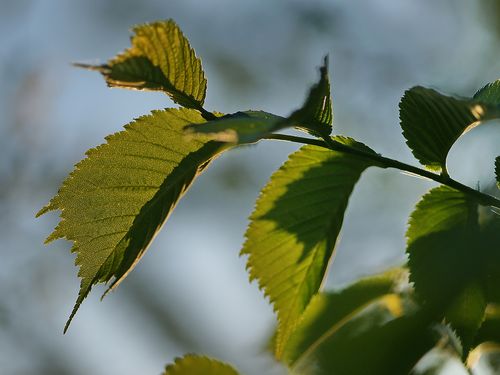
Photos: Martina Gehret (1,2,3,4), Wolfgang Schödel (5,6)
Ginkgo biloba
- Height: usually up to 20 m, exceptions up to 40 m
- Trunk: grey bark, longitudinally fissured, broadly furrowed
- Leaves: fan-shaped, leathery, coarse, up to 10 cm long, notched in the middle, strikingly yellow in autumn
- Fruits/seeds: plum-like yellow, strong unpleasant odour
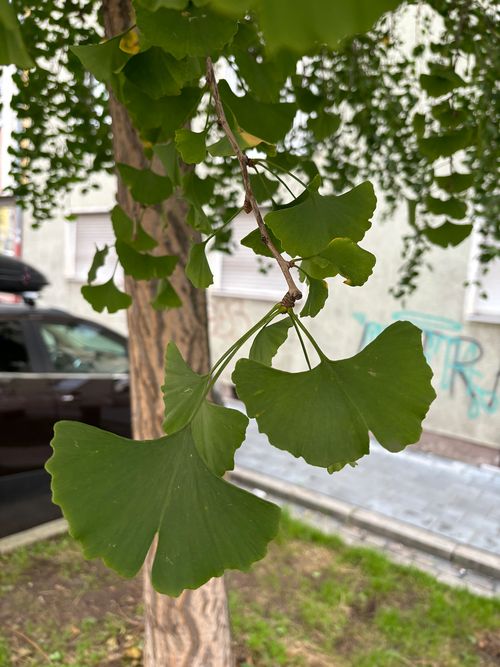
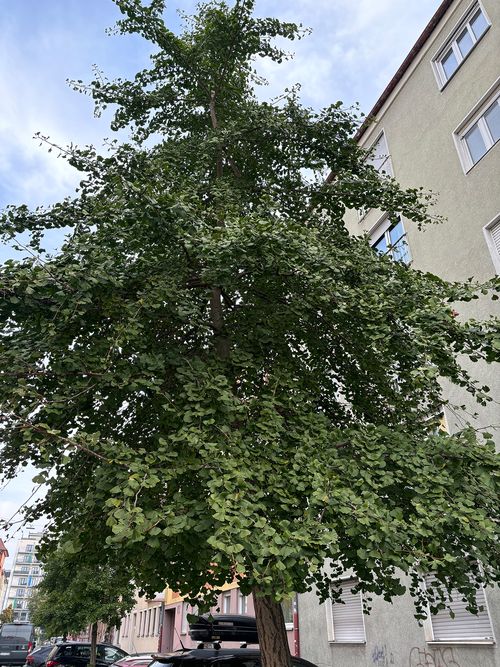
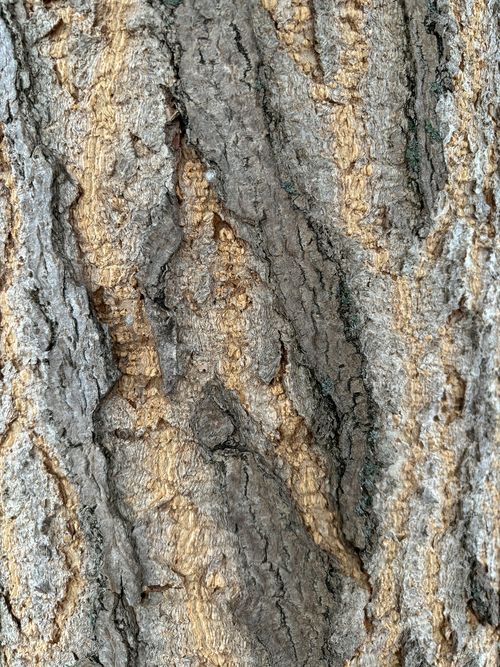
Photos: Janina Deutschmann (1,2,3)
Acer spp.
- Height: many types of maple trees, from shrubs to large trees
- Trunk: bark varied (smooth to longitudinally fissured to scaly)
- Leaves: usually 3-5 lobed, palmate, from 5-20 cm in size, opposed leaves
- Fruits/seeds: Fruits with fruit wings (‘nose pincher’) for wind dispersal
- Other: 3 native maple species and countless species globally
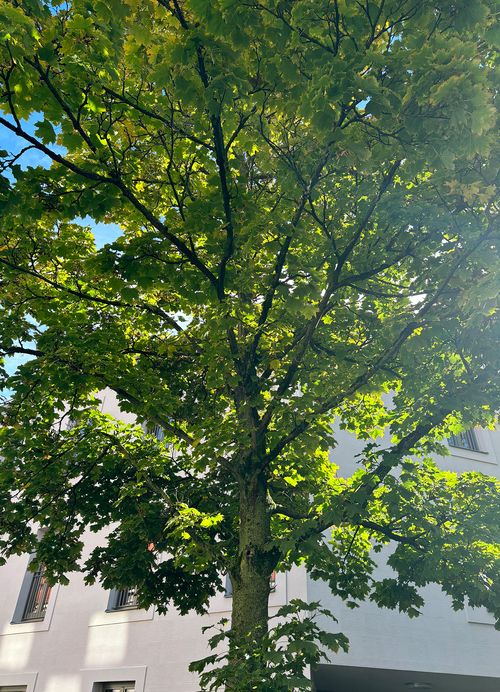
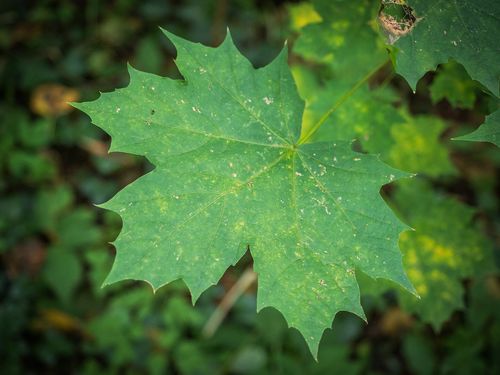
Photos: Janina Deutschmann (1), Kerstin Ellersdorfer (2)
Acer campestre
- Height: 10-15 m
- Trunk: sometimes multi-stemmed and shrub-like, bark fine-longitudinally fissured, smaller growth than other maple species
- Leaves: 3-5 lobed, 5-10 cm wide, round leaf ends, finely haired, with milky sap
- Fruits/seeds: Fruits with horizontal fruit wings (‘nose pinchers’) for wind dispersal


Photos: Janina Deutschmann (1,2)
Acer platanoides
- Height: up to 20 m
- Trunk: bark longitudinally fissured, dark brown to blackish
- Leaves: 5-lobed with distinct tips, 12-18 cm wide, with milky sap
- Buds: green buds
- Flowers: yellow-green, clustered flowers in April/May before leaves emerge
- Fruits/seeds: Fruits with right-angeled fruit wings (‘nose pincher’) for wind dispersal (approx. 3 cm)


Photos: Janina Deutschmann (1,2,3), Wolfgang Schödel (4)
Acer pseudoplatanus
- Height: up to 20 m
- Trunk: bark silvery to grey-brown, with a ‘camouflage’ pattern
- Leaves: 5-lobed, rough/blunt, 8-20 cm wide, often red stalk, without milky sap
- Buds: red buds
- Fruits/seeds: Fruits with right-angeled fruit wings (‘nose pincher’) for wind dispersal (approx. 3 cm)


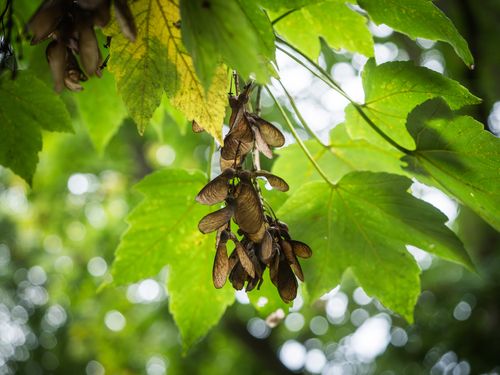
Photos: Janina Deutschmann (1,2,3), Kerstin Ellersdorfer (4)
White willow
- Height: up to 25 m
- Trunk: grey bark, deeply longitudinally fissured with broad ribs
- Leaves: 4-12 cm long, lanceolate, pointed, alternate
- Flowers: catkins
- Fruits/seeds: wind dispersal of white fluffed seeds in big clusters
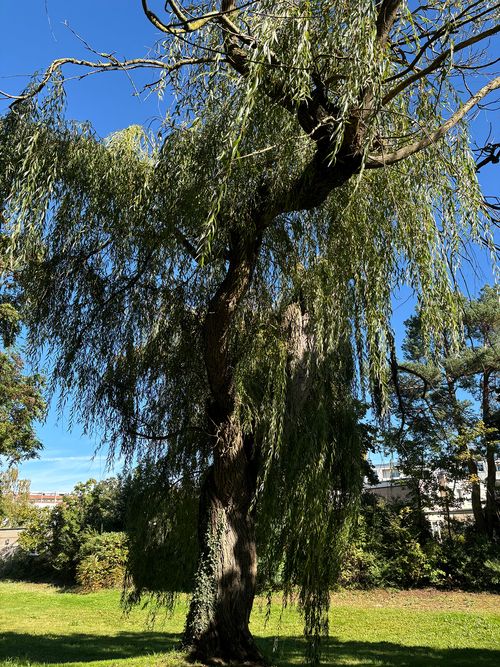
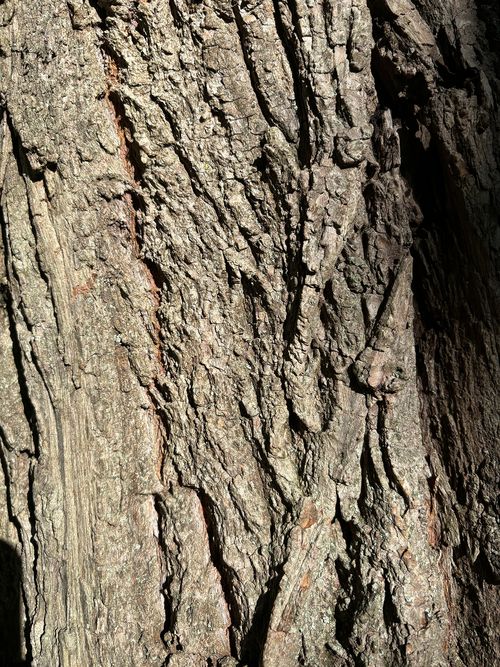
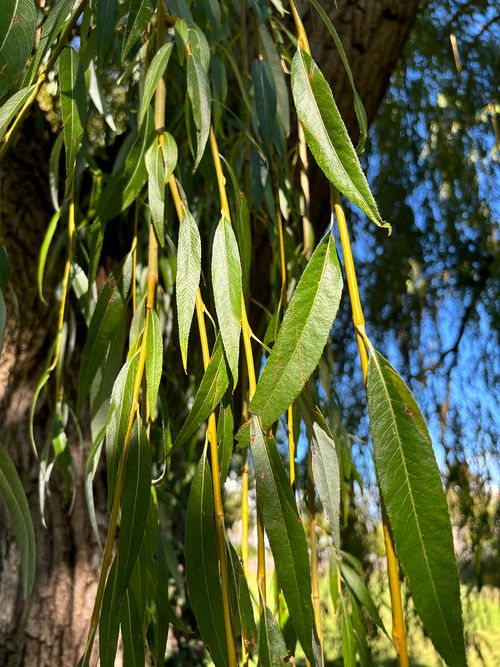
Fotos: Janina Deutschmann (1,2,3)
Salix caprea
- Height: up to 10 m
- Trunk: Shrub-like or small tree, grey bark with large diamond-shaped patterns
- Leaves: Leaves elliptical to obovate, twisted tip, alternate
- Flowers: palm catkins (up to 3 cm) with dense silvery fur in March/April
- Other: short-lived pioneer species, the only willow species that only occurs outside floodplains and marshes
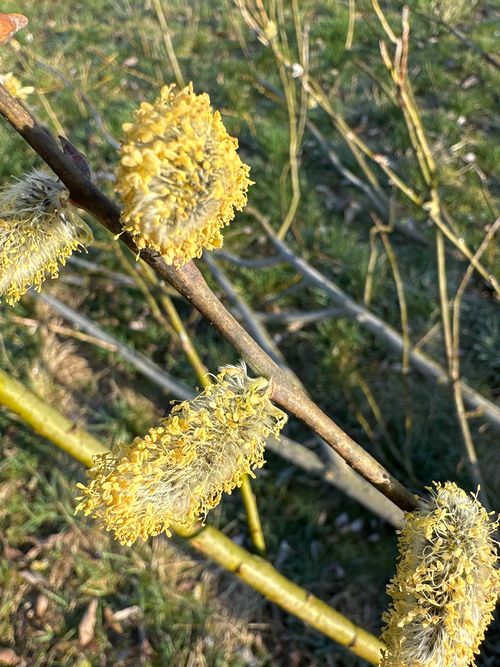
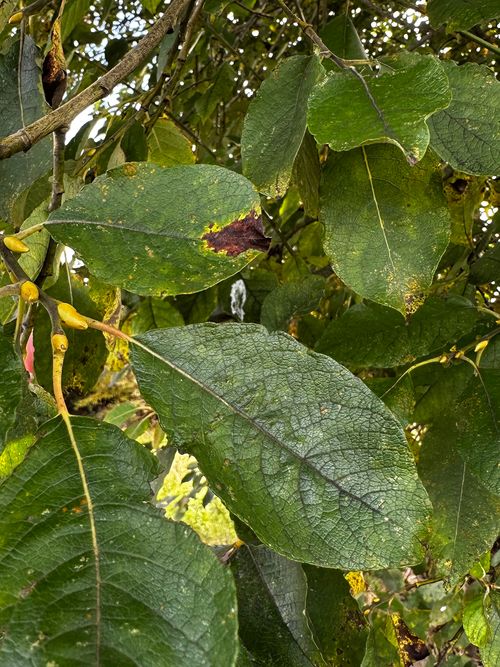
Photos: Martina Gehret (1,2)
Salix spp.
- Height: depending on the species, shrub-like to larger tree
- Trunk: fast-growing, often hollow inside
- Leaves: elliptical to lanceolate, pointed, alternate
- Flowers: catkin-shaped
- Other: 300 to 400 species worldwide, around 30 to 40 different willow species in Germany, usually with strong elasticity of the branches
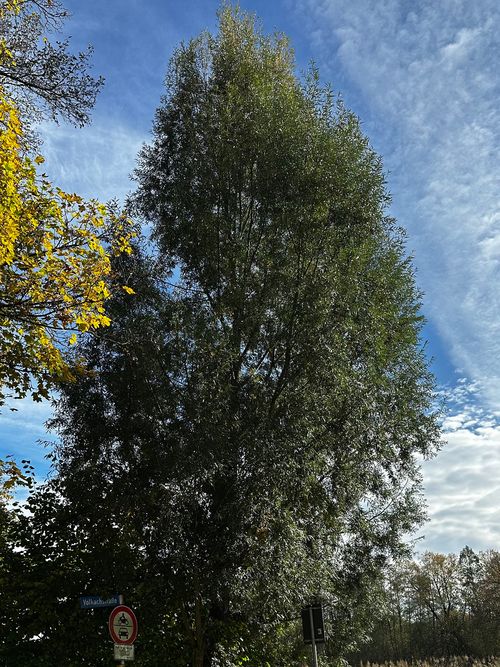
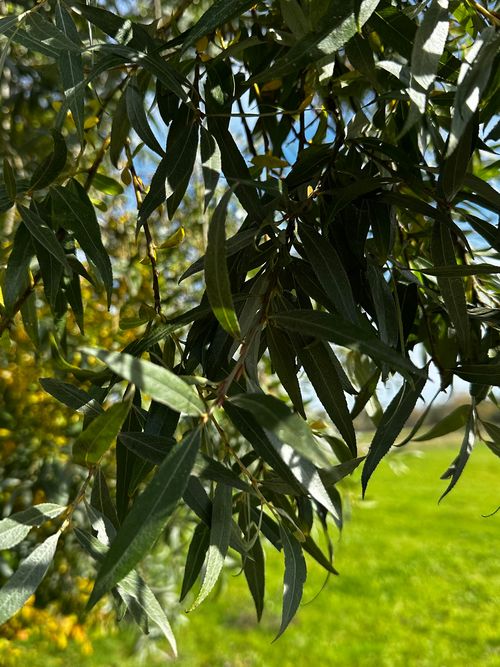
Photos: Martina Gehret (1,2)
Alnus spp.
- Height: up to 25 m
- Trunk: Black-brown bark, longitudinally fissured, often multi-stemmed
- Leaves: obovate to roundish, recessed tip
- Buds: sticky buds
- Fruits/seeds: small (approx. 1.5 cm) woody fruit cones (as the only deciduous tree)
- Other: sheds green leaves in autumn, has root nodules

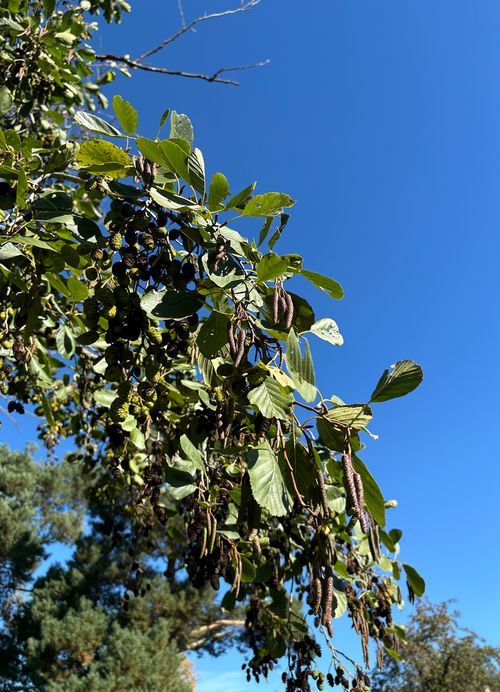
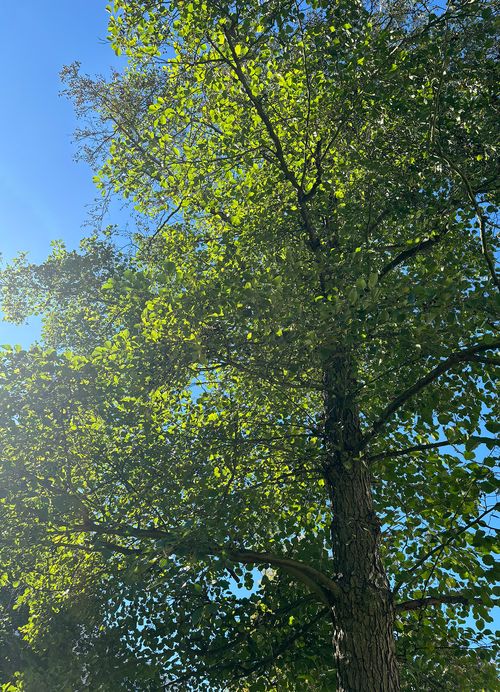
Photos: Janina Deutschmann (1,2,3)
Prunus spp.
- Height: up to 20 m depending on species, exceptions up to 30 m
- Trunk: flat-cracked bark, partly shiny, lenticels form clearly horizontal structures
- Crown: often broadly spreaded
- Leaves: elongated ovate to elliptical, 7-12 cm long, pointed
- Flowers: beautiful white flowers in April/Mai, in 2 to 3-flowered umbels
- Fruits/seeds: cultivated cherry with aromatic, red to black-red drupes
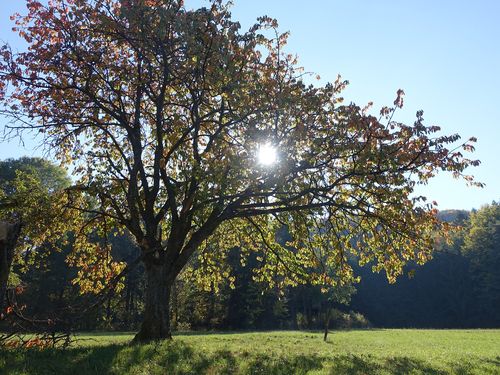
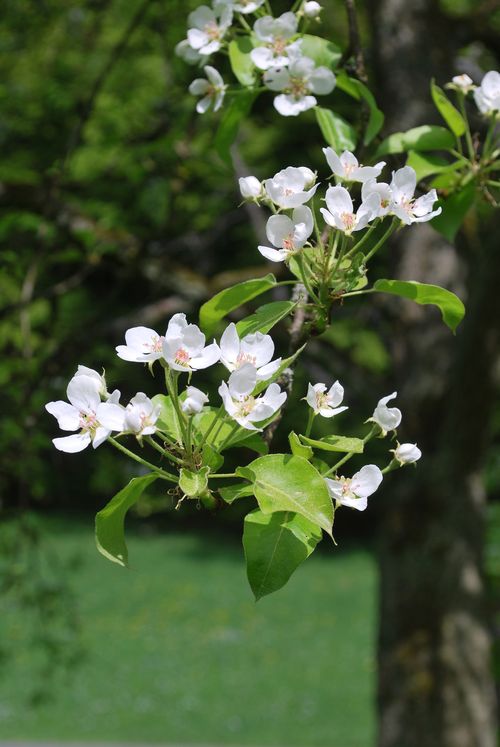
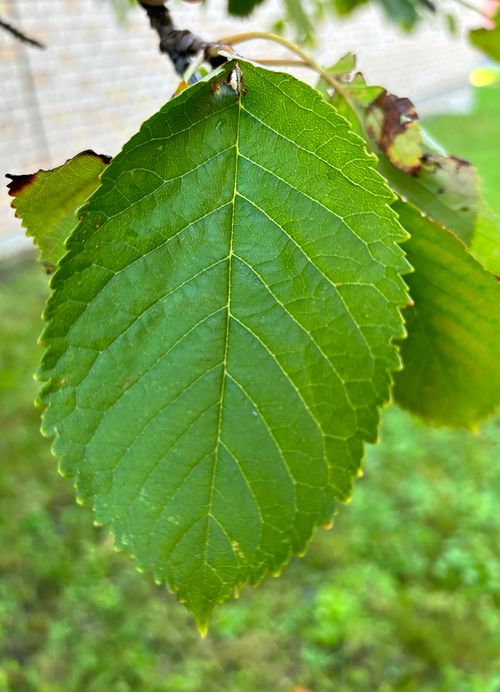
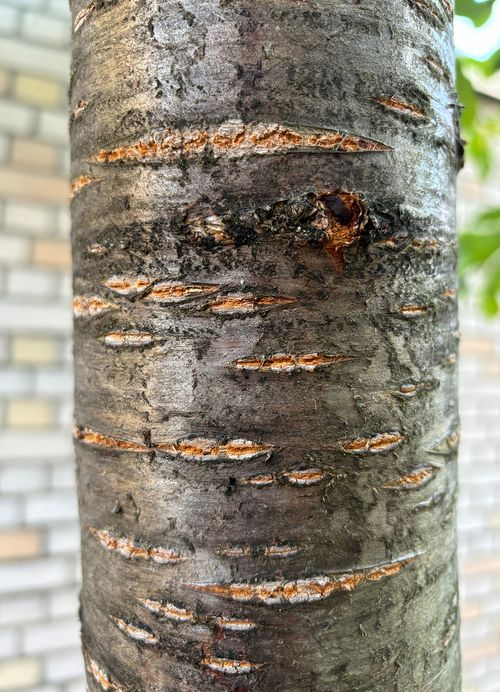
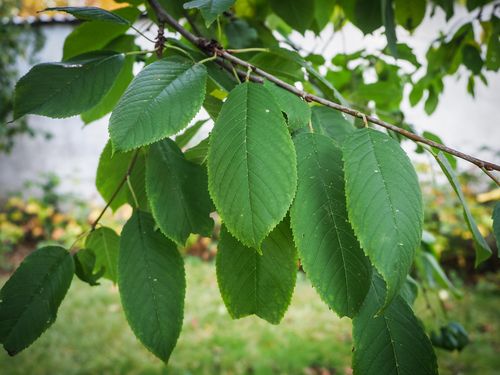
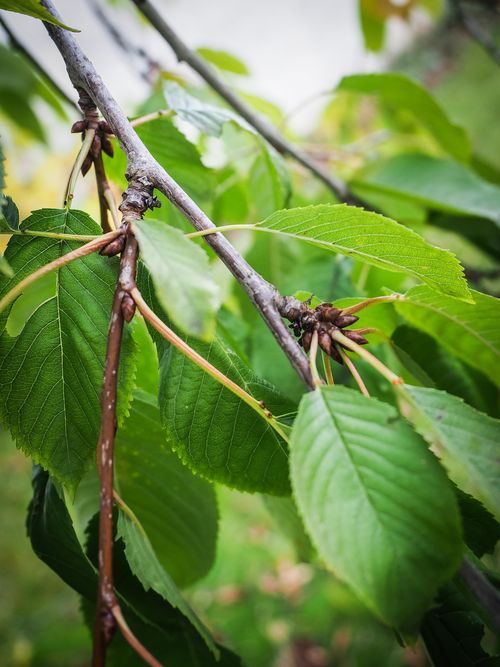
Photos: Heide Frobel (1,2), Janina Deutschmann (3,4), Kerstin Ellersdorfer (5,6)
Malus spp.
- Height: medium-sized tree, up to 15 m
- Trunk: smooth bark at first, light to dark grey-brown bark flaking off in scales with age
- Crown: mostly broad
- Leaves: elliptical to ovate, up to 12 cm long, soft-haired underside
- Flowers: white to pink flowers, in April/May
- Fruits/seeds: edible fruit, green to red depending on species
- Other: around 30,000 different apple varieties worldwide, 2,000 in Germany
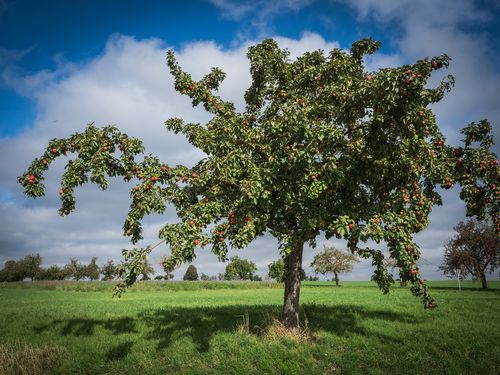
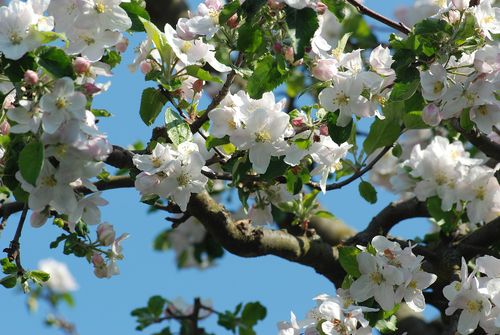
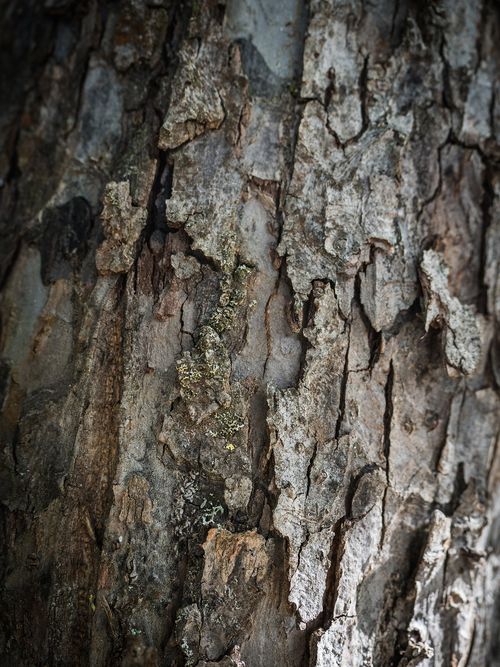
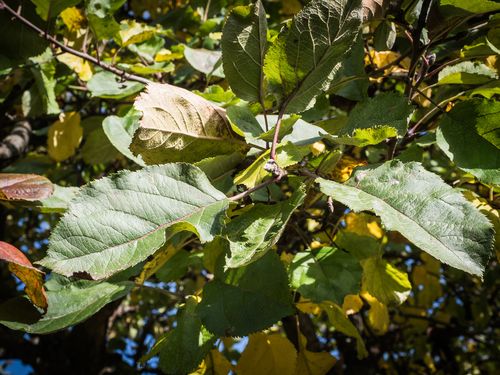
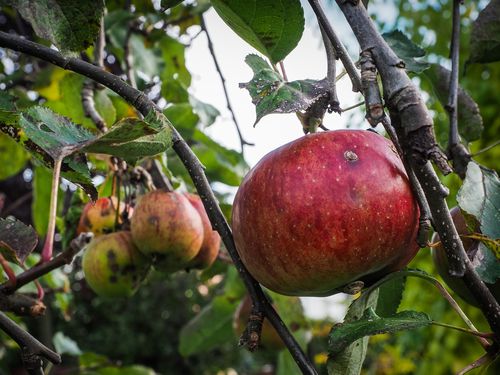
Photos: Kerstin Ellersdorfer (1,2,3,4,5)
Pyrus spp.
- Height: up to 15 m, exceptions up to 20 m
- Trunk: dark brown shedding bark
- Crown: narrow or broadly conical
- Leaves: ovate to elliptical, 5-9 cm long, serrated to smooth-edged
- Flowers: white to pink, approx. 3 cm wide, 3 to 9-flowered umbels, in April/May
- Fruits/seeds: edible fruit, mostly greenish to yellow
- Other: Around 1,500 to 5,000 varieties worldwide, of which only around 10 are commercially available
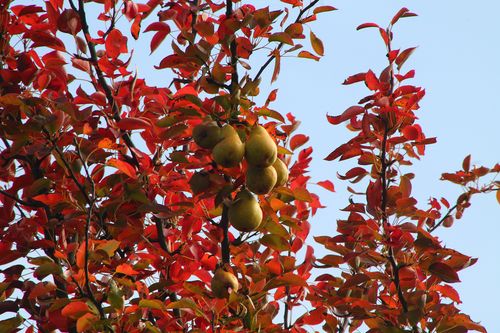
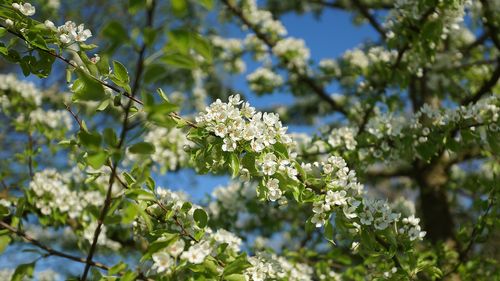
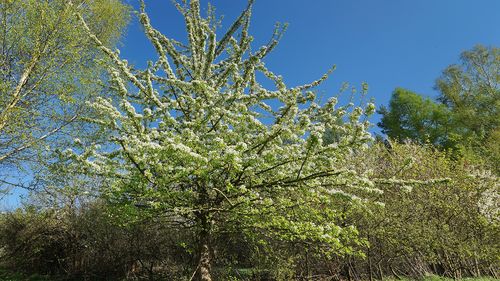
Photos: Tobias Erras (1), Wolfgang Schödel (2,3)
Sorbus spp.
- Height: up to 15 m, exceptions up to 25 m
- Trunk: occasionally multi-stemmed, smooth, silvery-grey to matt grey bark, slightly fissured at older age
- Leaves: simple, broadly ovate, 6-8 cm long, conical at the base, hairy underside (referring to Sorbus aria), also pinnate or lobed depending on the species
- Flowers: white, about 1.5 cm wide in 5-8 cm wide umbels
- Fruits/seeds: elongated to spherical fruits, orange to coral-red in clusters
- Other: also known as rowanberry, wild service tree, mountain ash, depending on species
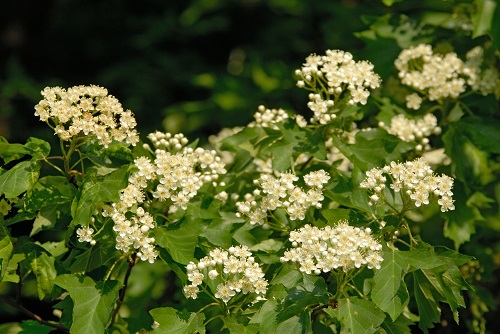
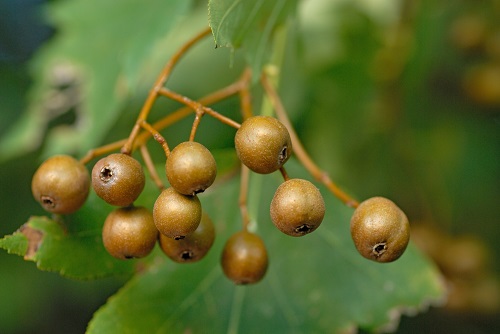
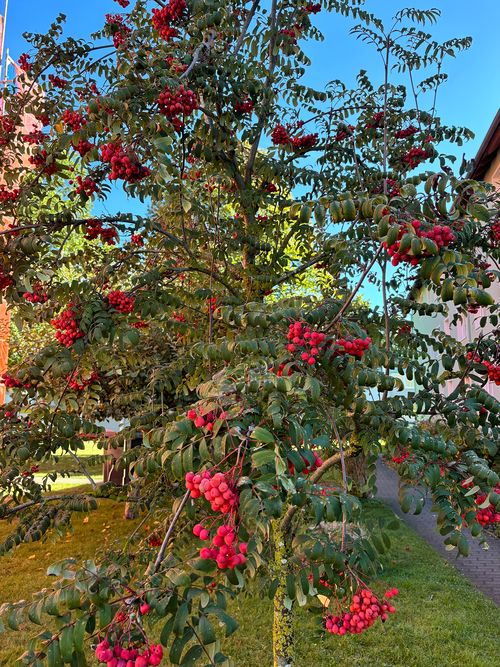
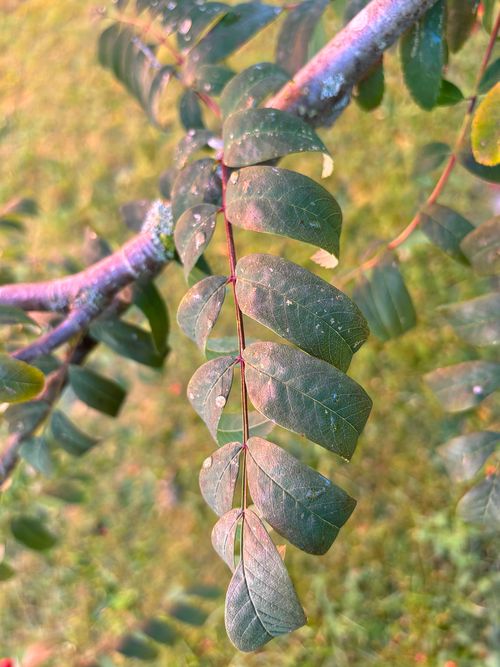
Photos: Thomas Stephan (1,2), Janina Deutschmann (3,4)
Gleditsia triacanthos
- Height: up to 25 m
- Trunk: longitudinally fissured, detaching in elongated plates, with distinct tufted thorns
- Leaves: simple or doubly pinnate with 14-28 elliptically shaped small leafs
- Fruits/seeds: 12-40 cm long, leathery, strap-shaped, wavy-twisted legumes containing about 25 seeds
- Other: usually thorny on trunk and branches
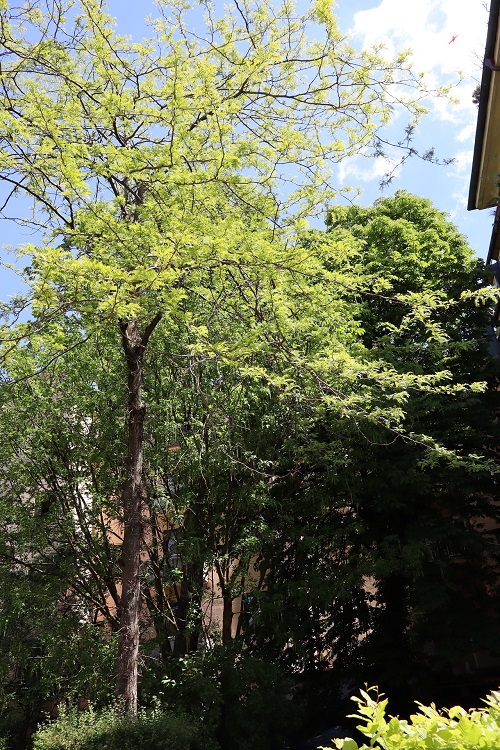
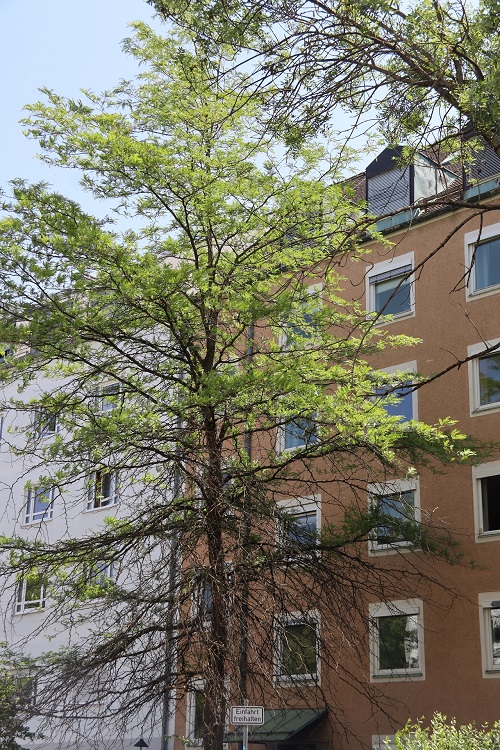
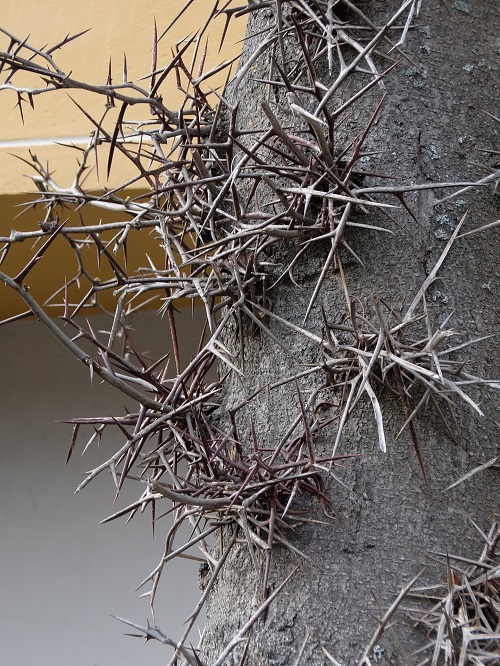
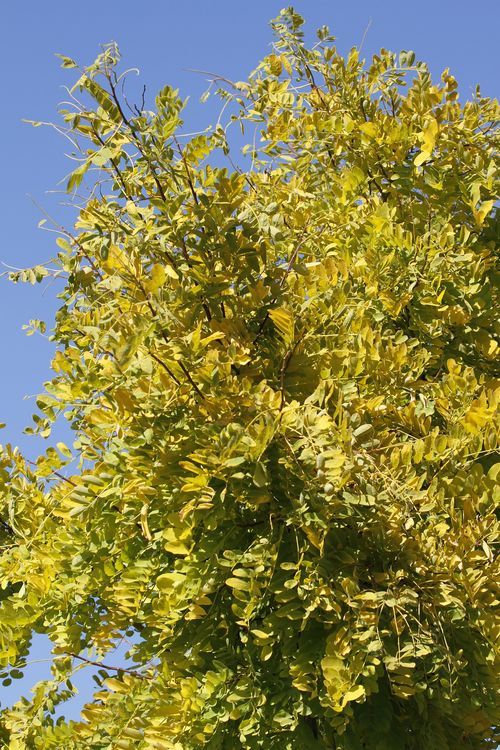
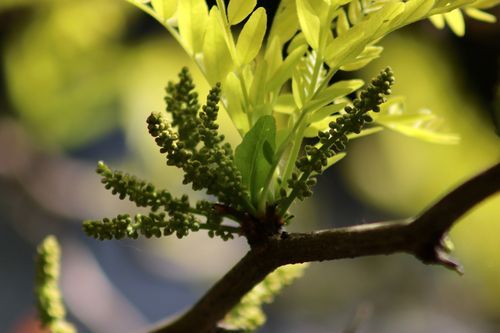
Photos: Dorit Zimmermann (1,2,3), Viola auf Pixabay (4), Annette Meyer auf Pixabay (5)
Corylus colurna
- Height: up to 20 m, exceptions up to 25 m
- Trunk: strikingly fissured scaly bark
- Leaves: broadly ovate, 5-15 cm long, double serrated, heart-shaped base
- Flowers: yellow catkins up to 12 cm long, in March/April
- Fruits/seeds: ball-shaped clusters, edible nuts (approx. 2 cm) with bristly husk
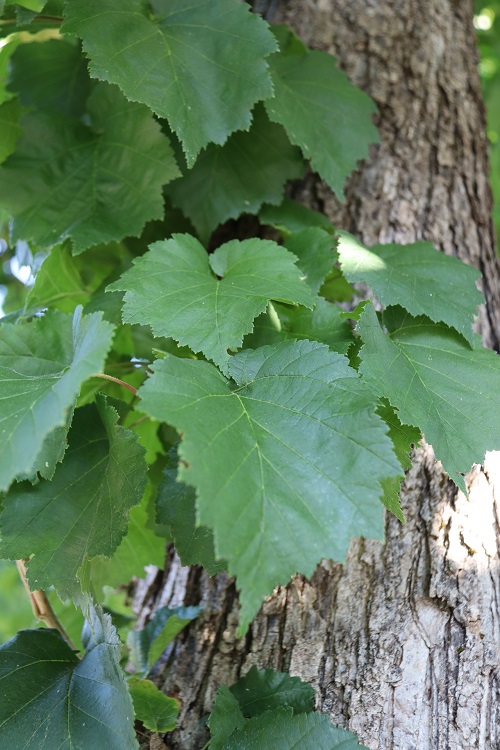
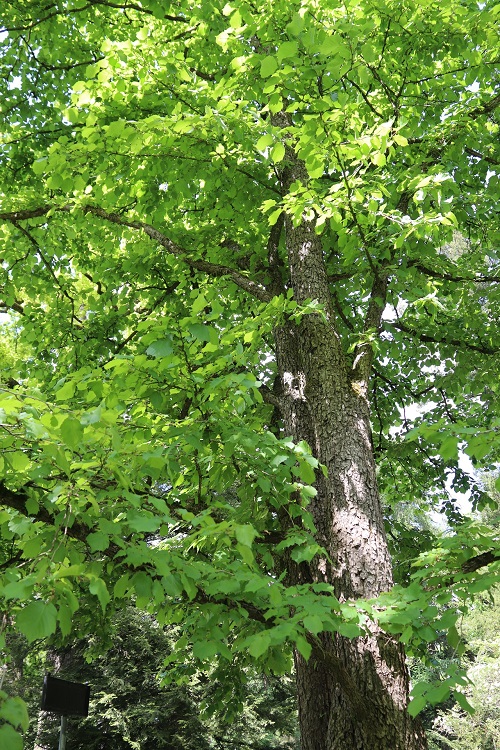
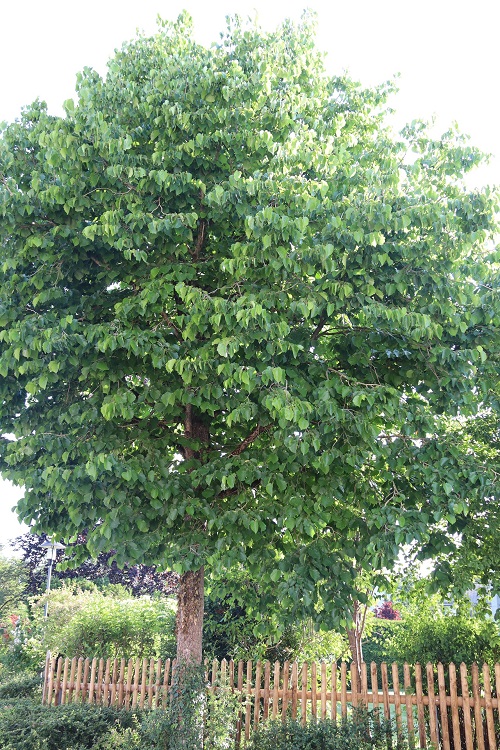
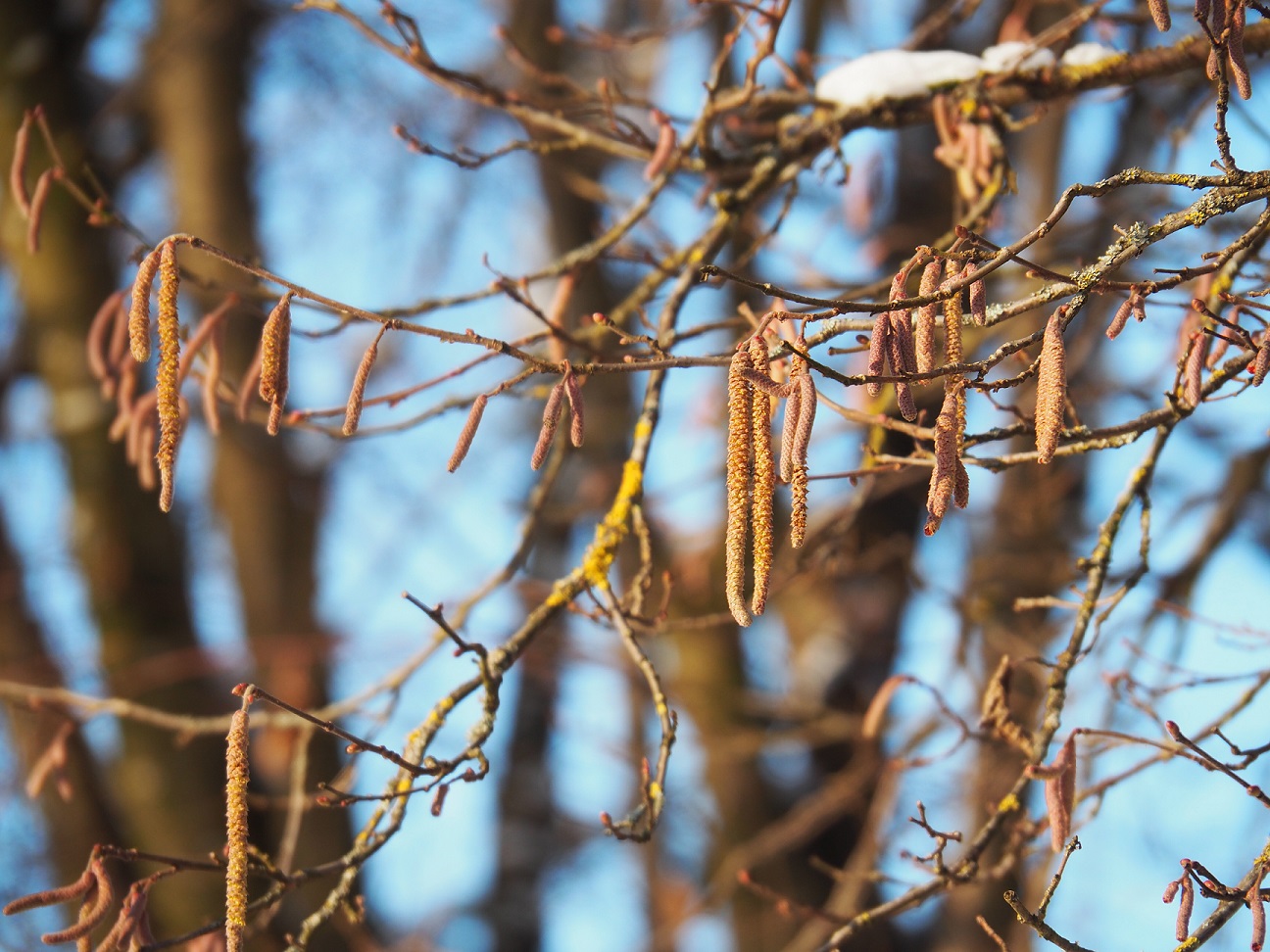
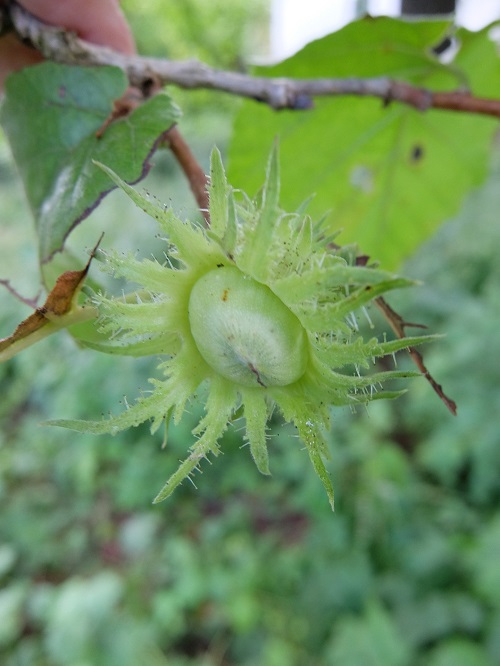
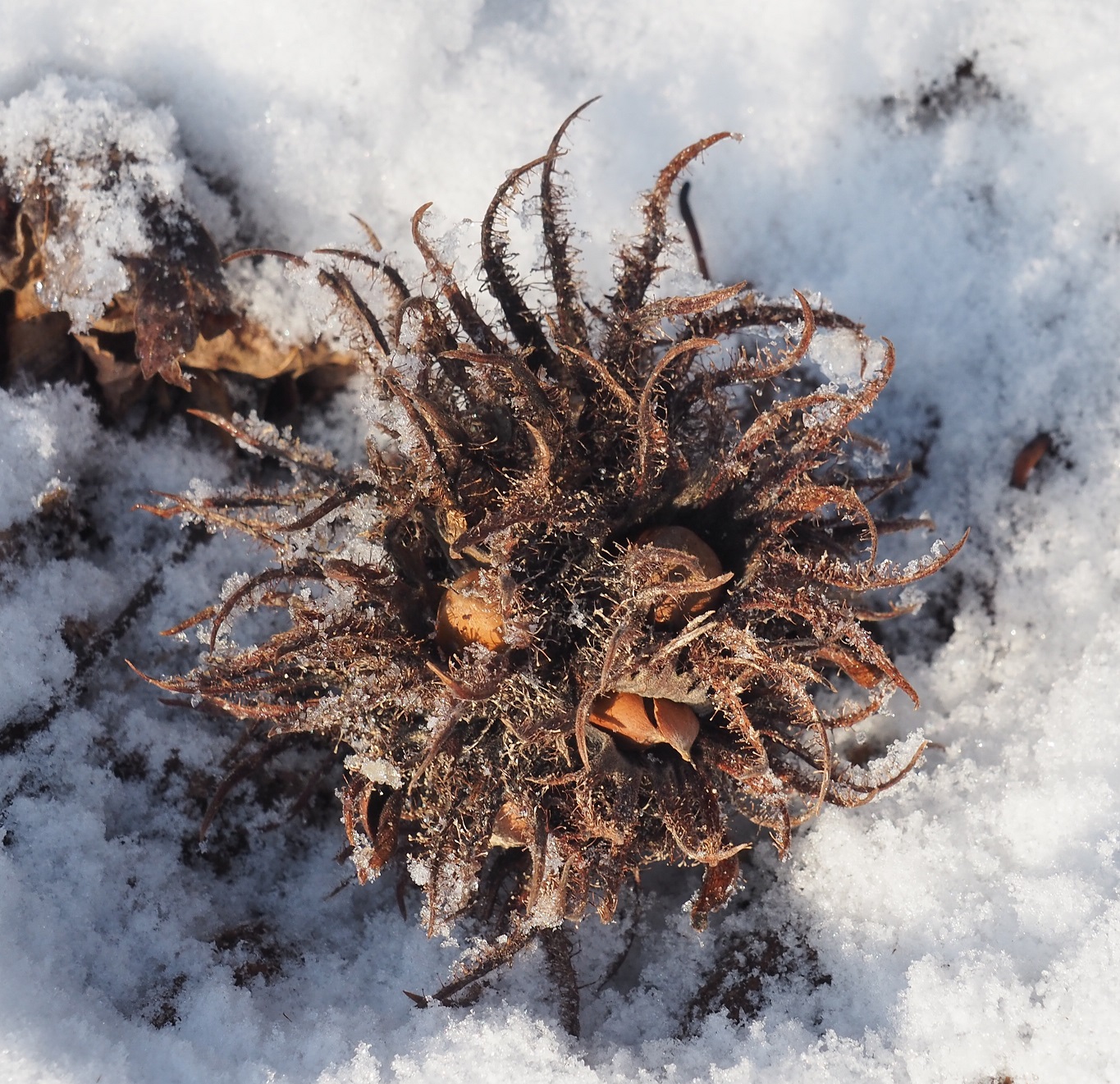
Photos: Dorit Zimmermann (1,2,3,5), Barbara Pressel (4,6)
Styphnolobium japonicum
- Height: up to 15-20 m
- Trunk: longitudinally cracked bark
- Crown: round, heartshaped to oval, broadly spreading with age
- Leaves: oval, imparipinnate leaves
- Flowers: fragrant, white flowers in large, loose panicles, rich in nectar, insect-friendly
- Fruits/seeds: pearl-like pods (approx. 8 cm) with black-brown seeds
- Other: almost all parts of the plant (except flowers) are poisonous
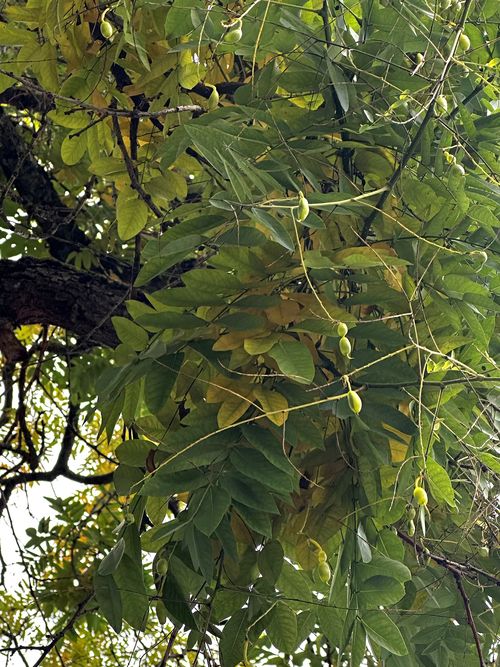
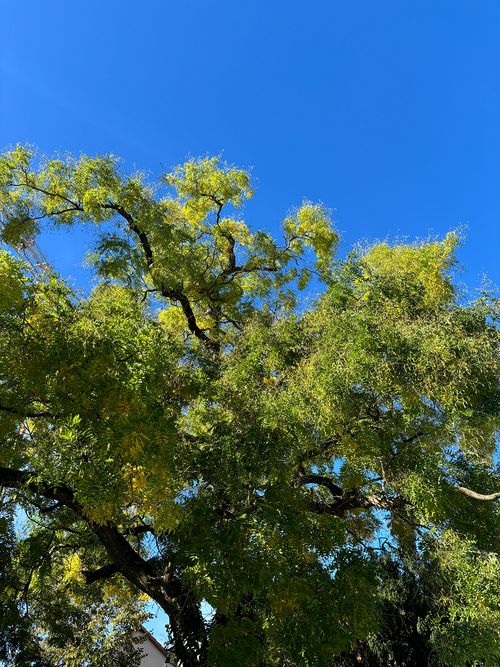
Photos: Martina Gehret (1), Janina Deutschmann (2)
Crataegus spp.
- Height: up to 10 m, depending on species
- Trunk: Shrub-shaped or small tree, often densely branched, smooth bark, green-brown to dark brown, cracking with age
- Leaves: lobed or serrated, petiolate leaves (depending on species), with stipules
- Buds: ovoid to spherical
- Flowers: white blossom in May/June, rich in nectar, insect-friendly
- Fruits/seeds: small, yellow to red apple-like drupes
- Other: many (sub)species and variations, thorny branches
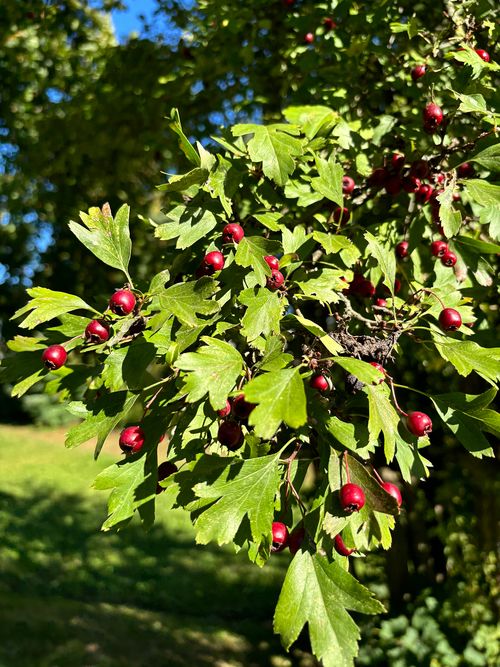
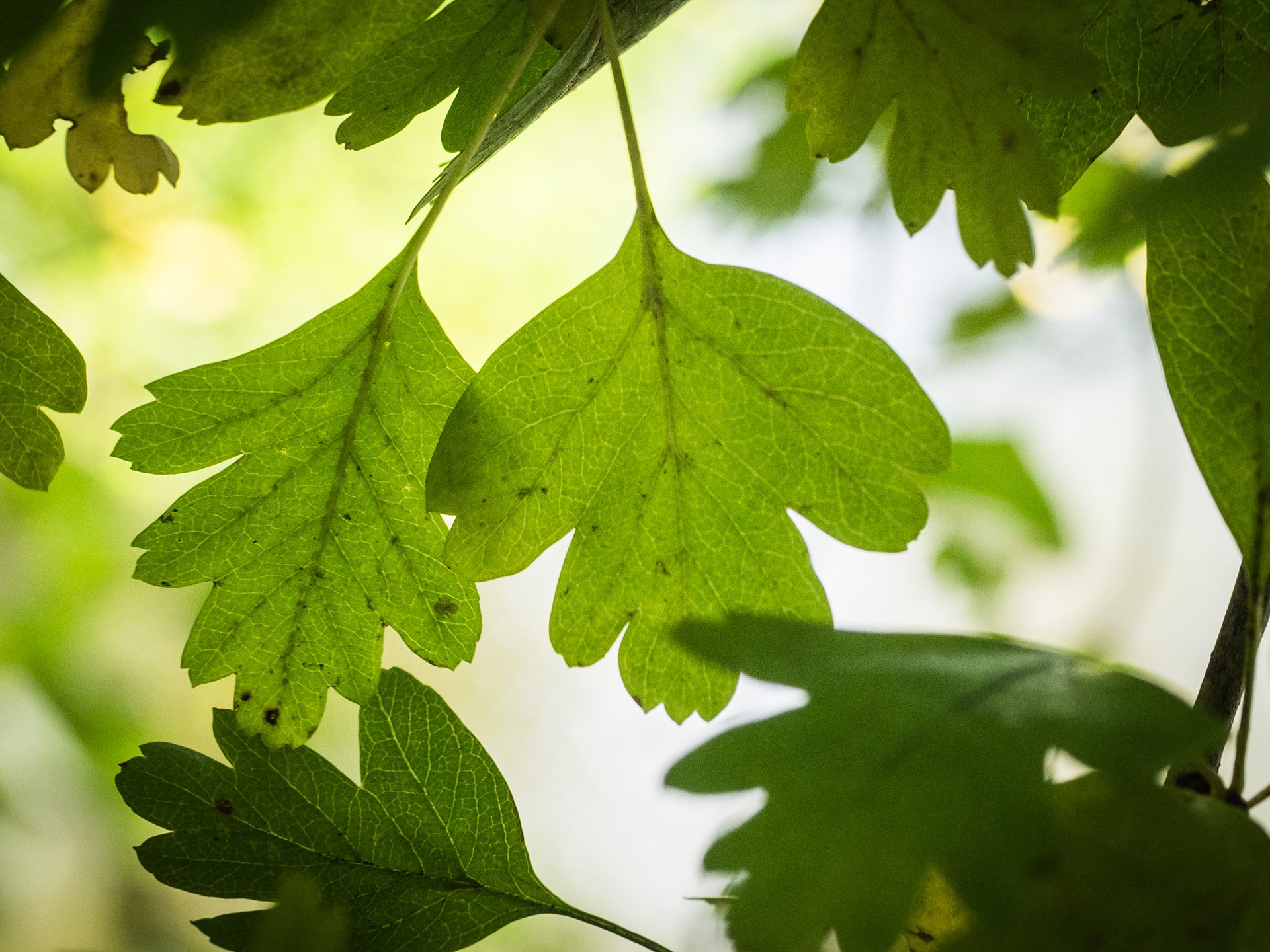
Photos: Janina Deutschmann (1), Kerstin Ellersdorfer (2)
Ailanthus altissima
- Height: up to 25 m, fast-growing
- Trunk: often multi-stemmed, upright, smooth, grey-brown, slightly fissured bark
- Crown: broad, spreading
- Leaves: imparipinnate, petiolate leaves, 40-90 cm long, leaflets with marginal glands (nectaries)
- Flowers: green, inconspicuous, panicle-shaped flower, June to August, nectar-rich, insect-friendly
- Fruits/seeds: yellowish-red nut fruits, broadly winged (wind dispersal), often remain on tree for a long time
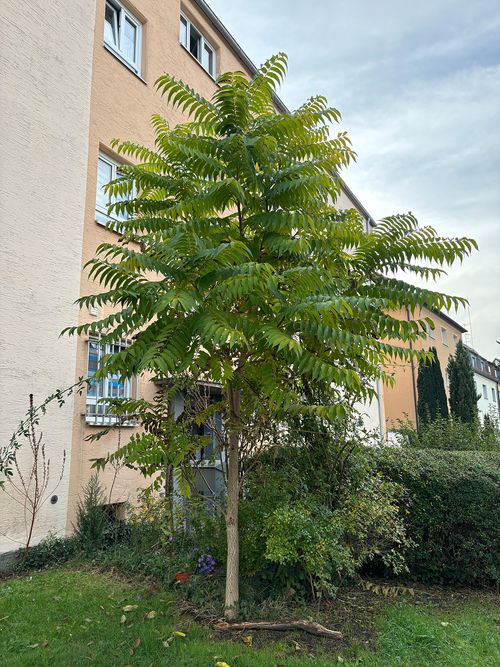
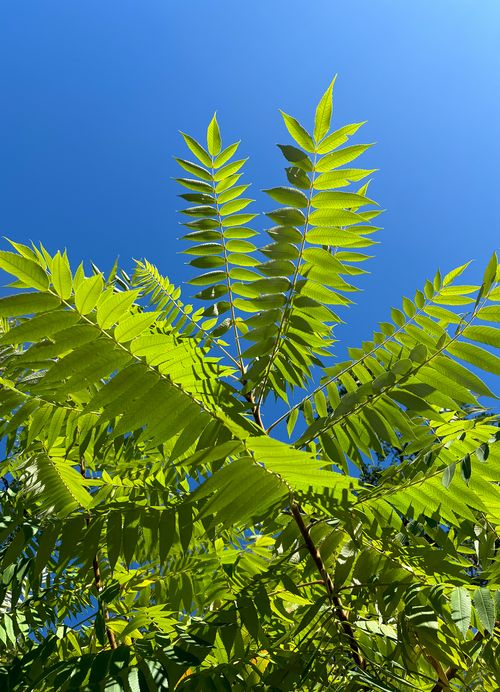
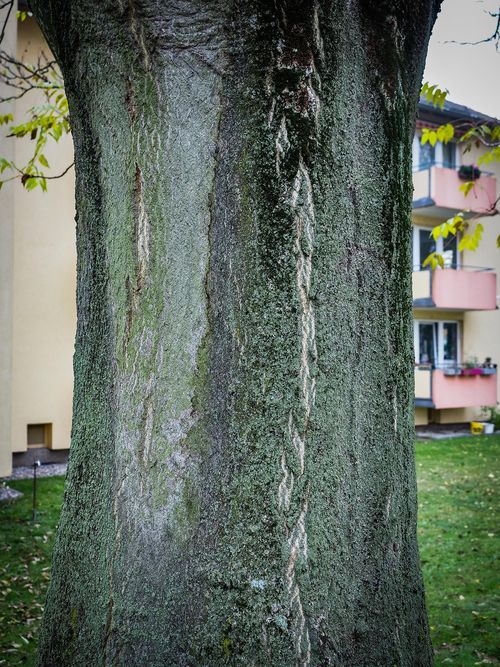
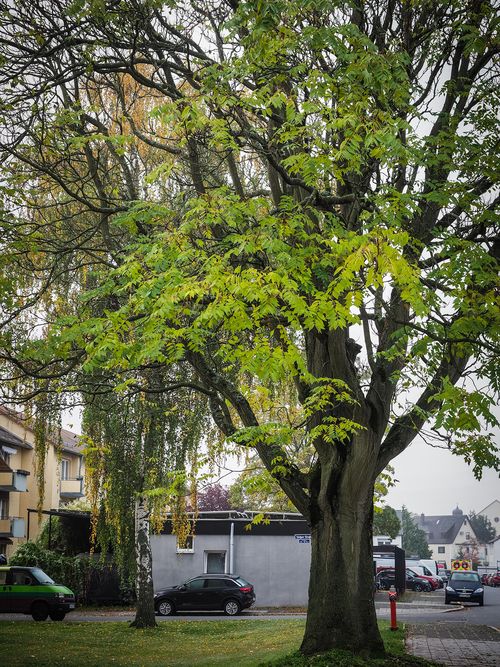
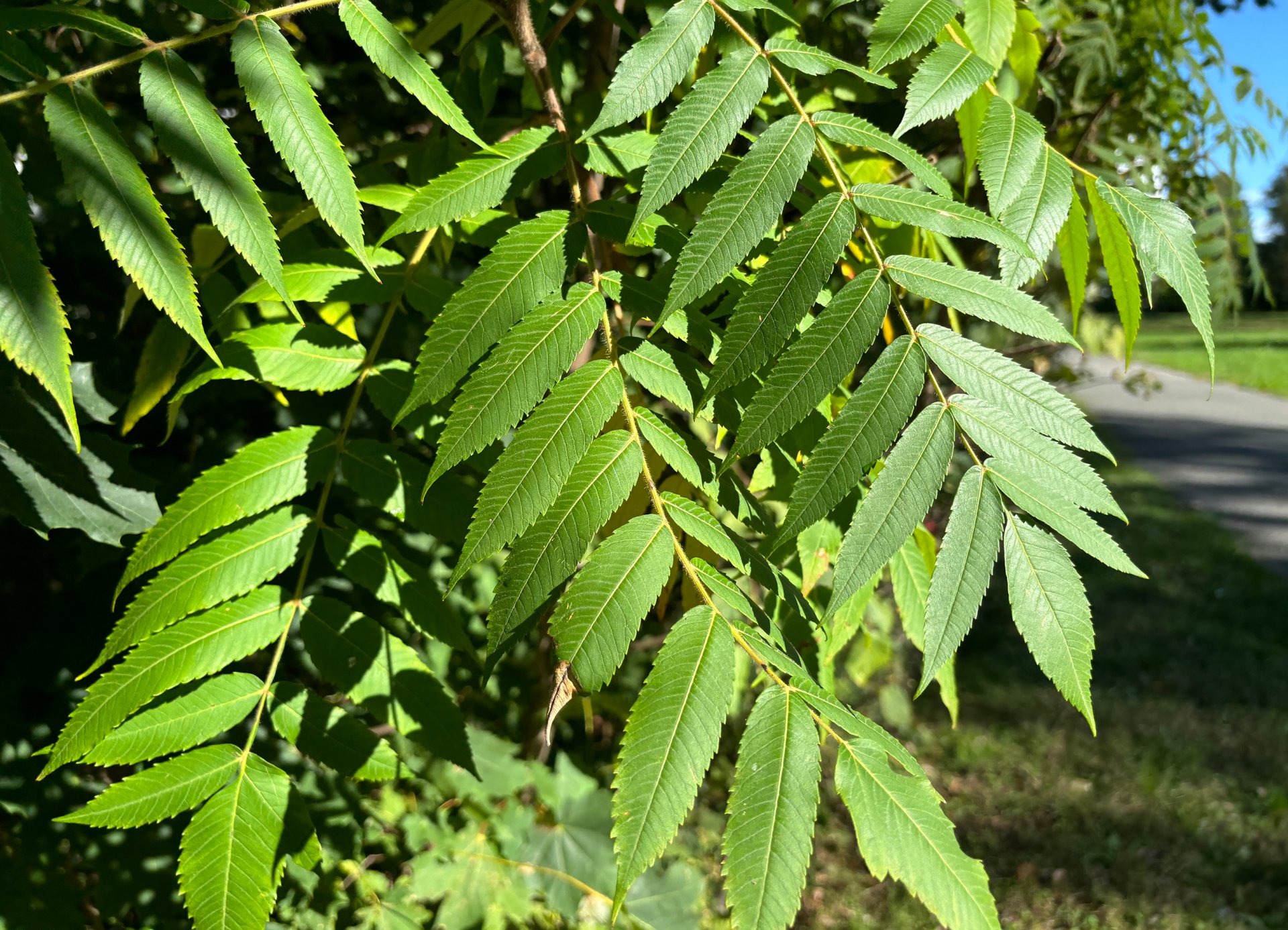
Photos: Janina Deutschmann (1,2), Kerstin Ellersdorfer (3,4)
Abies spp.
- Height: up to 40 m
- Trunk: Bark light grey, smooth with distinct cork warts (lenticels), coarse and scaly with age
- Leaves: needles often flat, usually blunt and helically arranged, often parted, underside with two white stripes
- Fruits/seeds: ovoid to cylindrical cones, upright, disintegrate after ripening
- Other: Shade tree species
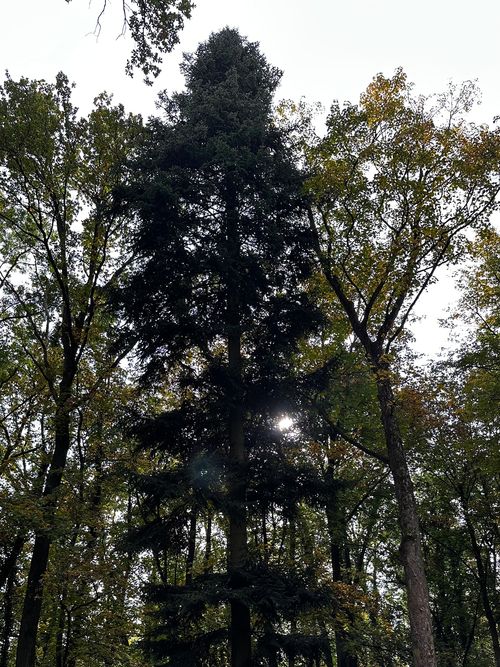
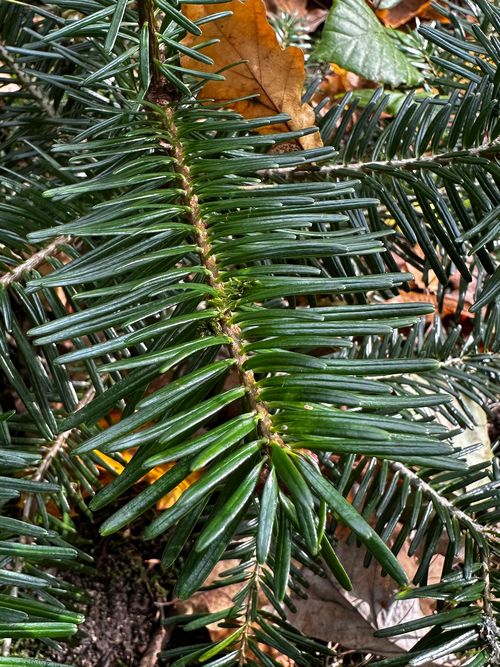
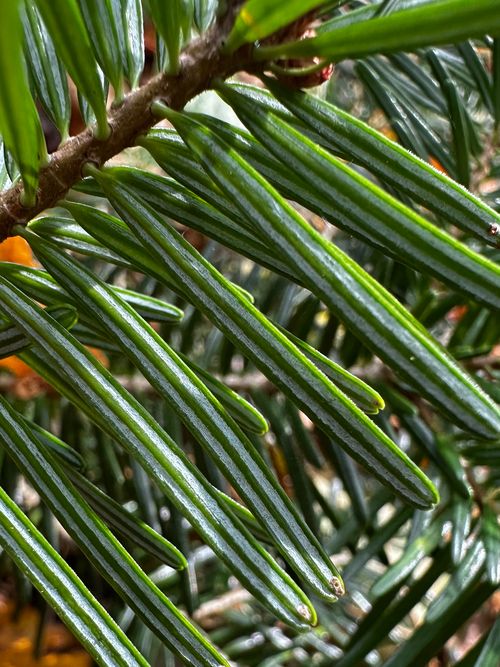
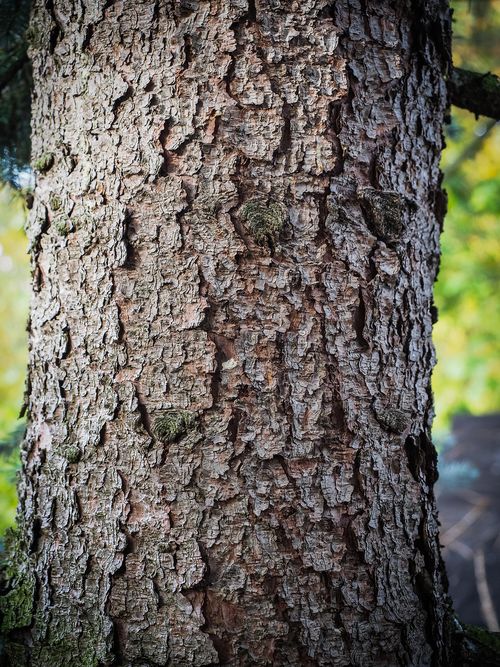
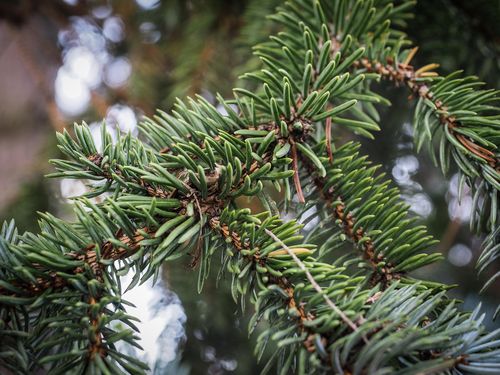
Photos: Martina Gehret (1,2,3), Kerstin Ellersdorfer (4,5)
Picea abies
- Height: medium to tall tree, up to 40 m
- Trunk: young trees reddish-brown, cracking scaly with grey tones when old, often greenish on weather side
- Leaves: pointed needles 4-edged with stomata on all sides or flat with stomata downwards, fused to the twig at the base
- Fruits/seeds: Elongated, cylindrical cones, initially protruding, later drooping, seeds with spoon-like wings
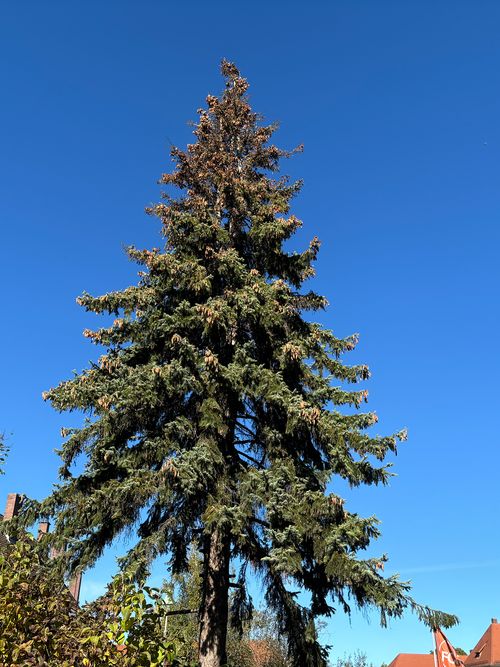
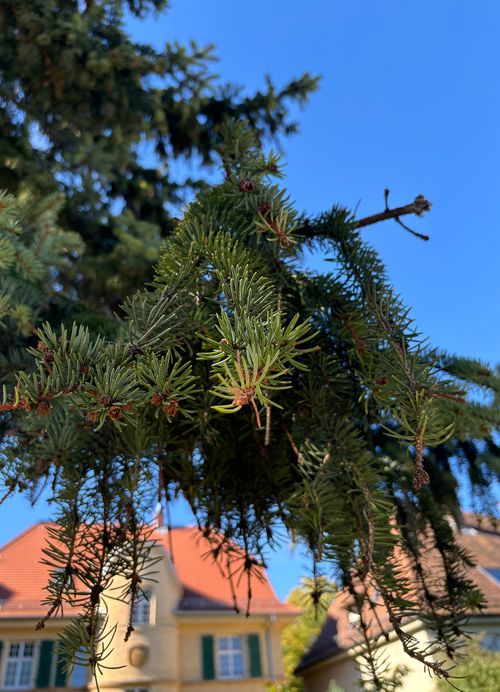
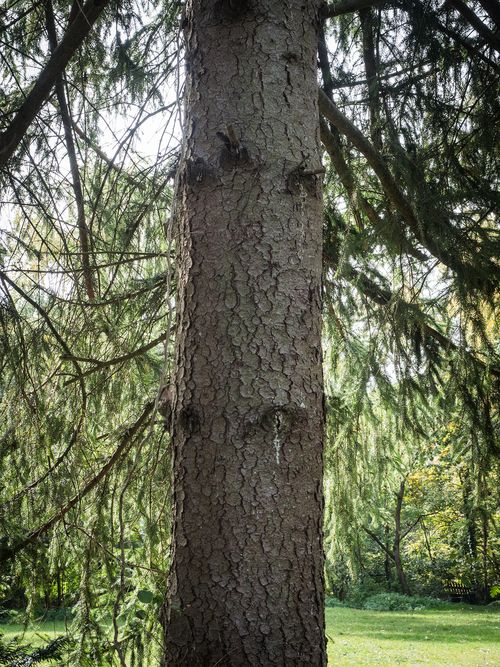
Photos: Janina Deutschmann (1,2), Kerstin Ellersdorfer (3)
Larix spp.
- Height: up to 40 m
- Trunk: reddish to grey-brown, thick, deeply furrowed scaly bark with age
- Leaves: blunt, soft, thin, keeled needles, in clusters of 15-50 on short shoots
- Flowers: purple-coloured, in upper crown
- Fruits/seeds: spherical, ovoid cones (approx. 3 cm), remain on tree for a long time
- Other: only deciduous, sheds needles in autumn
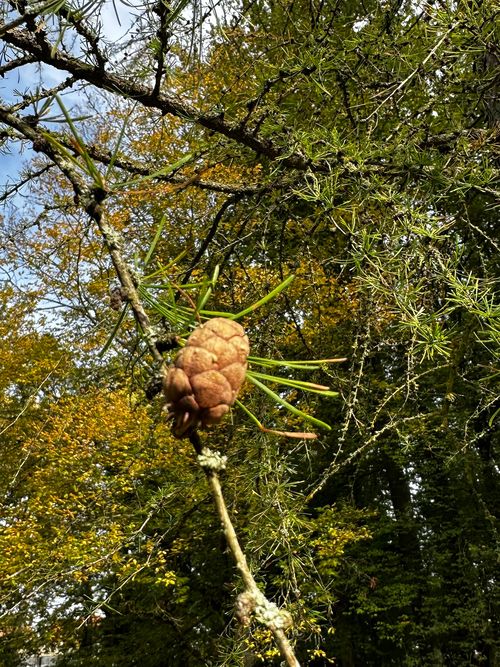
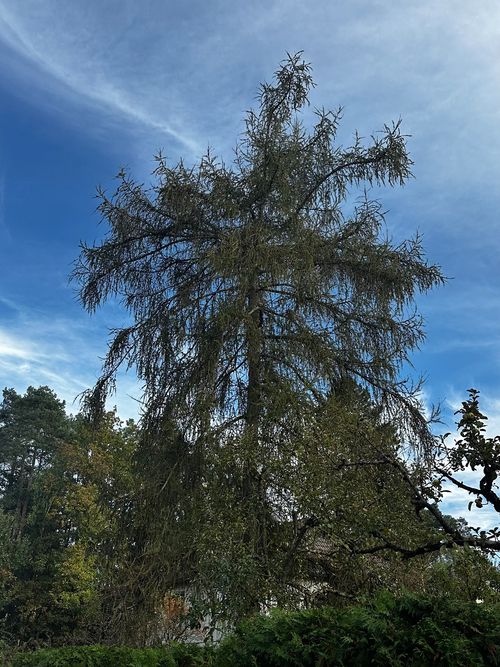
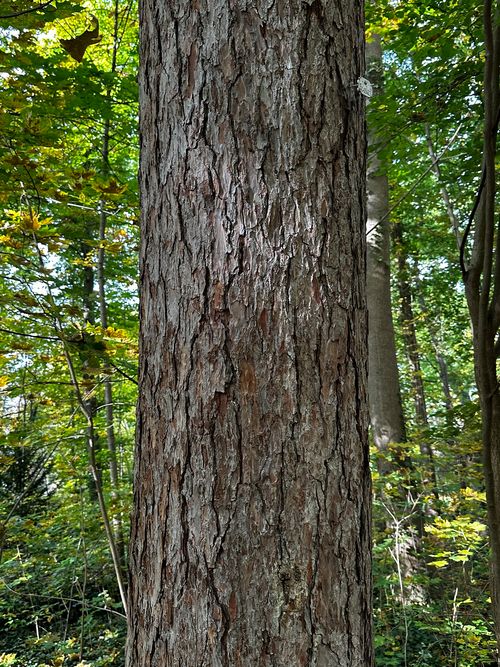
Photos: Martina Gehret (1,2,3)

Please visit the website about the SPOTTERON Platform on www.spotteron.net
This website uses no external trackers, no analytics, just session cookies and values your online privacy.