
Apps
Pilzfinder is the web-app of the mycology research society of the University of Vienna. In the browser-based project, you can contribute mushroom observations from all across Europe and get feedback from the expert of the Austrian Mycology Society. By joining this Citizen Science project, you can help with the science behind fungi and learn more about the fascinating world of mushrooms.
Coastal areas are in constant evolution, climate change will impact where and how humans live. In times of the imminent climate crisis, the coastline will change dramatically, and extreme weather phenomena are already starting to be part of our daily life.Citizens monitoring weather and waterThe Coastal Observer Citizen Science project explores these effects and their impact on the environment and our mood. The Coastal Observer App encourages citizens to become active in monitoring weather...
Do you like spiders? In the SpiderSpotter Citizen Science app, you can share your observations of spiders and their webs to help the research about their adaptation to the environment and contribute to biodiversity monitoring. The app features a range of spider species with and it has an active community of spider enthusiasts and arachnologists. If you love spiders (or at least appreciate them) join this Citizen Science project!Spiders, their colours and their netsThe increasingly hot...
At the Spot-a-Bee Citizen Science project, the researchers of Cardiff University and the University of Glasgow, UK want to find out what plants, trees and shrubs are important for bees in city and town parks and gardens. People can help survey bee-friendly plants towns, cities and villages! If you spot a bee, use your mobile to take a picture of the plants they’re buzzing around and upload the spot in the Citizen Science app.Explore the fascinating world of bees with Citizen ScienceThe...
With Big City Birds you can observe birds and learn how they adapt to living in cities. The project focuses on five bird species: Sulphur-crested Cockatoo, Australian Brush-turkey, Australian White Ibis, Little Corella, and Long-billed Corella.
Seit 2012 ist es das Ziel der Arbeitsgruppe für Citizen Science an der Universität für Bodenkultur Wien die Citizen Science Akteure in Österreich zu finden und zu vernetzen. Zum Anlass der ersten Österreichischen Citizen Science Konferenz 2015 wurde die Onlineplattform auf www.citizen-science.at von uns komplett überarbeitet um dem Technik- und Designanspruch der Gegenwart gerecht zu werden. Die Website wurde im SPOTTERON Design neu gelauncht und mit modernen...
With your help, we would like to map architectural, cultural and natural monuments all over Baden-Württemberg. Together we will use this app to find out what there is to see in Baden-Württemberg! We are interested in your discoveries and favourite places, no matter in which corner of our state. Because who knows them better than you?
CoronaReport is a citizen science project for documenting the influence of COVID-19 on our lives. Citizens can use the CoronaReport app to share their stories and to better understand how the crisis is changing lives all around the world and provide records about their daily occurrences. These data are helping scientists understand how the Coronavirus COVID-19 pandemic is affecting the way people live and work.A Citizen Science app in times of a global crisisWith the app, participants can...
Nature's Calender Burgenland is the next regional project of the Nature's Calender app family. The Citizen Science app can be used locally for phenology observations in nature and offers all community functions and features for species classfication. By the local character of the Citizen Science app especially schools and educational institutions in the region can participate in an optimal way.
The connections between water and geological underground are diverse and often complicated. With the SIBRA App, you can generate reliable data on these topics and help to a better understanding of these connections. That way, you can contribute to developing models and scenarios that allow for assessing possible effects of extreme weather events, such as rapid snowmelt, flooding or drought.Citizen Scienctist collecting hydrogeological dataWith the SIBRA app, a measuring instrument is now...
The BRUSHTURKEYS app is all about Australian Brushturkeys extending their natural habitat, which usually includes rainforests and woodlands, to suburban areas.The brushturkey is a fascinating bird for Citizens and Scientists alike.Once a rare species due to overhunting, the Australian Brush-turkey is now commonly found in urban areas on Australia’s east coast. They are large birds with a wingspan of about 85 cm, black feathers and a red head. The males build huge nest mounds on the ground...
Nature's Calendar Upper Austria is a regional Nature's Calendar project. With the app, you can observe when plants are starting to blossom, trees yielding fruit or throwing off leaves or animals being active, thus helping scientists to better understand climate change and what to do about it, simply by observing the nature around you!Better understaning of climate change and what to do about itWith the app you can easily record your own nature observations on the map with your...
Street lamps, light signs and illuminated buildings - light at night means security and nicer cities, but has also been shown to have negative effects on people and animals. The more artificial lights, the fewer stars you can see in the night sky. Counting stars for scienceThe "Stjärnförsöket" (the Star Spotting Experiment) project collects contributions about light pollution in Sweden and in partner countries. By pointing a cardboard tube in all cardinal directions, Citizen Scientists...
In the Tea Bag Index Citizen Science App, everything is about soil. Various observation categories are ready to participate in, from easy soil classification and testing to the well-known method of burying and weighting teabags to measure the decay rate of plants. Citizen Scientists are welcome to participate worldwide and contribute to improving climate models and soil research.Drinking tea for the climateThe Tea Bag Index (TBI) collects data on soil observations and in particular on the...
Our Outdoors is a citizen science project which aims to find out more about what you and others experience when you are in public spaces such as parks, beaches, canals, and town squares. It was developed by researchers in the Scottish Collaboration of Public Health Research and Practice (SCPHRP) at the University of Edinburgh in partnership with Sustrans, the MRC and citizens like yourself.Improving environments with Citizen ScienceBy taking part in the research you will contribute will...
UPCOMING - In MyCityLife präsentieren Bürger Ihre persönlichen Hotspots Ihrer Stadt mit dem Smartphone.
With the "LitterBug" app by independent Austrian environmental organization GLOBAL 2000, you can sharpen your awareness for the trash left in nature and help cleaning it up. The aim is to support a sustainable clean environment everywhere.A cleaner environement with Citizen ScienceThe GLOBAL 2000 DreckSpotz App should not only make our nature a little cleaner, but also ensure that it stays that way in the long term. With the app, people from all over Austria and beyond can help to...
"Forschen im Almtal" is the app for a Citizen Science project of the University of Vienna in collaboration with the wildlife park in Grünau in Austria's Almtal. Visitors of the Wildlife park can become Citizen Scientists and observe three bird species (grey goose, raven and northern bald ibis) and help collect data on their behaviour in the Citizen Science App 'Forschen im Almtal'.Learning more about bird behaviourThis project aims to monitor these three bird species, to find out when and...
With "Crows in the zoo" you can observe the species and subspecies of crows and how they interact with the animals at the Vienna Zoo. Observe and find out how clever these birds are and how quickly they learn!Observe different crow species and see how quickly they learn with Citizen Science!The aim is to actively involve zoo visitors and citizen scientists in the research activities of the University of Vienna (Department of Behavioural and Cognitive Biology together with the...
With the CrowdWater Citizen Science app, you can observe rivers and collect hydrological data, including water level, streamflow and soil moisture data, as well as data about the dynamics of temporary streams, plastic pollution and general stream type data.Better predicting of floods and droughts with Citizen ScienceThe project does not only look at the possibilities of collecting data but also at the value of this data for hydrological forecasts. The goal is to develop a cheap and...
WaldrApp is a Citizen Science project from the University of Vienna aiming to collect ecologic Information on the whereabouts of "Waldrapps" (English: northern bald ibis). Since these birds are an endangered species, the data collected through the app can help gain essential data for future settling projects. Feel free to join and contribute to this citizen observatory!Citizen Scientists are spotting an endagered bird speciesThe northern bald ibis choose their feeding areas according to...
Cane toads are relentless invaders. They were transported to sugar cane growing regions of the world from South America early last century, including Australia, in the hope, they would eradicate beetles devastating sugar cane crops. The experiment failed spectacularly. Toads ignored beetles, and instead embarked on an epic global invasion. With this App, you can reduce their population to protect local flora and fauna.Citizen Science helping to cope with an invasive speciesThe purpose of...
ArtSpots is a community-built art atlas. Through the app people who are interested in various art forms like Street Art, historic or contemporary art, photography, architecture and more can put their art observations on the map and discover art spots in their own city or while travelling. A place for art lovers from around the worldDo you love discovering art? With the ArtSpots app, you can share your art discoveries and own artworks with a community full of art lovers - and put your...
This Citizen Science App was specially designed for children and young people! With it, you and your friends can observe your surroundings and evaluate possible positive places or dangers, and thus contribute to improving them.Improving public spaces with the youngest Citizen ScientstShow the grown-ups how children see their environment: in which places do you feel comfortable and where do you feel unsafe? Where do you meet your friends? Which traffic light totally annoys you? Is there a...

"Naturkalender" (Nature's Calendar) is the Austrian phenology app for interested Citizen Scientists who want to support phenology and climate protection by observing their surroundings. The focus lies in the development of certain so-called phenological indicator plants. Through community science observations of plants that start to bloom, bear fruit, or shed their leaves, or animal activities, they support the data collection of the GeoSphere Austria and the European Phenology...
With the Green Growth Forest app, everyone can contribute to keeping Suriname the greenest country on earth.Suriname is a small country in South America, an impressive 93 per cent of it is covered in dense forests. One could say it's one of the greenest countries on the planet. It's forest contributes to the world’s climate change as one of two carbon negative countries globally, and it harbours the world’s fourth-largest amount of freshwater resources.A Citizen Science App to keep...
In the Roadkill Citizen Science Project from the University of Natural Ressources and Life Sciences in Vienna, Citizen Scientists and researchers collect data about roadkill on streets all around the world. If there's a high number of roadkill in one spot or a particular species gets killed in the same place a lot, that can help scientists understand how the animals came to die and find solutions for it.Why is roadkill important and how can Citizen Scientists help?Habitat fragmentation by...
Soils for Science (S4S) is a citizen science initiative of The University of Queensland, Institute for Molecular Bioscience. S4S aims to inform the public on the importance of antibiotic resistance in modern healthcare, and soil microbes as a source of next generation antibiotics. S4S provides the public with free sampling kits (visit soilsforscience.org.au) to collect soil samples rich in microbial biodiversity (bacteria and fungi). Pure microbes will be isolated by UQ researchers and used...
We, humans, are capable of dramatically altering the landscape. Cities are a familiar and extreme example of this change. Intriguingly, some animals can adapt to these changing environments by flexibly changing their behaviour. The project focuses on five bird species that have done so successfully: Sulphur-crested Cockatoo, Australian Brush-turkey, Australian White Ibis, Little Corella, and Long-billed Corella. Additional species can be reported by selecting “other.”Birds adapting to change...
CoastSnap is a global citizen science project to capture our changing coastlines. No matter where you are in the world, if you have a smartphone and an interest in the coast, we welcome you to participate! CoastSnap relies on repeat photos at the same location to track how the coast is changing over time due to processes such as storms, rising sea levels, human activities and other factors.Snap a photo of a coast near you in the app!Using a specialised technique known as photogrammetry...
Anyone with a passion for nature, photography, and the protection of our planet can be a naturalist. The NatureSpots App enables nature lovers, biodiversity enthusiast, nature conservation activists and everyone else interested in wildlife and natural habitats to share animal, plant or fungi observations and habitat discoveries on their adventures.Once you start you won't be able to stop - suddenly you'll know more plants, mushrooms and animals than ever before. You'll explore new habitats...
With the MAKENYA - Mammal Atlas Kenya App, you can discover and contribute to the fascinating world of Kenyan Mammals. Explore about 390 mammal species throughout Kenya and get involved in the first Kenyan Mammal Monitoring App. Share your photographs or observations with a community of animal lovers, researchers, scientists, and citizens to help understand the world of mammals.Are you ready for adventure? Anybody can be a naturalist!Kenya is one of Africa's most important countries...
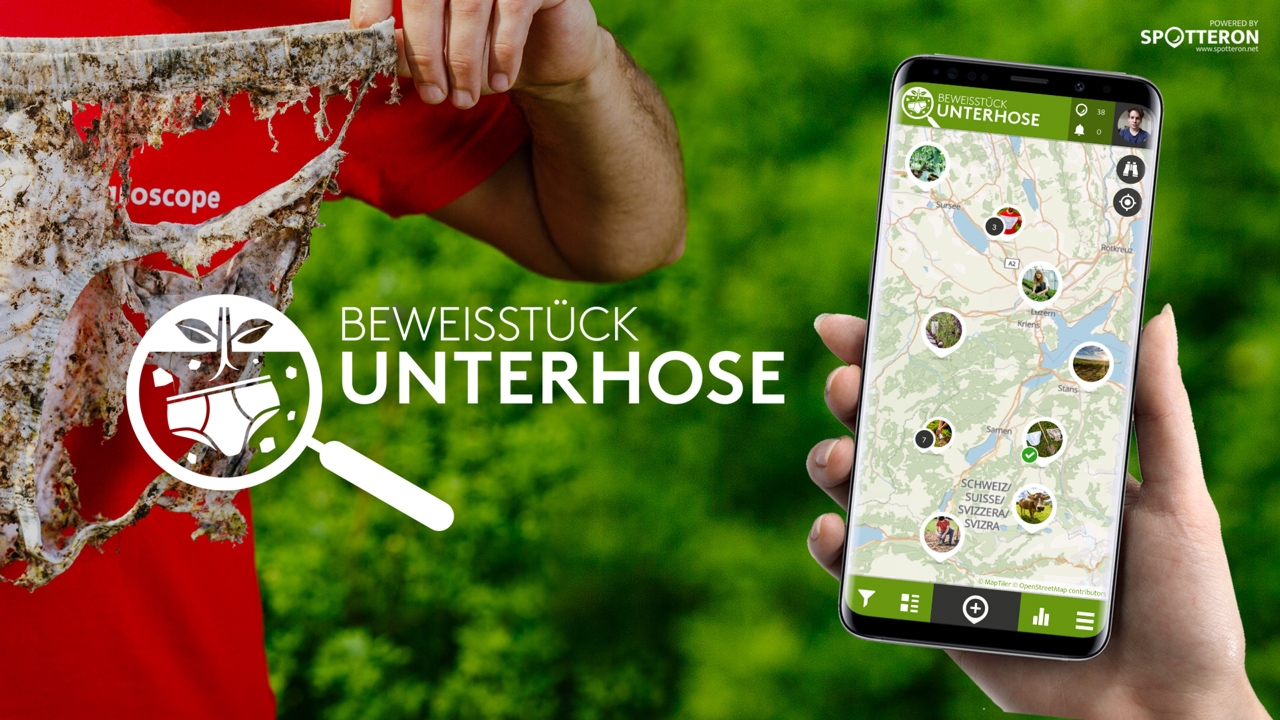
Do you know what the connection is between underpants and vegetables? Underpants can be used to assess how alive the soil is. In this Citizen Science project, scientists from the University of Zurich and Agroscope Switzerland are testing whether this is true. 'Slip of Evidence' invites every citizen to join in and do research, whether you are a farmer, hobby gardener, self-supporter or flower lover.
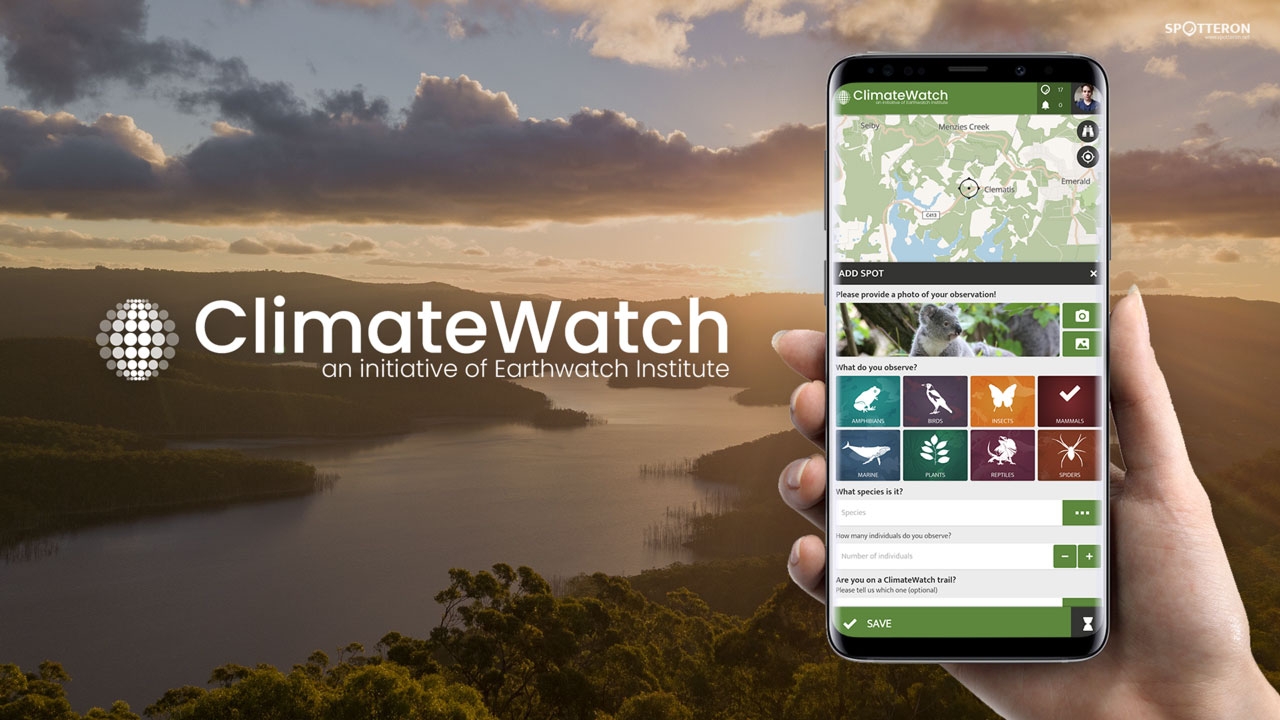
Are you concerned about the environment? Do you want to help preserve the natural heritage of Australia for generations to come? Then get involved with the ClimateWatch App - the first continental phenology project in the Southern Hemisphere - and be part of an active community making a real difference to the future of our planet.

Gardening is currently experiencing a renaissance. Eating fresh, healthy fruits and vegetables from your own garden is a beautiful experience. It is even better when you consider natural cycles in cultivation, avoid pesticides and peat, and promote biodiversity. Gardens offer enormous potential for protecting biodiversity. This Citizen Science App will help you with that!Be part of creating a large nature park of insect-friendly gardens!Allotments and private gardens, and communal green...
Read more: Nature Park Garden - Small Gardens, Big Impact | BUND

With HydroCrowd, Citizen Scientists can make a real impact by monitoring rainfall and other hydro-climatic data in Ecuador, Honduras, and Tanzania. No need to be a weather expert—just grab the app and get ready to dive into the world of water!

Fridays for Future sees itself as a horizontal, grassroots movement that acts impartially and refers to science for the facts. To engage the global population more, this app was developed using SPOTTERON. The aim is to find out how the climate crisis is perceived by the population and which positive and negative emotions are associated with certain topics related to the biodiversity and climate crisis.The users should learn more about the climate crisis and at the same time be able to make...

The new citizen participation uses "Citizen Science" in their hometown and nationwide to get your feedback on places. As a result, citizens are empowered to become active in a city worth living in to collect and share data themselves and to interact with scientists. This enables them to recognize the consequences of sealing, heat, water shortages, and a lack of biodiversity, and generally, how places in their own environment affect us all.People must be given the opportunity to take part in...
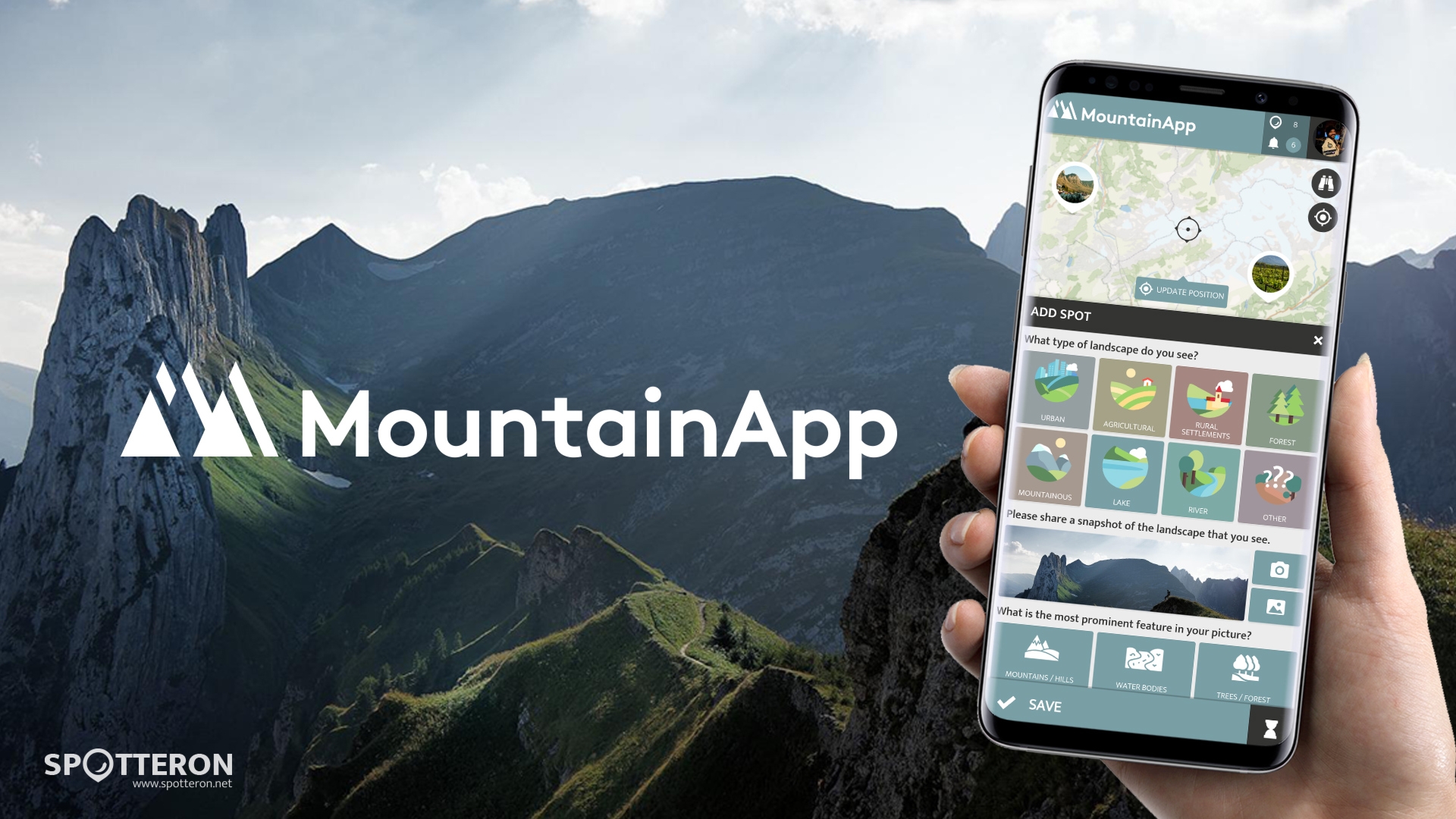
Share your landscape! Explore mountainous landscapes all over Europe.MTA - MountainApp wants to inspire people to immerse themselves in landscapes. MTA - MountainApp is a project jointly run by researchers from Switzerland and Georgia. MTA - MountainApp was developed for a transnational research seminar taught at the University of Zurich and the Ivane Javakhishvili Tbilisi State University. The app is used to facilitate cross-border student collaboration and learning and to introduce...
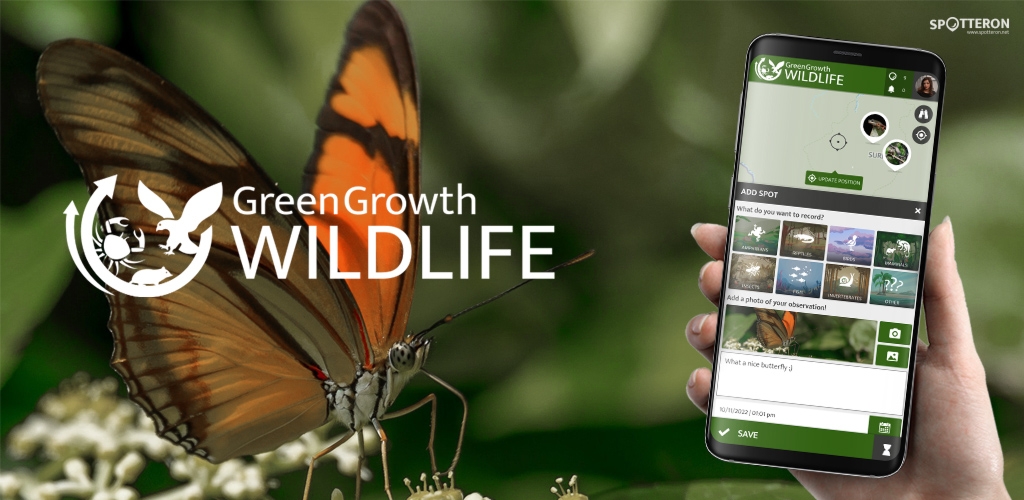
Suriname's lush forests are home to a plethora of unique flora and animals. Despite this abundance, there is still a lack of a unified system that consolidates all critical information in a single, easily accessible location. This is where the Green Growth Wildlife app comes in, providing a complete platform for collecting vital information that will help map and understand the health of Suriname's biodiversity.A Citizen Science App to Map Suriname's Abundant WildlifeThe aim for the future...

AmphiApp is the app for the AmphiBiom project, which aims to take an important step towards a comprehensive protection concept for the green toad. Research is being carried out throughout Austria to determine which habitats the green toad prefers, in conjunction with the study of pollutants in water bodies and land use.
As part of this new paleontology project, whether you are a student, a hobby collector, or a professional scientist, you will find an app in which you can share your fossil discoveries and even let them determine them. So you can help to complete the network of geological data in Austria.Go on a time travel through the history of the earth with fascinating fossils!Here you can show your fossil finds, from ammonites to dinosaurs, and fossil traces to the world, exchange ideas with...